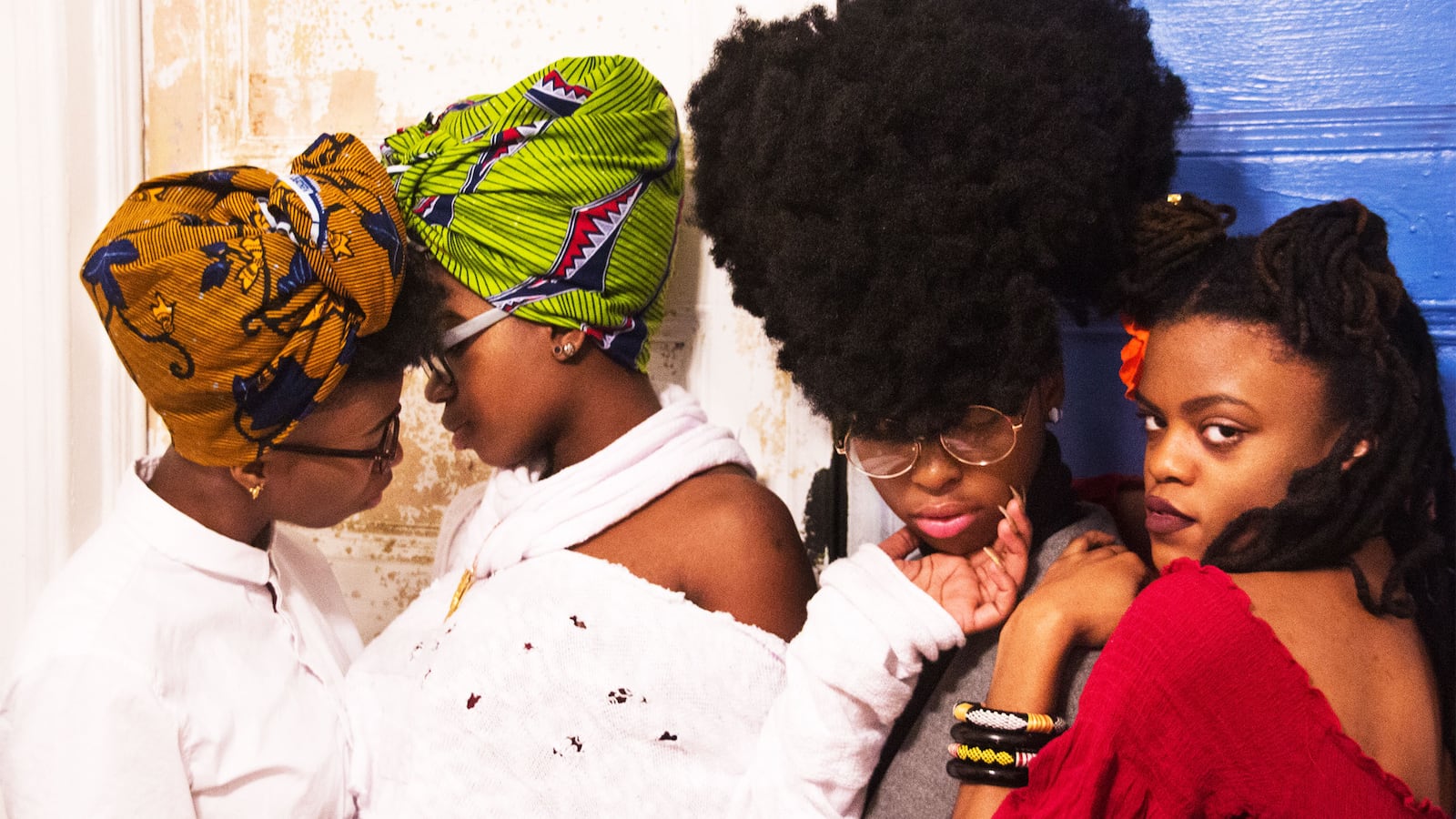
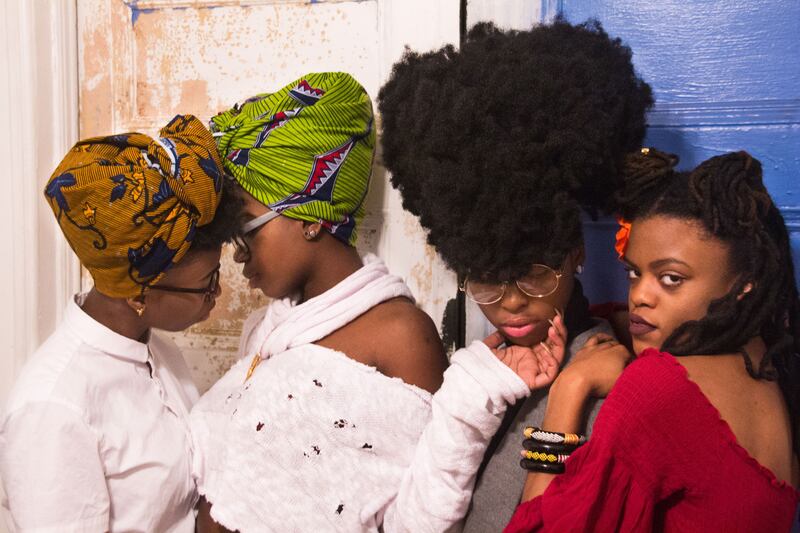
Mikael Owunna, a queer Nigerian-American photographer, has been documenting LGBTQ African immigrants for the past three years in his photo series, Limit(less). In the thought-provoking interviews provided in conjunction with the colorful portraits, Owunna’s subjects discuss what it means to identify as both LGBTQ and African and how they use their fashion to help disprove the notion that being queer is “un-African.”
Here, a selection of images and parts of interviews from his series. Visit the Limit(less) site for more photos and interviews and click here to help support Owunna and his project.
Mikael Owunna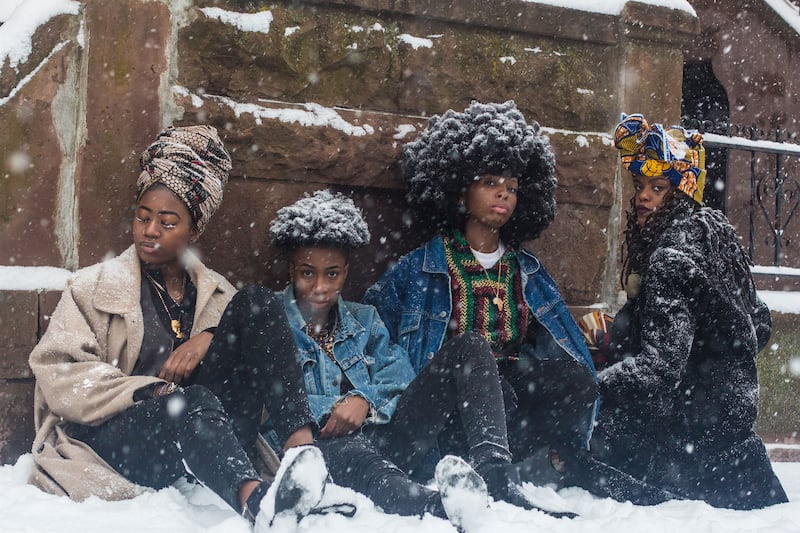
Mai’Yah, 18, Liberia, queer; Badu, 20, Ivory Coast (New York City-born and raised) pansexual, androgynous; Yéwándé (Yéwá), 18, Nigeria (USA-born), queer; Amadi, 18, Nigeria (USA-born), genderqueer, queer, androgynous.
Mikael Owunna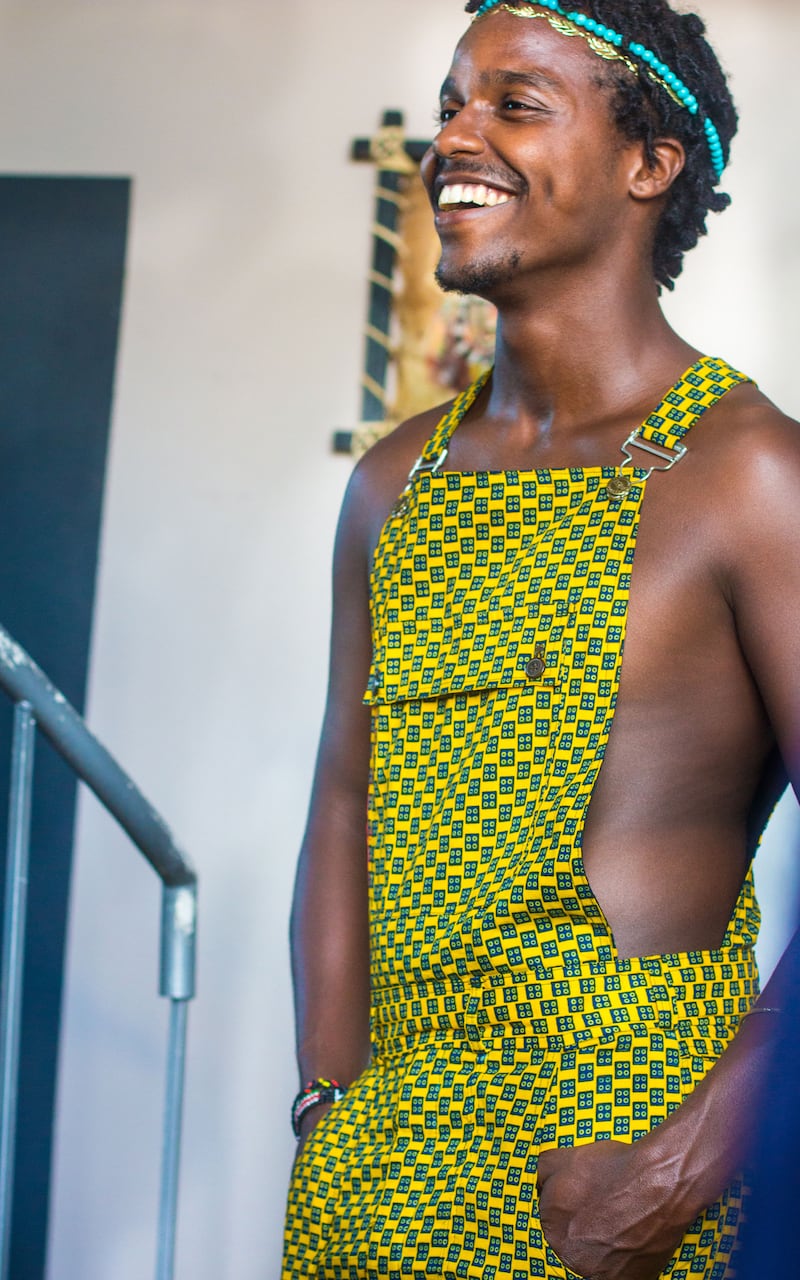
“When my family was formally introduced to my queerness they were scared. Not of me but for me. They knew the cruelty society had towards people like me. Over time their fear has turned into pride. My immediate family is completely accepting of me. Though they are not completely understanding of what it’s like to live as a gay black man, they support me and treat me the same as they always have.”
Mikael Owunna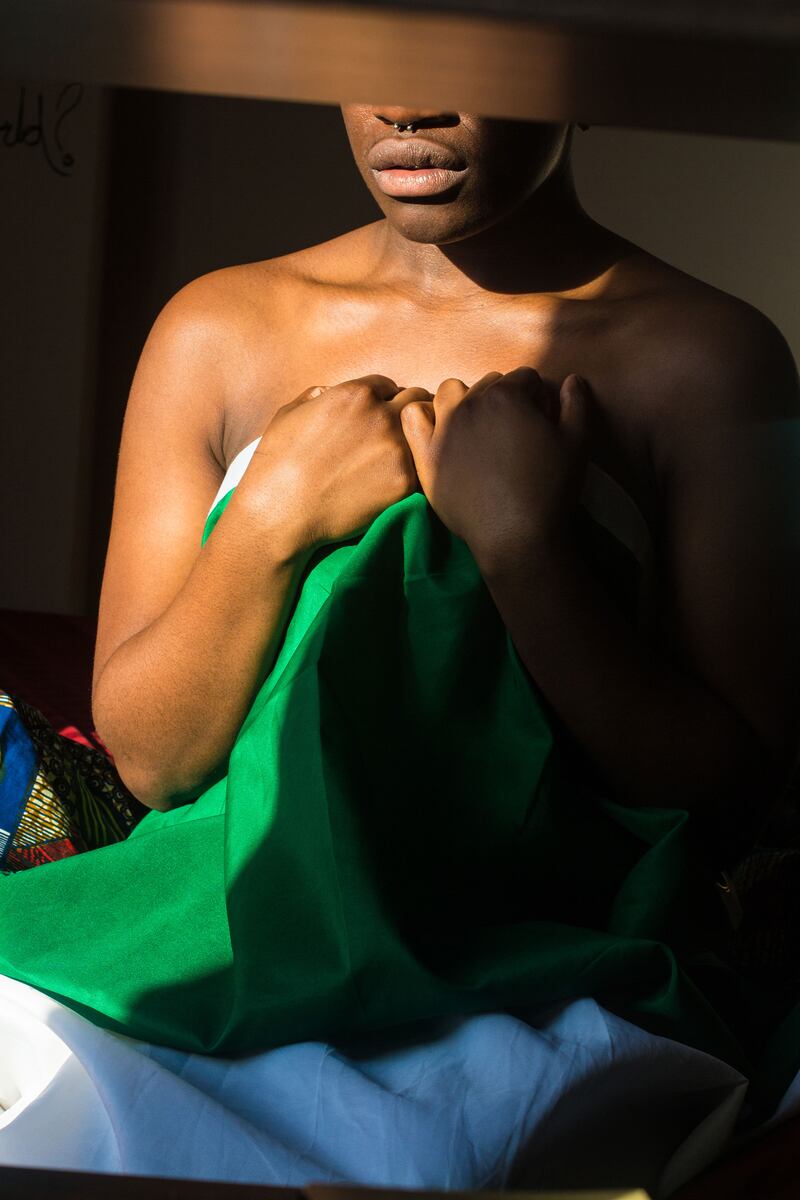
“I definitely think I’ve pushed away from my African identity in a way. I haven’t been able to be both because I don’t really feel safe to be African and LGBT or like it’s possible. That’s something I have to explore and really understand. The LGBT identity is really new to me, so I’m really trying to understand what that means also as Nigerian. I feel like when I find out what that means to me, it’ll be revolutionary... It’s a liberating experience to be able to confirm who are you. These are two identities that are extremely important, but they are always framed as antithesis to each other. I get to be a living example with many others that they go together perfectly.”
Mikael Owunna
“During a conversation about queerness, African(ness), and identity, a good friend of mine made a statement that has stuck with me ever since. He is also a queer East African man, a Black body, living in Canada. He said that one difficulty in being a queer African man in the Canadian diaspora is that within our own African communities we are expected to be hyper feminine, as a consequence of our sexual orientation, while within the Canadian queer scene we are expected to be hyper masculine as a result of our Blackness. I couldn’t agree more. In many ways we are pushed out of both communities in unique and specific ways, and pulled in in just as complex ways. For me, this is a source of power. When we are neither here nor there, we are free to carve out and customize space for ourselves through community, art, and self-exploration. It’s both agonizingly isolating and indescribably freeing to live on the margins of the expected. It is at this crossroads that we make our home, and brick by brick it becomes ever more immaculate.”
Mikael Owunna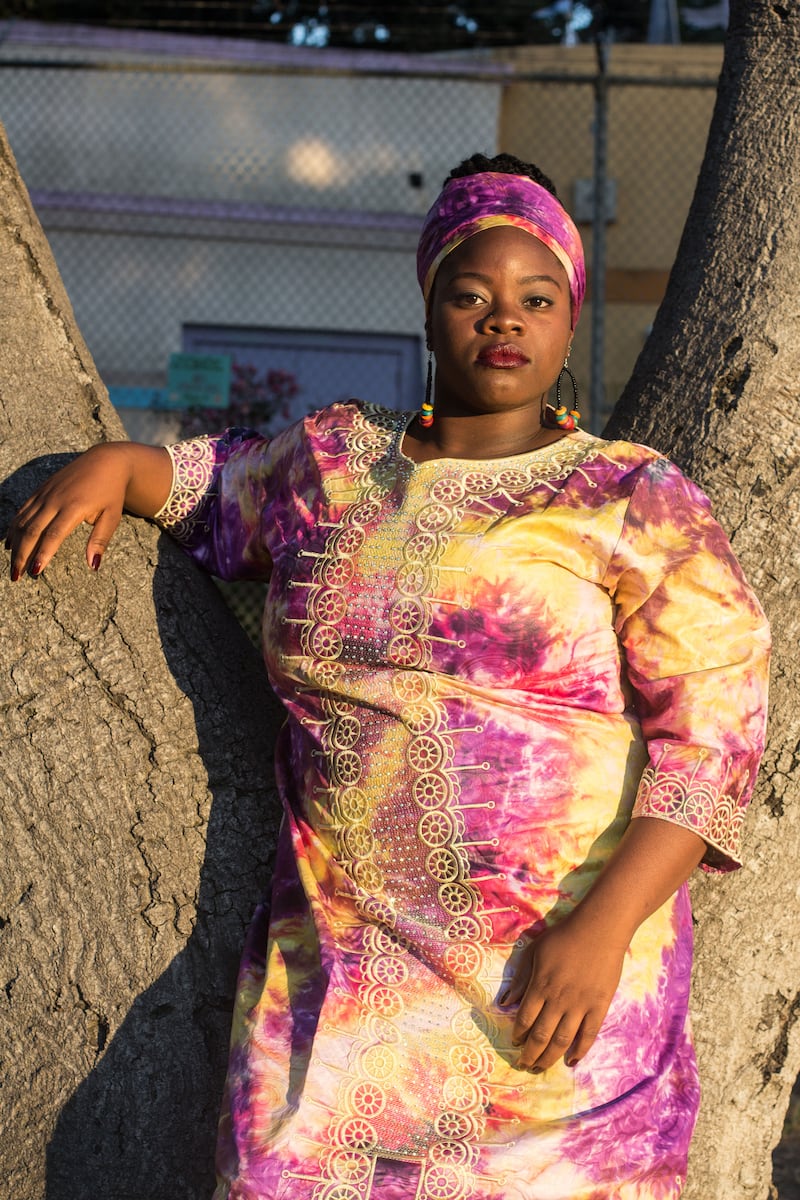
“I haven’t been home since I was 5 years old. Shortly after coming out to my mother, we had a conversation. She was visiting Nigeria and wanted me to come home with her to visit her church. She hoped that with strong deliverance, I would no longer be queer. She even used the laws and consequences around suspected homosexuality in Nigeria, as justification that she was right to try to rid of my queerness. It was a literal ultimatum.”
Mikael Owunna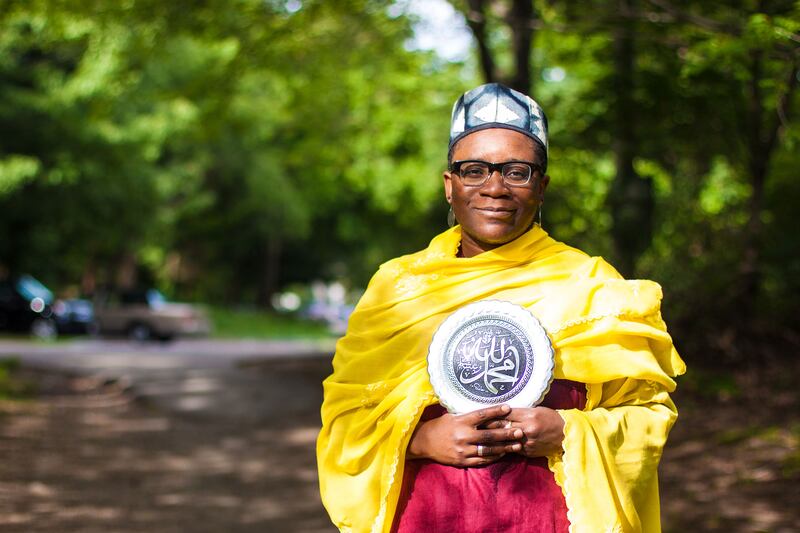
“I don’t look, I don’t really represent the queer aesthetic in terms of the standard—I don’t look like a stud, I don’t look like a dapper queer. I look like something else, and that something else is a nod to where I come from. It’s me standing in my power, but it’s also distinctly you, like I have my little fedoras and those types of things, which I think do tip over into some of the queer aesthetics particularly, I would say, the queer aesthetics of people of color.”
Mikael Owunna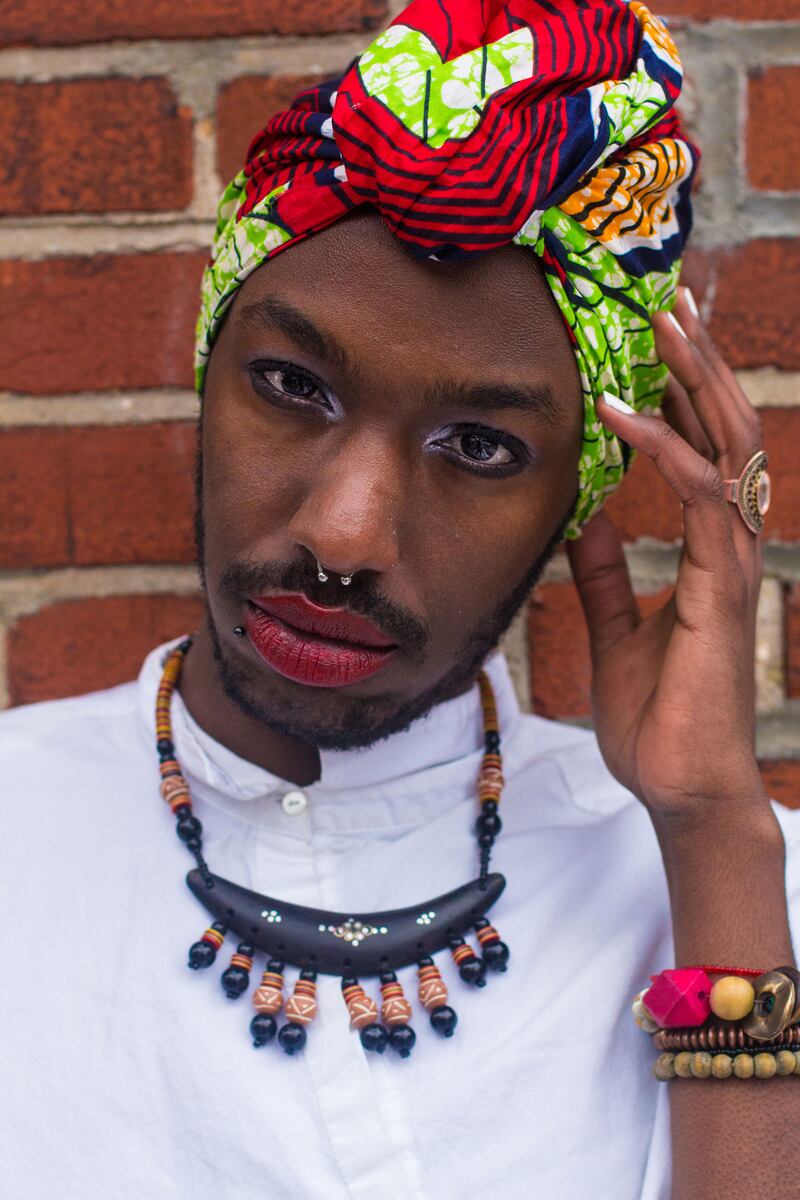
“I have for a long time thought that I could only fully embrace one of the two identities, that they were mutually exclusive. When I decided to embrace my LGBTQ identity, I subconsciously pushed away my African identity. I found myself becoming what some call a “Bounty” or “Oreo,” black on the outside and white on the inside. But prior to that I had already tried to push away my LGBTQ identity. It was complete denial; I was convincing myself so hard that my LGBTQ identity did not exist that I would ultimately believe it but yet I felt so empty, shallow, and incomplete. And then one day I thought to myself why not try embracing both identities, just for the sake of trying. I remember feeling butterflies in my stomach and feeling so light as if an enormous weight was lifted off of me. I never felt so complete and comfortable in my skin.”
Mikael Owunna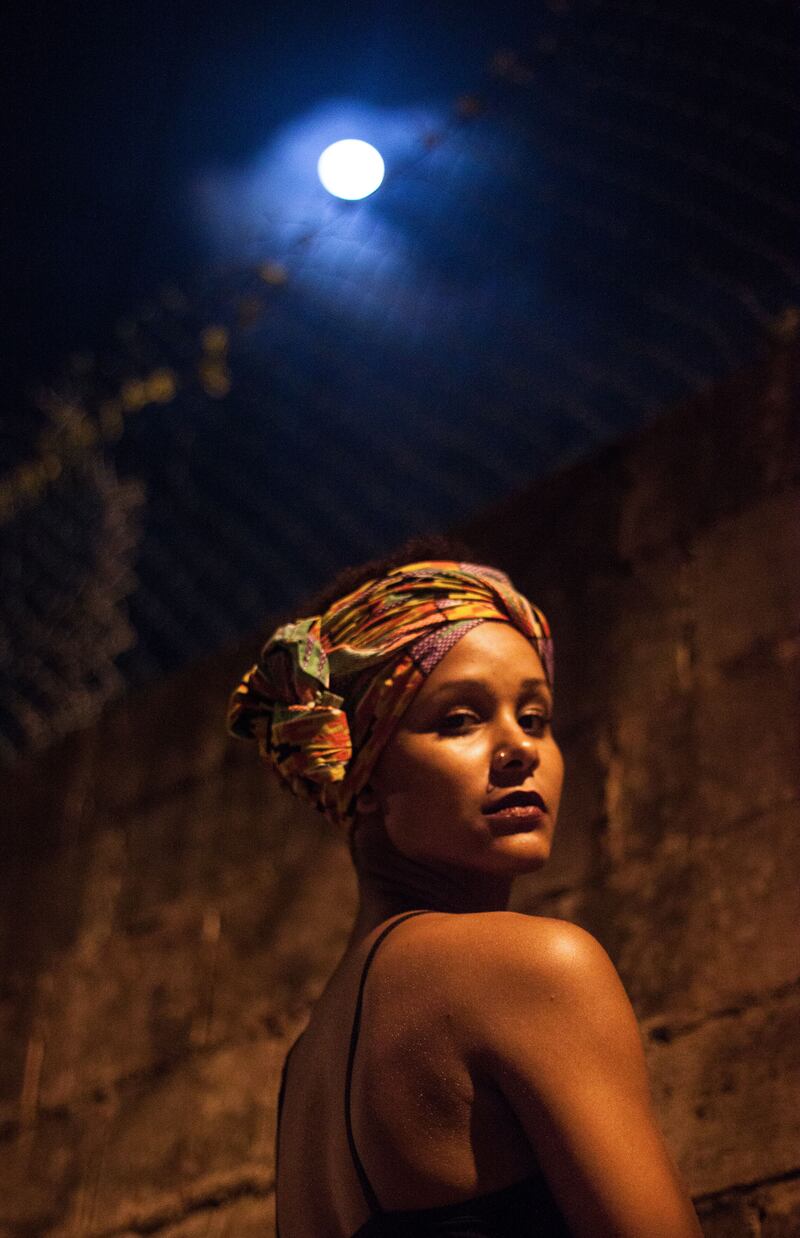
“I grew up in the Caribbean, so my African identity is closely linked to that part of the diaspora. In Trinidad, colourism/shadeism plays a huge role in structuring privilege in everyday life. For me, benefiting from the privilege of having lighter skin in my society also meant that I was constantly being pushed away from my African heritage, growing up being told that I was ‘not really black,’ or that I was ‘too light to be Nigerian.’ On the other hand, growing up knowing that I was attracted to both men and women, while also being a cis femme woman, meant that I was constantly struggling to prove my identity to myself and others. Bisexuality sometimes feels less accepted, because people would rather you ‘make up your mind and just choose,’ or ‘get over this phase’ rather that ‘be greedy’ (literally things I have heard). My ability to pass as a straight woman grants me a different level of safety than those who are more visibly queer but can also be the means through which people erase parts of my identity. I had to grow to be comfortable with who I am, and how I choose to express myself outside of what society expects; there’s no way to satisfy what everyone thinks I should be, and no way to be happy living as someone else.”
Mikael Owunna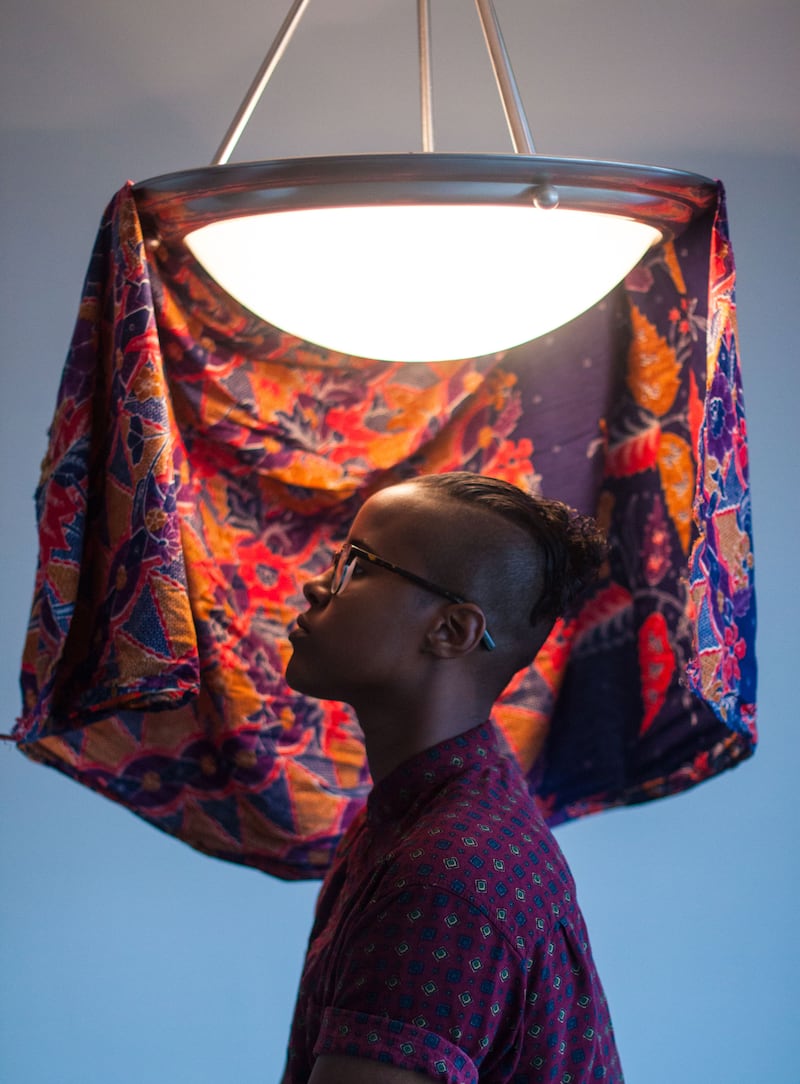
“Wiilo in Somali means ‘girl who dresses like boy.’ It’s a nickname that I was given by my elders when I was younger. It’s something that has always comforted me when I was going through my process of discovering my queerness and helped me to overcome the shame and the feeling of being pushed away from my culture.”
Mikael Owunna
“My relationship with my family in terms of my sexuality is great. I only felt the need to come out to my mom and for the rest I’ve made it an obvious thing, as obvious as being straight is. I haven’t made a big deal about it and neither have they. I understand how extremely privileged I am to be out to my family and I cherish it deeply. Although she may not always understand my sexuality, the fact that I’m attracted to all gender identities and not just one, my mom always taught me to be my own person and live a life that makes me happy. She taught me to be independent and strong, and her acceptance was the only one I felt I needed, so I’m truly blessed to have it.”
Mikael Owunna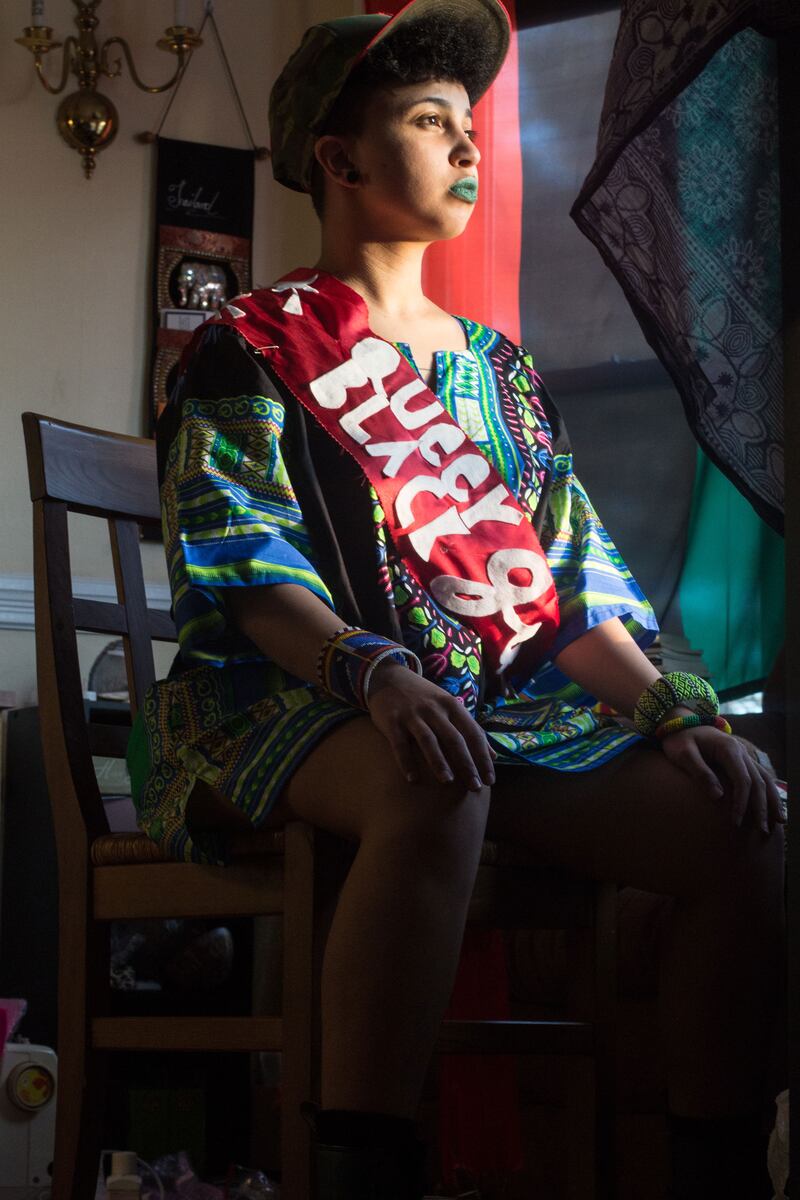
“It is critical that we tell our own stories, rather than be made invisible or be misrepresented through other people’s narratives of who we are. Through this project we can be seen and speak our truths, through our style, through our stories, through these images.”
Mikael Owunna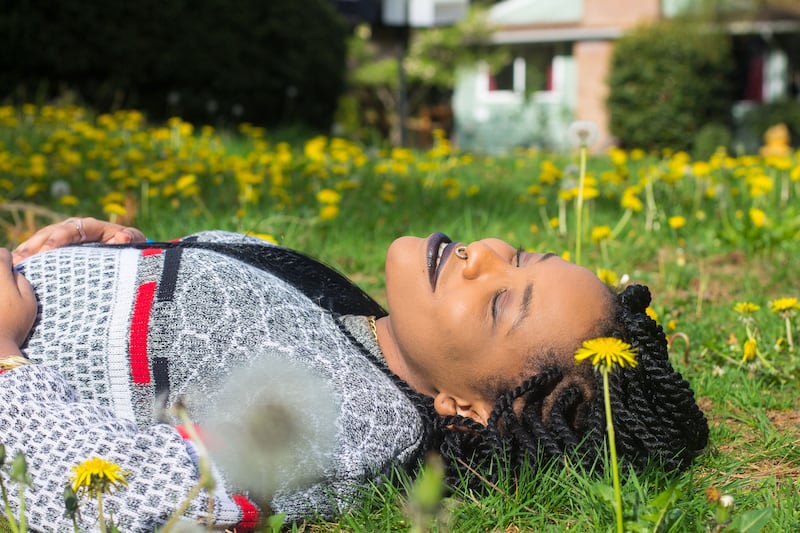
“My relationship with my immediate family is an interesting one. I came out to my mother when I was 14. That was a major turning point in my life because she was the most important person in my world and she simply didn’t accept what I had to say. That moment, more than any other, taught me about the dualities of love—my mother’s love for me was fierce and unyielding and even still, she rejected me. I don’t regret coming out to her—I have never felt such intense relief in my life. The experience toughened me up. Two years later, when she passed away and my brother outed me to my entire Ethiopian family, I was prepared for the fallout. I am closest to my mother’s family and they love me tremendously, but most of them will never accept me in the way that I would want. Now, we operate on a strict, ‘don’t ask, don’t tell’ policy. I unintentionally came out to my Dad when I was 21. I had assumed that my Mom had told him years earlier—she hadn’t. In passing, I mentioned a girl I was seeing. He seemed a little surprised. When I asked him how he felt about it, he said, ‘If you’re happy, then I am too,’ in his still-thick Namibian accent. I was pleasantly surprised. We have a very complicated, often-tense relationship—which made the moment even more profound.”
Mikael Owunna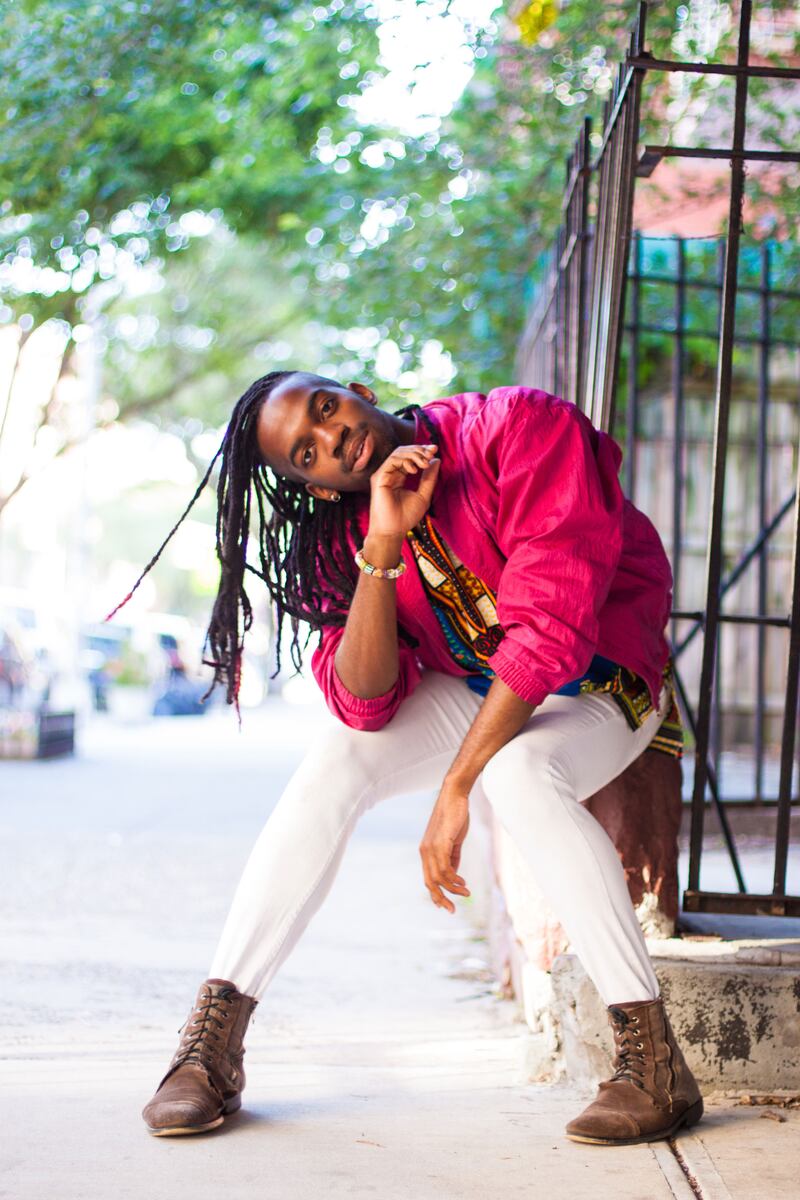
“I think the world tends to place African and LGBTQ identities in opposition with each other. Africans typically declare LGBTQ as a very white/american/un-african concept #sin #sodom #gomorrah #YASgawdGiveitupforLilith #ChristianFundamentalistColonizersinAfrica. While parts of the LGBTQ community allies itself with white supremacy and patriarchy #WhitePenisastheHolyGrail. So I have never felt at home with just one community, or any place that doesn’t allow for intersectionality. I am lucky because I have built a home and inner fire within myself that simply does not accept the binary. And it certainly doesn’t accept others defining my identity. It simply isn’t in my nature. How did I build that home within myself? A big part of it is probably having allies and representation of queerness at a young age.”
Mikael Owunna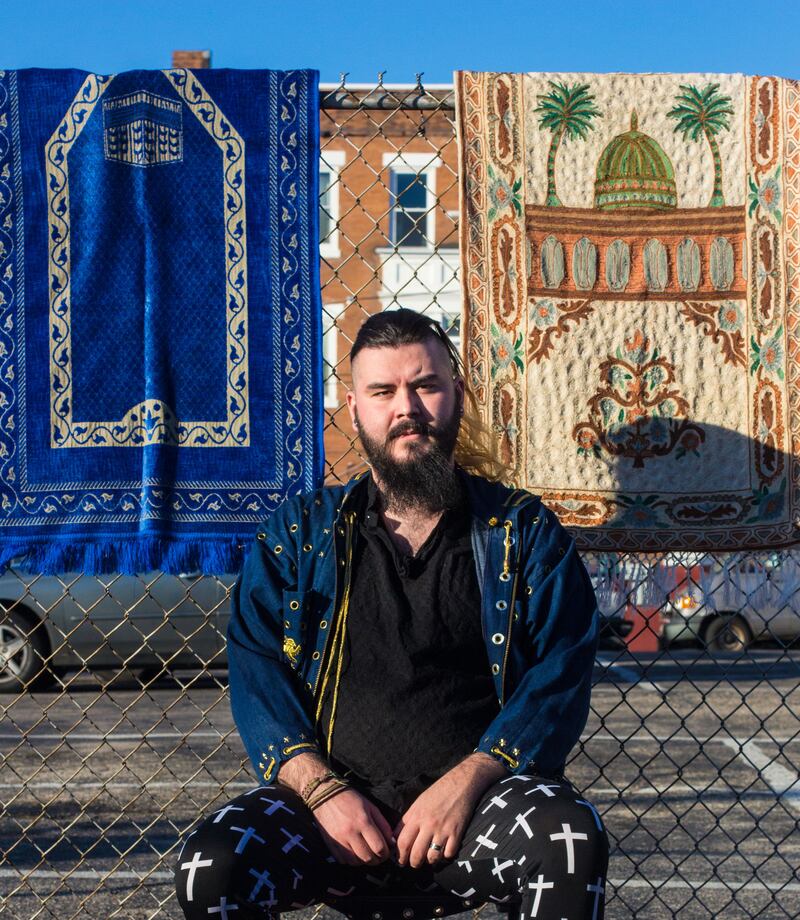
“I think many Moroccans have a mixed relationship with African identity. Many feel both Arab and African, but I think because of the cultural sphere Morocco is in, and because of colorism and anti-blackness, Arab comes first, Moroccan comes before both of those, and Muslim comes before everything else. So as a sometimes white passing African from the North, I think I have always felt some amount of awkwardness with my African identity. This is something I am trying to challenge myself on, and I think being in this project is a big step towards that.”
Mikael Owunna