Shakespeare 400: How The Bard Invented More Than Edison
The English language was a struggling infant when Shakespeare wrote, and he took full advantage of its fluidity, inventing more than 1,700 new words and countless phrases.
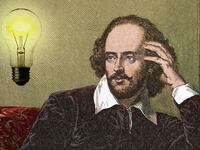
Photo Illustration by Emil Lendof/The Daily Beast
Genius being a matter of time and circumstance as well as innate ability, it is worth wondering if Shakespeare would have been Shakespeare had he lived other than in Elizabethan England.
Perhaps. Perhaps not. Because one of the things that Shakespeare exploited was the utter fluidity of the language he wielded so well.
The English language was a baby just finding its footing when Shakespeare wrote his plays and poems. It was a thing in flux, and without any Grammar Nazis around to slap his hand, Shakespeare had a field day.
RELATED—Arthur Phillips: The Year Shakespeare Wrote Lear
OK, the English language is always in flux, but in Elizabethan England, there were few arbiters as we know them. Samuel Johnson would not compile his dictionary for another century and a half, so even among those who could read and write, there was no authority telling people what was proper and what was not beyond the confines of the rude schools such as Shakespeare would have attended in Stratford.
Get the best of The Beast delivered right to your inbox
By clicking “SUBSCRIBE” you agree to our Terms of Use and Privacy Policy.
As a result he was free, when stuck for a word, to simply make up what he needed, comfortable in the knowledge that no one was going to slap his hand. He did this more than 1,700 times, far more than any other writer.
Sometimes the result was wholly original, but as often as not, he invented by jamming two words together (eyeball, green-eyed, madcap, moonbeam) or turning a noun or verb into an adjective or adverb (flawed, olympian, hurried, deafening, obsequiously). Having a nodding acquaintance with at least seven languages did this magpie no harm.
Scholars estimate that Shakepeare’s vocabulary contained more than 24,000 words, the largest of any author (Milton clocks in at 17,377).
Here’s a sampling of the ones he more or less invented (PDF):
AddictionAdvertisingBanditBlanketCaterCriticDawnDwindleEpilepticElbowFixtureFrugalGenerousGnarledGossipGrovelHintImpedeJadedLabelLuggageMimicNegotiateObscenePedantRantScuffleSkim milkTortureTranquilUnrealVariedWorthlessZany
Then there the phrases he coined.
Here are just a few (PDF):
All’s well that ends wellAs merry as the day is longBag and baggageBrave new worldCrack of doomElbow roomHousehold wordsKill with kindnessMake a virtue of necessityMore sinned against than sinningOne fell swoopWhat’s past is prologuePrimrose pathSalad daysSweets to the sweetSet my teeth on edgeToo much of a good thingWild-goose chase
With all that on his plate, it’s no wonder that he begged, borrowed, or stole the plot of nearly every play he wrote. All that word-mongering left him no time for anything else.
Register below to read this article for free or subscribe
to unlock unlimited access to The Daily Beast.
Monthly
$1
First month then $5.99/month
Annual
$35
First year then $59.99/year
Premium
$79
First year then $119.99/year
*Substack access provided by the next business day, using your subscription email. Choosing the Premium plan constitutes your permission to share your subscription email with Substack and your agreement to Substack’s Privacy Policy.
Already have an account? Sign In
Looks like you already have a subscription!
You're all set!
Thanks for subscribing.