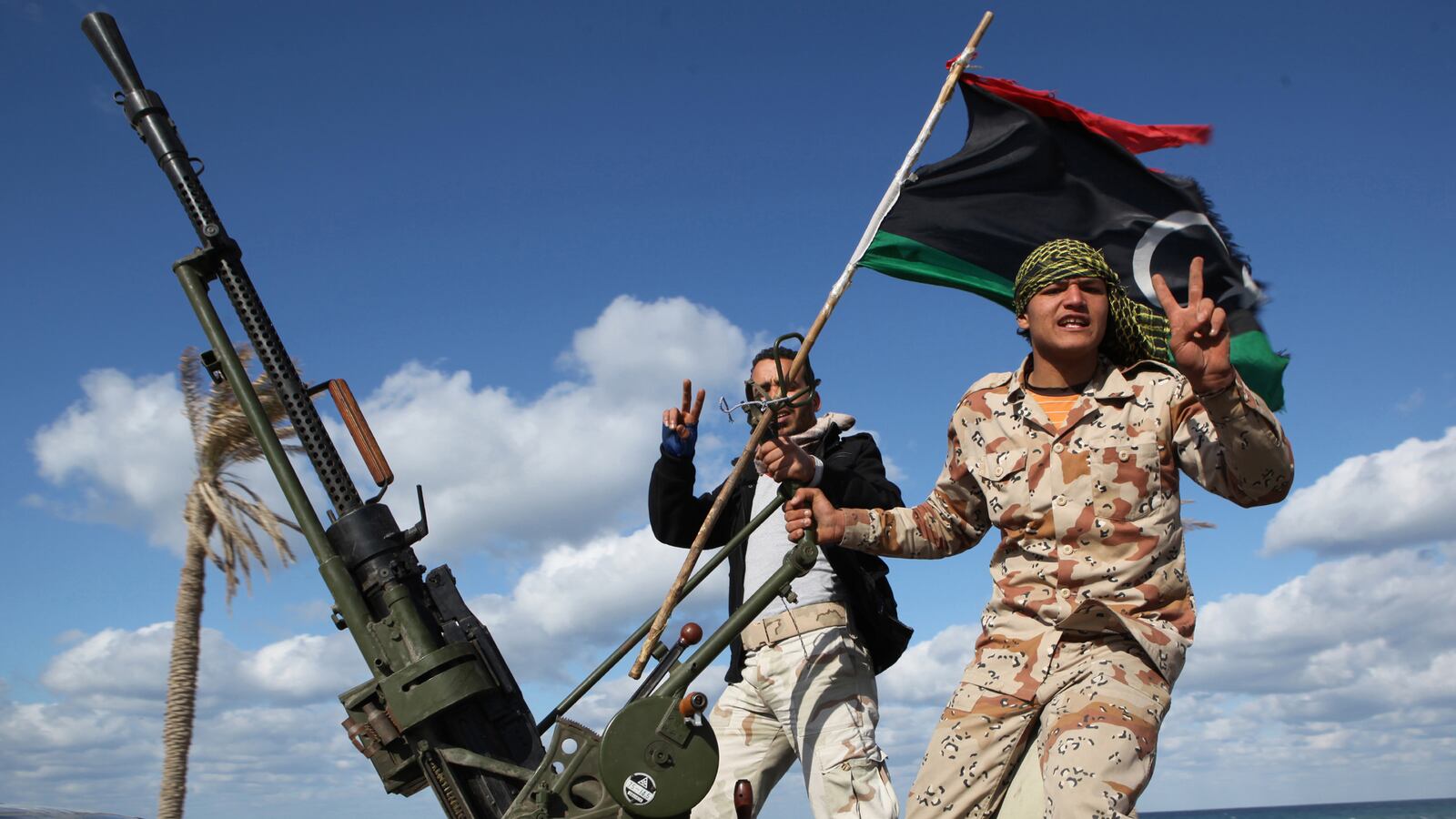
Libya’s leaders have given the go-ahead for revolutionary militias, including the powerful Islamist Nawasi brigade and Ansar al-Sharia—the militia blamed for the assault last September on the U.S. consulate—to combat drug dealers and a crime wave that is disrupting daily life in the capital and in the eastern city of Benghazi.
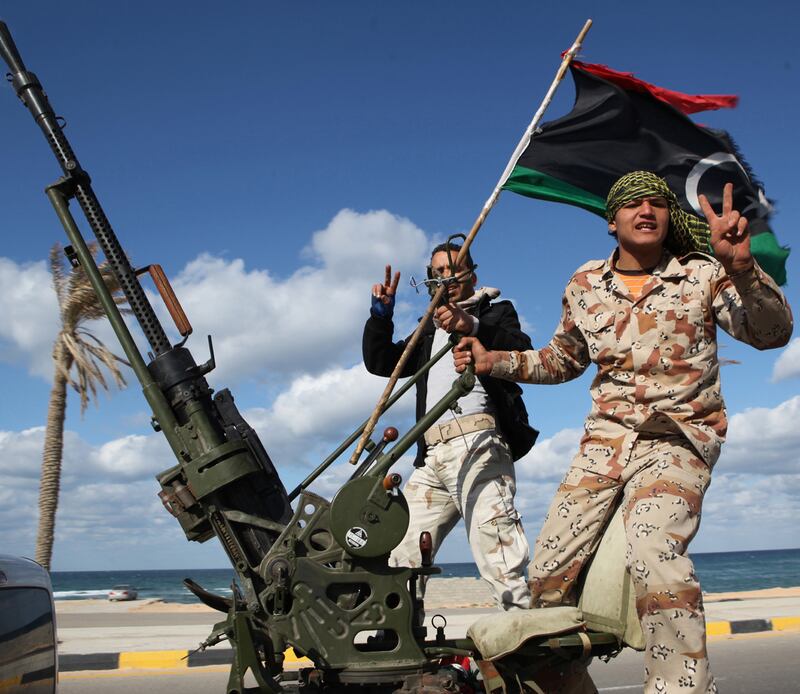
Many residents, fed up with petty crime, firefights and the growing threat of carjacking, have welcomed the move, which seems to have been forced on the government due to the slow process of establishing a stable police force and army since the overthrow of Colonel Muammar Gaddafi.
Yet some Libyans question the rough and arbitrary methods employed by the thuwars (warriors) in the militias and warn they have an extreme political agenda.
Since the consulate attack that led to the death of U.S. ambassador Christopher Stevens, Ansar al-Sharia has kept a low profile but recently—and noticeably at celebrations to mark the second anniversary of the revolution earlier this month—the militia was back manning checkpoints and guarding hospitals and other public buildings. Government payments to Ansar al-Sharia militiamen also have been resumed and are made through other Benghazi brigades, including the 17th of February brigade, according to sources in the General National Congress, Libya’s new Parliament.
The sources say the chief of the defense staff, Yousef Mangoush, has been diverting operational funds from the fledgling armed forces to the militia. They worry the move is “playing with fire.”
After the attack on the U.S. consulate in Benghazi, Libyan leaders promised to quickly to disband militias. Some estimates say there are 200,000 thuwars nationwide. But with violence escalating in the country’s major cities, Prime Minister Ali Zeidan has a potential crisis on his hands. His advisers believe that crime is a major factor in the souring of the public mood toward the government, and Zeidan has identified the breakdown of law and order as one of his administration’s key challenges.
“We’ve no choice but to use the militias,” said an adviser to Zeidan. “Security has deteriorated and we have to find ways to establish law and order.”
In Tripoli, carjacking is rife and kidnappings are on the rise. In the past few days alone, the chairman of a major manufacturer and the deputy head of the fire service were snatched. Ashour Shuwail, the interior minister, said that the murder rate has increased by 500 percent since 2010. Prosecutors said they are examining over 100 cases of petty criminals invading houses and evicting their owners.
Much of the crime is being blamed on drugs. “Drug trafficking is becoming one of our most serious problems,” says Abd Al-Wahhab Muhammad Qaid, chairman of Libya’s Parliament’s security committee. “You must understand that it is going to take us time to build up state institutions.”
The Nawasi brigade was involved in nightly firefights last week with drug gangs in Tripoli’s Ben Ashour district. Nawasi militiamen have also cracked down on clandestine parties and recently detained a dozen gay men for several days, roughing them up and threatening to execute them.
Nawasi militiamen were involved in the illegal demolition of an historic Sufi mosque in central Tripoli last summer—a destruction that was denounced by Libyan leaders, who said they had been powerless to stop it. “I challenged one of the militiamen as the mosque was being bulldozed,” said Naziha Arebi, a film-maker. “He told me as a woman that I should lower my gaze when talking with a man.”
Away from Tripoli, militias remain powerful, semi-autonomous forces, ready to shrug off central authority. The commanders of the militia in Zintan, a town 85 miles southwest of Tripoli, have refused to hand over Saif al-Islam, Gaddafi’s son. They say that any future trial of Saif must be in Zintan rather than Tripoli.
Militias in the eastern city of Benghazi are also too powerful for the government to be able to confront. The investigation into the assault on the U.S. consulate has made little progress in the face of the recalcitrance of the Ansar al-Sharia commanders.
Since the attack by radical Islamists on the consulate, the city has grown ever more lawless. Police stations have been sacked, the public prosecutor’s office has been bombed three times and a rash of mysterious assassinations, mainly of security personnel, has spread panic. No one claims responsibility and the assassins are never caught.
Outlying districts of Tripoli have seen firefights between rival militias. For several nights recently, two of the smaller militias have been clashing over territory in the Janzour district, near a major United Nations compound.
Militiamen say ordinary Libyans should stop complaining about them. “We are the ones who made this revolution happen,” said Alajami Ali Al-Ateri, a Zintan militia commander. “When there’s a problem they turn to us.”