Democratic Senate hopeful Abdul El-Sayed has gotten into a fiery clash live on air.
The Michigan congressional candidate appeared on Fox News’ The Story with Martha MacCallum on Monday, where they duked it out over terrorism and the war in Iran.
She challenged him over whether or not his comments in the past had suggested that the victims of terror were actually at fault.
El-Sayed’s campaign says it has deleted his posts about 9/11 and terrorism from before July 2023 “to prevent any old posts from being taken out of context.”

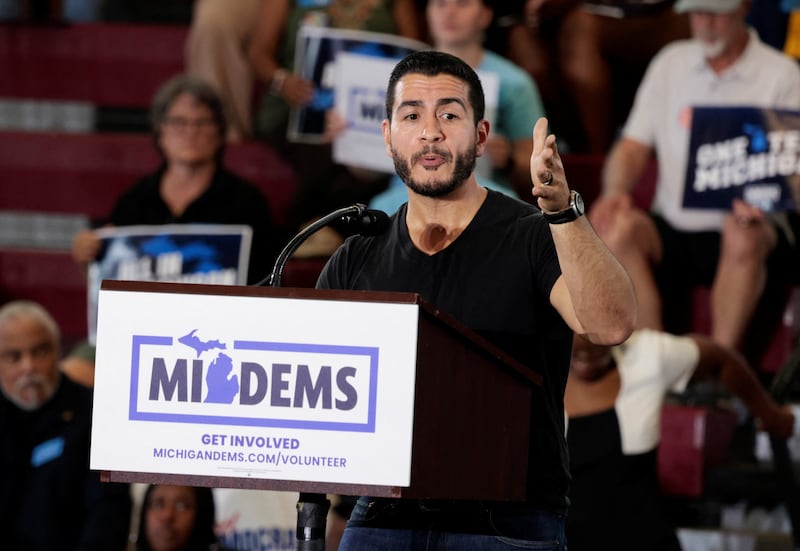
He moved to make it clear to MacCallum that those attacked in acts of terrorism were never to blame.
“The victim is never at fault, and terrorism is wrong no matter who perpetrates the terrorism, who it is perpetrated against. Terrorism is wrong, and we need to root it out,” he said.
He then said the question the U.S. needs to ask itself when conducting foreign policy is whether that action will make the world a safer place or not.
“War is a system of violence. When you think about a war we shouldn’t be fighting, like the war in Iran right now. Why are we fighting this war? To what end? Who benefits from it?”
MacCallum pushed back.
“Probably because Iran created a huge threat to the neighborhood and killed thousands of American citizens,” she replied.
“But the threat had been contained. The big threat. The nuclear threat,” he said.
“I don’t know about that. They had been breaking the JCPOA by many estimations,” MacCallum said, referencing the Obama-era Iran nuclear deal, formally known as the Joint Comprehensive Plan of Action.
He said Obama had ensured an agreement was in place, one that Trump later torched.
“Ask yourself, does more war make us safer?” he asked again, and as MacCallum tried to cut him off, he said, “I haven’t finished my point, I just want to finish what I was saying.”
“We’re in a situation where we could have chosen peace, and instead we chose war, and now you’ve got a situation at the Strait of Hormuz where we can’t move oil and gas—”
“I gotta jump in there, that’s not true,” MacCallum said, successfully cutting in. “The Wall Street Journal put out a piece the other day that said we’re almost to a level of getting oil out of the strait and the region”
He then asked why gas prices are so high, to which MacCallum relied on President Donald Trump’s long-used line that prices were about to come down.
“That’s not what Michiganders are experiencing at the pump,” El-Sayed replied.
“I just want to say: there was no war. And then there was a war. And more war has made us less safe. It has increased our prices. It has made it so that we don’t know where the prices are going to go tomorrow.
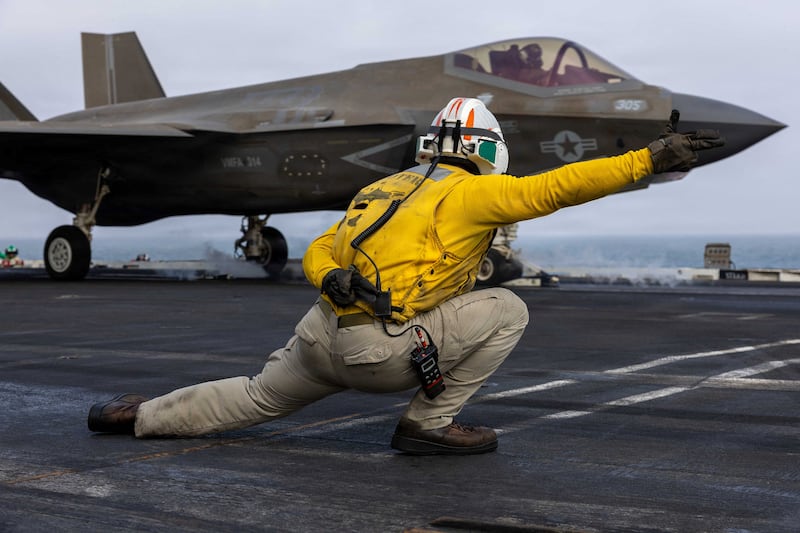
“And I just want to say that the average Michigander is looking at this... It’s not just gas prices. It’s also grocery prices. It’s also the 18 service members who lost their lives. It’s also the fact that you have service members who got deployed and were stuck out at sea without the resources or rations that they needed.”
El-Sayed then grilled MacCallum over whether she was a “fan” of the war, which is now in its eighth month. MacCallum bristled at the question.
“I’m interviewing you. I’m not saying I’m a fan of the war, I’m saying there’s an argument to be made that it will make the United States safer,” she said.
“My question is, does more war make more or less threats?” he hit back. When that question was ducked, he hit out, saying, “Can you answer my question? I just want to understand. Has it made us safer?”