Aging Cuban Exiles And Their Lawmakers Bypassed by White House
News of an opening with Havana has enraged the old guard of Miami that has longed to see the Castro family brought down. But the younger generation is ready for change.
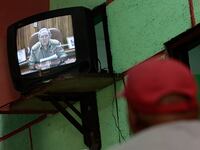
Enrique de la Osa/Reuters
Get the Beast Digest newsletter delivered straight to your inbox
By clicking “SIGN UP” you agree to our Terms of Use and Privacy Policy.
MIAMI — Cuban-American leaders and lawmakers were blindsided by the possible end of the half-century old U.S. embargo towards Cuba, leaving congressional aides scrambling and anti-Castro activists fuming.
It was clear the secret negotiations over 18 months between senior officials from both governments had left out Cuban-American lawmakers. The Obama administration feared the old guard politicians would scuttle talks if they got so much as a whiff of the backchannel communications.
Once the news was out, reactions came swiftly. Cuban-American lawmakers on both sides of the aisle praised the return of Alan Gross, but they were quick to condemn the Obama administration’s courting of the Cuban government.
“Trading Mr. Gross for three convicted criminals sets an extremely dangerous precedent,” said New Jersey Democratic Senator Bob Menendez, chairman of the Senate Committee on Foreign Relations. “It invites dictatorial and rogue regimes to use Americans serving overseas as bargaining chips.”
“Let’s be clear, this was not a humanitarian act by the Castro regime.”
Republican Congressman Mario Diaz-Balart of Miami said the opening of relations and further weakening of sanctions “attempt to legitimize and provide currency to our hemisphere’s worst human rights abuser.” Fellow Republican Congresswoman Ileana Ros-Lehtinen, Chairman of the Middle East and North Africa Subcommittee, also of Miami, called the move “a slap in the face and a threat to national security.”
Within minutes of Obama’s historic address, a few dozen Cuban-Americans flooded Versailles Café on Calle Ocho, an iconic place de resistance for anti-Castro protesters. But those few protestors were an indicator of how much has changed since the Cuban Revolution of 1959. In earlier years, anti-Castro activists would have mobbed Miami’s streets.
Some of these exiles fled Cuba in the early months following the Revolution in 1959, and the overwhelming majority once belonged to Cuba’s middle and upper classes. They were forced to leave their homes, businesses and families behind, and old grudges against the Castro regime run deep.
But the old anti-Castro crowd is fading and today, a majority of Cuban-Americans favors reestablishing relations with the communist country. On social media, Cuban-Americans all over the U.S. tweeted and uploaded Facebook statuses applauding Obama’s announcement.
A Florida International University poll in June showed a large majority—68 percent—of Cuban-Americans in Miami would favor ending the embargo.
Many advocates of reestablishing relations with the island, located 90 miles off Florida’s coast, says lawmakers’ reactions shows their growing disconnect with younger Cuban Americans and recent arrivals.
“This opens a new bridge for Cuban-Americans that bypasses their direct representatives in Congress,” says Arturo Lopez-Levy, adjunct faculty at the NYU School of Professional Studies Center for Global Affairs and visiting lecturer at Mills College in Oakland California.
The pathway to normalizing relations with Cuba also comes as a blow to Cuban-American Senators who led a successful effort to pass a bill that would levy sanctions against the Venezuelan government, a strong ally of Havana. These same lawmakers accuse the Cuban government of sharing repressive tactics with Venezuela, especially in light of protests that broke out in Caracas in February.
“I think it’s ironic that a week after we imposed sanctions on human rights violators in Venezuela we are lifting sanctions on a government that has taught the Venezuelans how to commit these human rights violations,” said Florida Republican Senator Marco Rubio.
Ricardo Herrero, Executive Director of #CubaNow, an organization that promotes dialogue between the two countries, said Obama’s announcement sent a strong message to congressional leaders who have not been speaking for the larger Cuban-American community for some time.
“They have been speaking for narrow and entrenched interests here in Miami that have not represented the Cuban-American community for some time now. It’s a time that they represent the rest of us.”
See more of our coverage in your search results.

Got a tip? Send it to The Daily Beast here.
Unlock a year of full access to The Daily Beast for $35.
Monthly
$1
First month then $5.99/month
Annual
$35
First year then $59.99/year
Premium
$79
First year then $119.99/year
*Substack access provided by the next business day, using your subscription email. Choosing the Premium plan constitutes your permission to share your subscription email with Substack and your agreement to Substack’s Privacy Policy.
Looks like you already have a subscription!
- Account (completed)
- Payment (completed)
- Confirmation (completed)
You're all set!
Thanks for subscribing.
- 1Account
- 2Payment
- 3Confirmation
Sign in or create an account
Register below to read this article for free or subscribe
to unlock unlimited access to The Daily Beast.
Monthly
$1
First month then $5.99/month
Annual
$35
First year then $59.99/year
Premium
$79
First year then $119.99/year
*Substack access provided by the next business day, using your subscription email. Choosing the Premium plan constitutes your permission to share your subscription email with Substack and your agreement to Substack’s Privacy Policy.
Already have an account? Sign In
Looks like you already have a subscription!
- Account (completed)
- Payment (completed)
- Confirmation (completed)
You're all set!
Thanks for subscribing.
- 1Account
- 2Payment
- 3Confirmation