Amateur Archeologist Unearths Priceless 2,000-Year-Old Haul
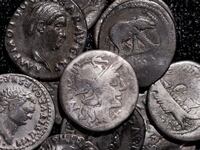
The 934 silver Roman coins amount to roughly six years of a soldier’s savings.
picture alliance/dpa/picture alliance via Getty I
An amateur archeologist has discovered Germany’s largest-ever hoard of ancient Roman silver coins. Oliver Reidl was searching a field in Wesseling, western Germany, with a metal detector when he realized something was buried beneath him. Researchers later recovered 934 silver denarii dating to the reign of Emperor Hadrian, nearly 2,000 years ago, between 39 B.C. and A.D. 459. They believe the coins, weighing around 6.8 pounds in total, were likely deliberately hidden during the second century A.D. “Of course, we can only speculate about the motives, but it’s very likely that someone wanted to keep this money safe,” Erich Classen, state archeologist and director of the office, told the Associated Press. “After all, banks didn’t exist back then.” Now displayed at the LVR-LandesMuseum in Bonn, the treasure has left archaeologists wondering who buried it — and why. One theory points to a Roman soldier. Legionaries earned about 300 denarii a year, with roughly half going on food and equipment. Researchers estimate the hoard represented around six years of savings.
Register below to read this article for free or subscribe
to unlock unlimited access to The Daily Beast.
Monthly
$1
First month then $5.99/month
Annual
$35
First year then $59.99/year
Premium
$79
First year then $119.99/year
*Substack access provided by the next business day, using your subscription email. Choosing the Premium plan constitutes your permission to share your subscription email with Substack and your agreement to Substack’s Privacy Policy.
Already have an account? Sign In
Looks like you already have a subscription!
- Account (completed)
- Payment (completed)
- Confirmation (completed)
You're all set!
Thanks for subscribing.
- 1Account
- 2Payment
- 3Confirmation