Boston Marathon Bombing Called ‘a Madrid-Style Event’
An ex-FBI counterterrorism investigator tells Lloyd Grove how the Boston blasts resemble the 2004 attacks.
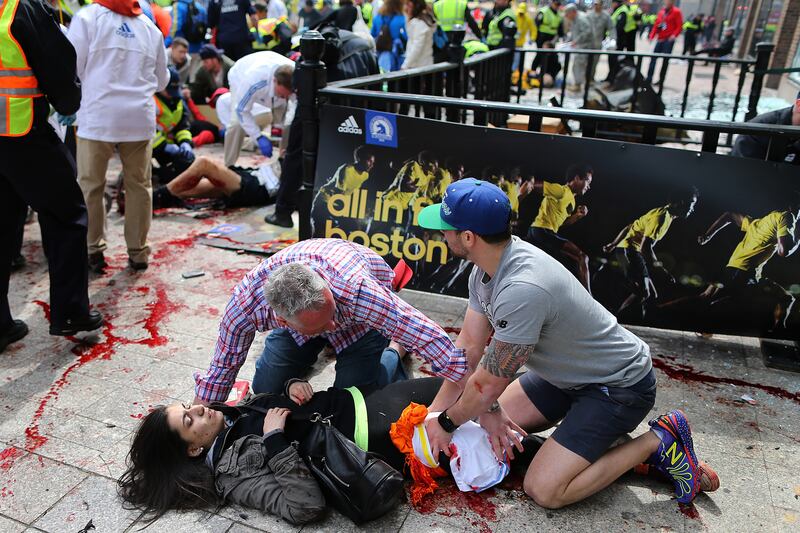
John Tlumacki/The Boston Globe,via Getty
Get the Beast Digest newsletter delivered straight to your inbox
By clicking “SIGN UP” you agree to our Terms of Use and Privacy Policy.
Watching the images of Monday’s Boston Marathon bombing on CNN International and the BBC, former FBI counterterrorism investigator Mark Rossini thought he noticed a disquieting connection.
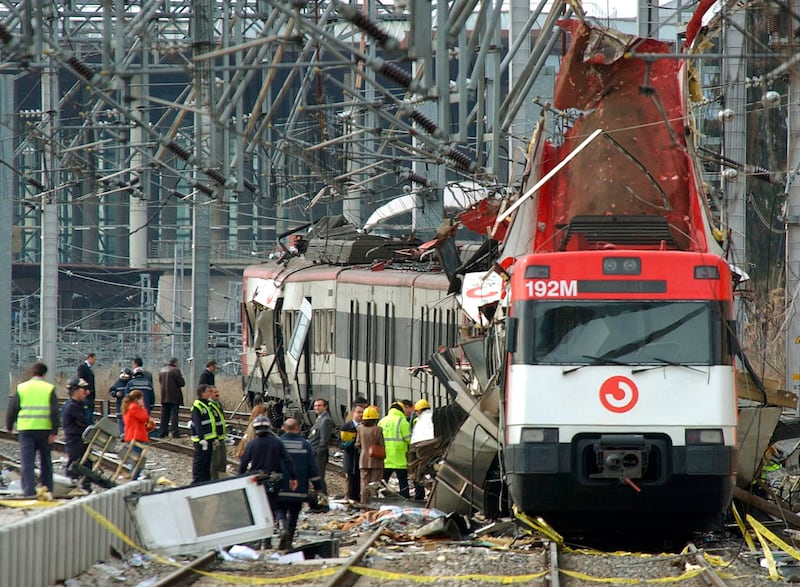
“This has the hallmarks of a Madrid-style event in many respects,” Rossini told The Daily Beast from Paris, where he was visiting on business for his private security consulting firm. “We don’t know who the bombers are, but I assume it was more than one. It’s just my gut that there might have been two people involved. And allegedly, a third device has been found.”
The Madrid commuter train bombings, a coordinated attack using multiple explosive devices that killed 191 people and wounded 1,800 on March 11, 2004, were attributed to an al Qaeda-inspired terrorist cell. Rossini at one point had been the FBI’s liaison to the Spanish police. And as one of the FBI’s team leaders on the scene in Nairobi, Kenya, investigating the 1998 al Qaeda bombing of the U.S. Embassy there, Rossini brings special insight to the Boston attack. He was also the FBI’s representative at “Alec Station,” the CIA’s out-of-the-way, tiny operation to track a little-known Saudi fanatic named Osama bin Laden years before 9/11.
“I’m not sure if it’s domestic, or if there was shrapnel or ball bearings in the bombs,” Rossini said, “but when I saw a still photo of the explosion, there was what looked like a fireball from an accelerant like a propane tank or gasoline”—yet another similarity to the carnage in Spain. “Of course, a pipe bomb could have that effect as well,” he added.
Rossini speculated that the Boston explosives were not planted long in advance of the marathon but probably carried into the finish-line area as the race was getting under way, inside harmless-looking backpacks. He said a bomber, masquerading as a supporter bringing food or water to a friend or loved one in the race, could easily have fooled bystanders or law enforcement officers.
The timing of the bombing is also telling, Rossini said. The devices were detonated during a period of maximum traffic at the finish line and calculated to inflict maximum injury and mayhem.
“My best guess is that finding the backpacks is going to be the best way to catch them,” Rossini said, adding that he has great confidence in the Boston Police Department and especially the FBI’s special agent in charge, Richard DesLauriers, a lawyer by training who runs the bureau’s Boston office. Rossini added that the FBI and the police were undoubtedly performing a meticulous screening of security camera footage from Copley Square and beyond in an effort to identify suspects in the crowd. “God willing, they have the kind of ring of cameras in Boston that New York has.”
Rossini continued: “Right now what the CIA is doing, along with the NSA [National Security Agency], is scrubbing any and all communications from cellphone tower traffic and text messages that were leading up to the bombing one or two hours before and also afterward. The CIA and NSA are also monitoring international traffic to see if anybody is talking about it. And at the counterterrorism center they’re burning the midnight oil, going through the database, tracking search terms, longitude and latitude points, scrubbing everything they have. They are also monitoring a multitude of people that have FISA warrants on them”—a reference to the Foreign Intelligence Surveillance Act that gives a secret court the power to activate secret warrants.
Also unknown, at this point, is how the bombs were detonated—by timers possibly or even by cell phones, another important clue about the identity of the perpetrators.
Rossini, however, cautioned against jumping to conclusions that the Boston bombing was the result of Middle East-inspired terrorism. “It could be a white supremacist group. We just don’t know.”
The “sickening” reality, Rossini said, is that such incidents as Monday’s bombing are ultimately not preventable. “I doesn’t matter how many drones we send, how many people we kill, how many terrorists we neutralize, how many people we put in Guantánamo,” he said. “They can strike with relative ease. What makes terrorism so scary is that action is always quicker than reaction.”
See more of our coverage in your search results.

Got a tip? Send it to The Daily Beast here.
Unlock a year of full access to The Daily Beast for $35.
Monthly
$1
First month then $5.99/month
Annual
$35
First year then $59.99/year
Premium
$79
First year then $119.99/year
*Substack access provided by the next business day, using your subscription email. Choosing the Premium plan constitutes your permission to share your subscription email with Substack and your agreement to Substack’s Privacy Policy.
Looks like you already have a subscription!
- Account (completed)
- Payment (completed)
- Confirmation (completed)
You're all set!
Thanks for subscribing.
- 1Account
- 2Payment
- 3Confirmation
Sign in or create an account
Register below to read this article for free or subscribe
to unlock unlimited access to The Daily Beast.
Monthly
$1
First month then $5.99/month
Annual
$35
First year then $59.99/year
Premium
$79
First year then $119.99/year
*Substack access provided by the next business day, using your subscription email. Choosing the Premium plan constitutes your permission to share your subscription email with Substack and your agreement to Substack’s Privacy Policy.
Already have an account? Sign In
Looks like you already have a subscription!
- Account (completed)
- Payment (completed)
- Confirmation (completed)
You're all set!
Thanks for subscribing.
- 1Account
- 2Payment
- 3Confirmation