China: Tensions Rise Over Islands as Rumors Swirl About Xi
Damian Dovarganes / AP Photo
Get the Beast Digest newsletter delivered straight to your inbox
By clicking “SIGN UP” you agree to our Terms of Use and Privacy Policy.
On the cusp of a major leadership transition, and with rumors swirling about why its heir apparent is incommunicado, China is once again embroiled in a simmering territorial dispute with Japan over a string of uninhabited islands in the East China Sea.
The tension reignited this week when the Japanese government decided to purchase three of five islands—known as the Senkakus in Japanese or the Diaoyu in Chinese—from a Japanese family that claims to own them for more than $26 million.
The move saw a swift backlash online in China, where for weeks anti-Japanese sentiment has mounted over the islands. In late August Chinese youth ripped the Japanese flag off the Japanese ambassador’s car, and protesters marched in the southwestern city of Chengdu, some waving a banner that read “Kill all Japanese.”
On Sunday at a gathering of the Asia-Pacific Economic Cooperation forum in Vladivostok, Russia, Chinese President Hu Jintao warned Tokyo to “not make the wrong decision,” and on Monday Premier Wen Jiabao said China “will absolutely make no concession on issues concerning its sovereignty and territorial integrity.”
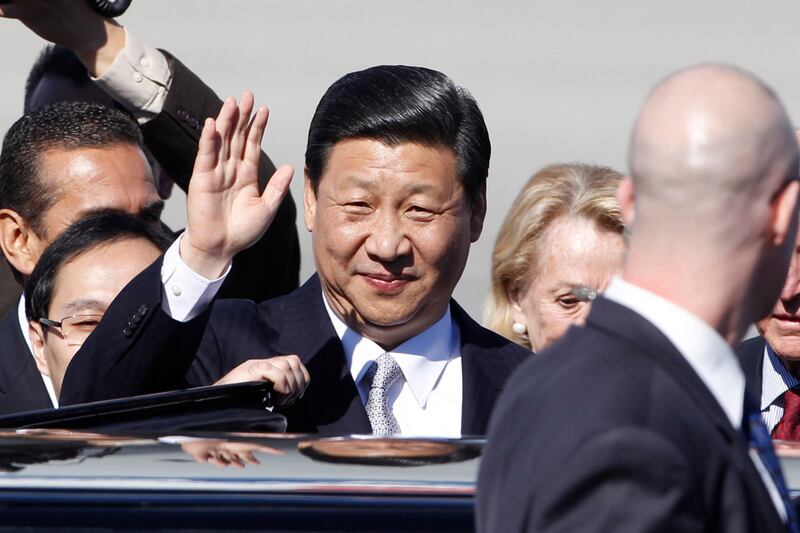
In stark contrast, Vice President Xi Jinping, who is set to take over for President Hu this fall, remained conspicuously absent from public life; he hasn’t appeared openly, even in photographs, since giving a speech at the Central Party School in Beijing on Sept. 1.
There is no solid evidence to contradict the Foreign Ministry’s explanation that Xi simply suffered a back injury. But the intensifying Sino-Japanese frictions—including China sending two patrol vessels toward the Diaoyu islets on Tuesday—underscore the delicacy of Xi’s imminent succession. Angry citizens who perceive the regime as weak in the face of international aggression are a nightmare for Beijing. They’re especially nerve-racking for a neophyte leader trying to consolidate his authority.
Nobody knows that better than President Hu. In May 1999, a year after being tapped as vice president, then–heir apparent Hu found himself being trotted out on national television as the voice of the government, tasked with calming hotheaded Chinese outraged by the NATO bombing of the Chinese Embassy in Belgrade. Three Chinese citizens died in the bombing. U.S. President Bill Clinton apologized and called the attack an accident. But before their anger cooled, Chinese protesters attacked American diplomatic facilities in five Chinese cities, set fire to the U.S. Consulate in Chengdu, and trapped the American ambassador inside his besieged embassy.
Today’s level of Chinese anger over the disputed islands is nowhere near that. But friction comes at a bad time, not only because of the upcoming 18th Communist Party Congress, but also because of the recent spate of political scandals involving prominent government officials such as Bo Xilai.
For China’s ruling Communist Party, succession has always been tricky business—and if heir apparent Xi remains absent much longer, it could complicate his political ascendance. Since 1949 the only top-level transition that took place smoothly, and according to script, was when current leader Hu took over several key posts from his predecessor, Jiang Zemin, between 2002 and 2004.
Like Jiang before him, Hu must pass on three key titles to Xi before the succession is complete. They represent the top posts in the Communist Party (general secretary), of the state (president), and of the party's military decision-making body (director of the Central Military Commission). The party position is usually transferred first, as is expected to happen at the congress, which normally takes place between September and November. Then the presidency is handed over during a parliamentary session the following March.
The military job is usually the last to be relinquished. By many accounts, Hu has not decided whether to vacate the post during this fall’s party congress or to hold on to it—and thereby retain more influence—for another two years.
“For questions about Xi's health to arise now, when some details of the succession remain in flux, might affect factors such as timing even if Xi takes over as party head and president,” said a political analyst in Beijing who requested anonymity because of the sensitivity of the topic.
If Xi doesn’t reemerge soon in reasonable health, what may have begun as a transient physical weakness could soon make him politically vulnerable.
See more of our coverage in your search results.

Got a tip? Send it to The Daily Beast here.
Unlock a year of full access to The Daily Beast for $35.
Monthly
$1
First month then $5.99/month
Annual
$35
First year then $59.99/year
Premium
$79
First year then $119.99/year
*Substack access provided by the next business day, using your subscription email. Choosing the Premium plan constitutes your permission to share your subscription email with Substack and your agreement to Substack’s Privacy Policy.
Looks like you already have a subscription!
- Account (completed)
- Payment (completed)
- Confirmation (completed)
You're all set!
Thanks for subscribing.
- 1Account
- 2Payment
- 3Confirmation
Sign in or create an account
Register below to read this article for free or subscribe
to unlock unlimited access to The Daily Beast.
Monthly
$1
First month then $5.99/month
Annual
$35
First year then $59.99/year
Premium
$79
First year then $119.99/year
*Substack access provided by the next business day, using your subscription email. Choosing the Premium plan constitutes your permission to share your subscription email with Substack and your agreement to Substack’s Privacy Policy.
Already have an account? Sign In
Looks like you already have a subscription!
- Account (completed)
- Payment (completed)
- Confirmation (completed)
You're all set!
Thanks for subscribing.
- 1Account
- 2Payment
- 3Confirmation