How Trump Learned to Lie and Twist Truth: Author
The 79-year-old president, who trades in sensationalism and half-truths, is a product of 1980s tabloid culture, author Jonathan Mahler argues.

Donald Trump’s playbook—outrage, mythmaking, and relentless self-promotion—wasn’t born in the White House or on The Apprentice. It was forged in the tabloid wars of 1980s New York, author Jonathan Mahler argues.
The 79-year-old president is “the personification of 1980s excess”, an era during which the young developer first learned to dominate the public stage, Mahler explained on Tuesday’s episode of The Daily Beast Podcast.
“What Trump does so well as a politician is build a story line,” the longtime New York Times Magazine writer said.
He argued that, contrary to the conventional belief that Trump’s rise as a master of publicity began with the reality TV show The Apprentice in 2004, the president is really a product of New York’s frenetic tabloid culture in the 1980s, when the media ecosystem wasn’t fragmented by social media and a few tabloids set the city abuzz.
“That is where Donald Trump learned to capture and hold the public attention,” Mahler said. “That is where he learned that publicity was power, that by capturing the public’s attention he could wield power.”
Get the best of The Beast delivered right to your inbox
By clicking “SUBSCRIBE” you agree to our Terms of Use and Privacy Policy.
As a “new class of celebrities” of rich bankers and real estate developers like himself emerged in New York, Trump took full advantage of “working sources” and “calling in stories constantly, anonymously” to Page Six, Mahler said.
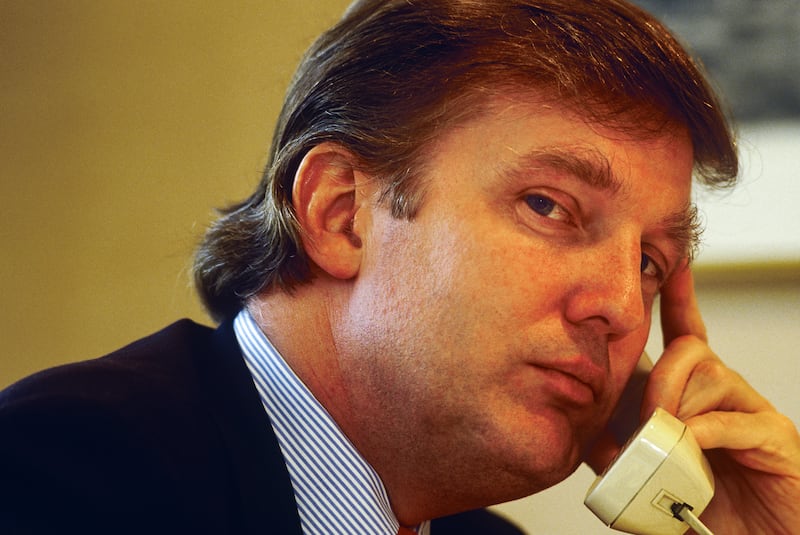
In the 1980s, Donald Trump recognized that he could “use the tabloids to kind of elevate himself and to demonize his enemies,” Jonathan Mahler said. Trump invented the fictitious spokesperson “John Barron” and used the pseudonym to plant stories and take calls.
Joe McNally/Getty Images
Trump, Mahler explained, recognized that he could “use the tabloids to elevate himself and to demonize his enemies,” inventing the fictitious spokesperson “John Barron” and using the pseudonym to give the press stories and take calls.
And while whether he’s mastered the art of the deal is up for debate, Trump had the art of publicity stunts down cold.
In one memorable instance, the 39-year-old developer publicly pressured then-New York City Mayor Ed Koch, with the help of tabloids, into handing the struggling Wollman Rink renovation in Central Park over to him in 1986. The stunt followed his feud with Koch over a denied tax break for Trump Tower.
Rather than a political maneuver, Trump saw his ploy as a “power grab,” Mahler argued.
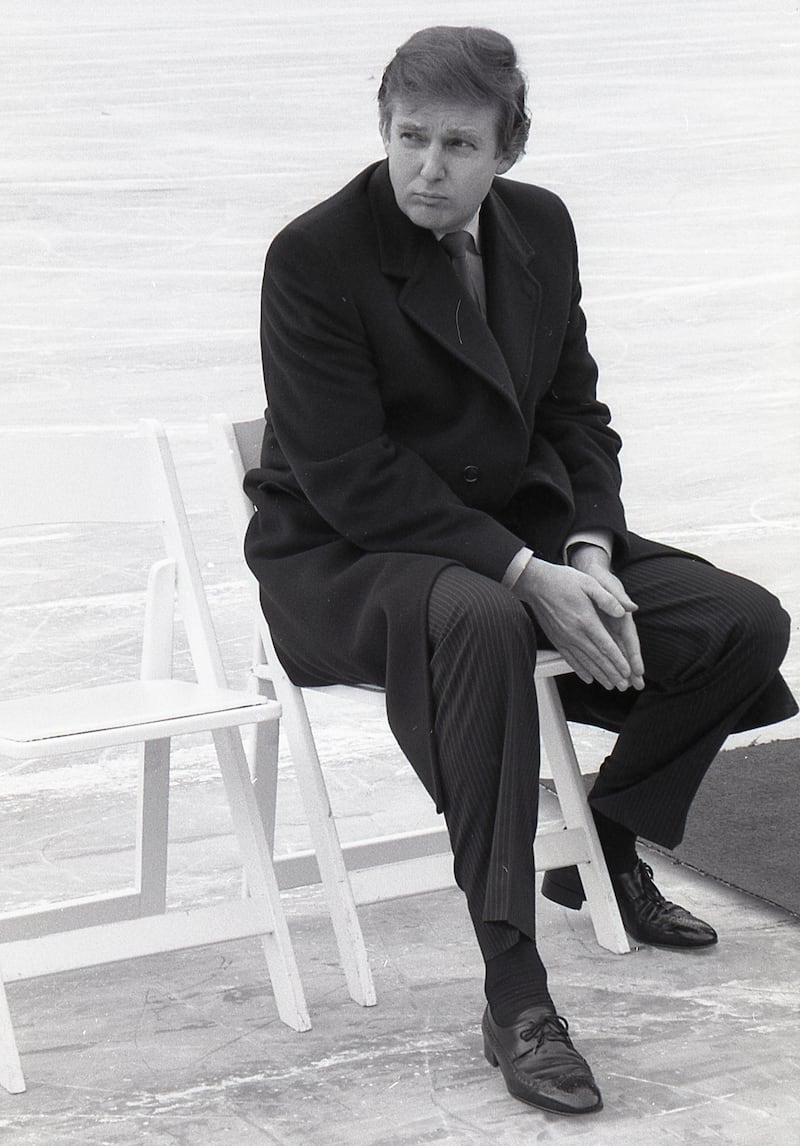
Donald Trump attends the opening of the restored Wollman Rink in Central park in November 1987.
Rita Barros/Getty Images
“It was a way to use power,” he told host Joanna Coles. ”And now we see him do it. I mean, that’s basically how his presidency operates.”
The president was accused this month of launching a blatant power grab by taking control of the Washington, D.C., police force and deploying the National Guard in the name of a crime crackdown, even though violent crime in the city hit a 30-year low last year.
Critics have argued the move is more performance than policy, designed to make the president appear powerful alongside armed soldiers.

Amid his D.C. crime crackdown, Trump announced Thursday that he'd go out on patrol with law enforcement, although he ended up bringing pizza and hamburgers for them before returning to the White House.
Anna Moneymaker/Getty Images
Trump first tested political waters in 1988, when he teased that he might run for president—although it’s widely believed to have been a publicity stunt to promote his book, The Art of the Deal.
Still, the book’s success “took Trump national and cemented the mythology around him in the kind of public consciousness,” Mahler said.

Mahler said Trump’s first foray into culture wars came in 1989, when he took out full-page ads in several prominent papers calling for the execution of the Central Park Five—a group of teenagers who were wrongly accused of raping and beating a jogger in Central Park, a crime they were eventually exonerated for.
During those formative years, Trump realized that he could “plant a seed” for a story and “run out the string literally for months on end,” said Mahler, whose book The Gods of New York: The Tumultuous Eighties, from Donald Trump to the Tompkins Square Riots was published earlier this month.
The Daily Beast has reached out to the White House for comment.

New episodes of The Daily Beast Podcast are released every Tuesday, Thursday and Sunday. Follow our new feed on your favorite podcast platform at beast.pub/dailybeastpod and subscribe on YouTube to watch full episodes.
See more of our coverage in your search results.


Got a tip? Send it to The Daily Beast here.
Register below to read this article for free or subscribe
to unlock unlimited access to The Daily Beast.
Monthly
$1
First month then $5.99/month
Annual
$35
First year then $59.99/year
Premium
$79
First year then $119.99/year
*Substack access provided by the next business day, using your subscription email. Choosing the Premium plan constitutes your permission to share your subscription email with Substack and your agreement to Substack’s Privacy Policy.
Already have an account? Sign In
Looks like you already have a subscription!
You're all set!
Thanks for subscribing.
Sign in or create an account
Login dialog
Loading comments…