I Made One Change to My Routine and It Wrecked My Skin
A rare skin reaction led to excruciating pain.

The Daily Beast/Julie Ramsey
A 48-year-old woman is opening up about the rare dermatological reaction she has battled for months.
Julie Ramsey, a content creator in Scotland, had been using steroid creams for eczema—a common, noncontagious skin disease that causes itching, redness, and flaky skin—since she was a baby.
After watching a YouTube video about the potential risks of steroid creams, however, she abruptly quit using the medication—a move that triggered an intense reaction she never anticipated.
“My whole body was just burning, like peeling off and oozing off and weeping and bleeding, and it was itchy,” Ramsey told The Looker.
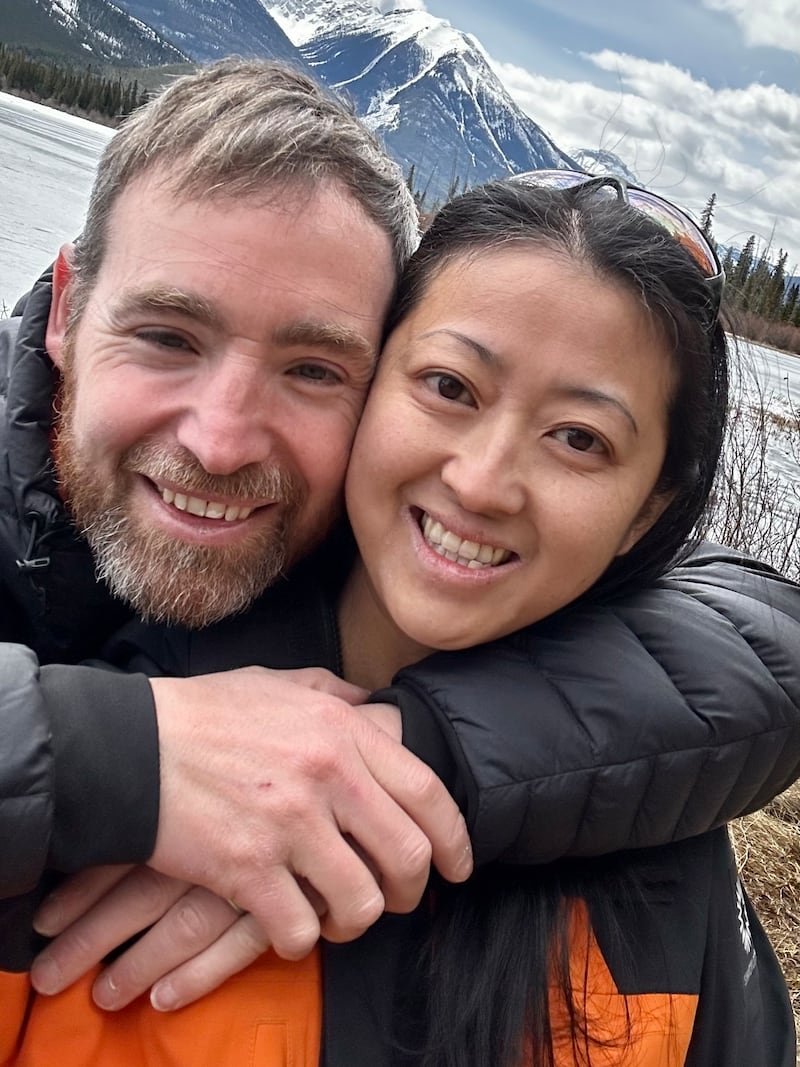
Julie Ramsey, pictured with her husband Chris, had never experienced such a strong dermatological reaction.
Julie Ramsey
Even in areas where she hadn’t had eczema before, she started experiencing extreme symptoms, which lasted for nine months and transformed her into a “burn victim.”
“It was awful in every manner,” said Ramsey, who holds two world records for her electric-vehicle adventures with her husband Chris.
Sign up to receive news and updates from The Looker
By clicking “Sign Up” you agree to our Terms of Use and Privacy Policy.
Ramsey views her decades-long use of steroid creams as a “vicious cycle”: the formula would temporarily reduce her inflammation, only for her symptoms to return shortly after and necessitate reapplication.
What followed her final decision to quit the topical medication altogether was months of “sheer agony,” she said.
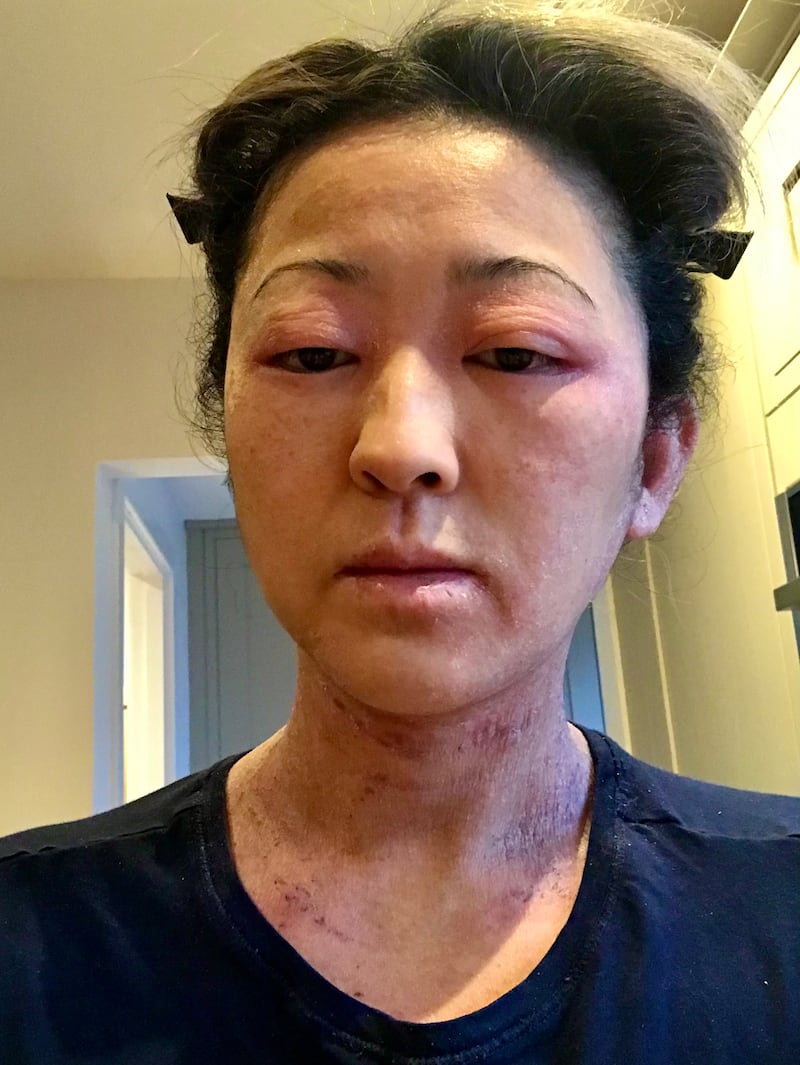
Julie Ramsey, 48, said topical steroid withdrawal, a severe reaction that happens after stopping prolonged use of topical corticosteroids, left her unrecognizable.
Julie Ramsey
Ramsey’s reaction is a skin condition called topical steroid withdrawal. It’s a severe reaction that happens after stopping prolonged use of topical corticosteroids, according to the National Eczema Association.
But research on the condition is limited. It was first documented in the late 1970s and formally designated as a side effect of topical corticosteroids in 2022.
When Ramsey went to her doctor out of fear that her open wounds could give her an infection, she was simply advised to use more steroid creams.
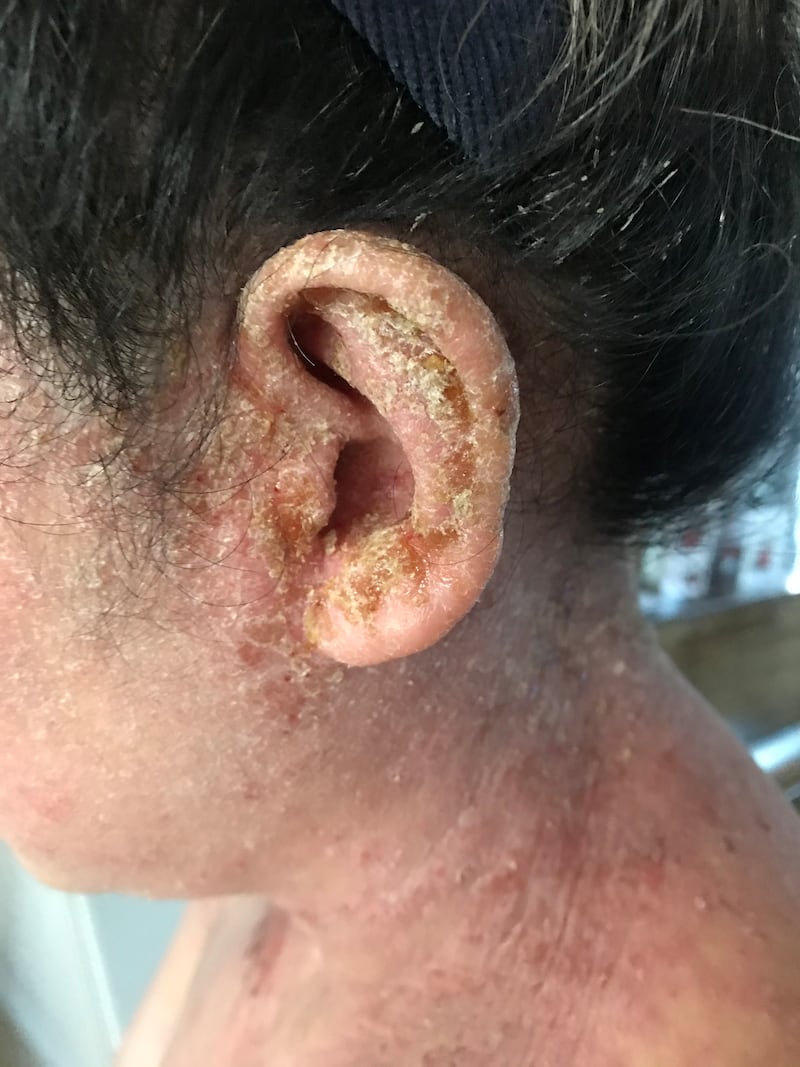
Julie Ramsey experienced intense skin reactions as a result of TSW, even in spots where she'd never had eczema before.
Julie Ramsey
“I ignored her advice. I didn’t take the cream, and it just endured,” she said.
Ramsey’s reaction became so uncomfortable that she couldn’t meet her basic needs; she credits her husband with caring for her during that time.
“When you go through that condition, you really need a good support network,” she recalled.
Dr. Mona Foad, a board-certified dermatologist based in Cincinnati, Ohio, told The Looker that most dermatologists will no longer prescribe class I or II steroids for long-term use.
Class I and II steroids are the strongest prescription skin medications, typically used for extreme cases of eczema and other skin conditions.
Dr. Foad added that social media has helped raise awareness of the condition, but it can also create misconceptions.
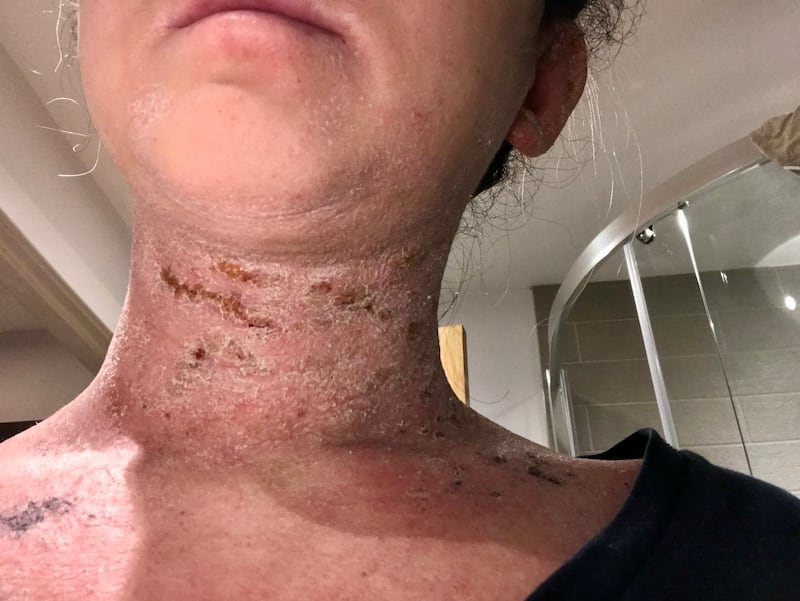
Julie Ramsey's suffered severe itching, swelling, and burning for nine months as a result of Topical Steroid Withdrawal.
Julie Ramsey
The topical steroid withdrawal hashtag has more than 70,000 posts on Instagram, and more than 30,000 on TikTok.
Another TSW sufferer, retired Army nurse Crystal Perez, said in a June 5 Instagram post under the hashtag that she was told her condition was “just eczema.”
“If you have used topical steroids long-term and your skin has worsened, if your flares have grown larger, more frequent, more severe; if you’ve been told to just keep applying steroid creams, please look into TSW,” Perez wrote in the post.
Dr. Foad said she’s concerned that other patients suddenly stop their eczema medication or leave the skin disease untreated out of fear.
“I strongly recommend never stopping a prescription on your own,” Dr. Foad said. “Work with your dermatologist on a gradual taper and a plan to transition to other therapies.”
She also stressed the importance of having a strong support system and access to mental healthcare while going through the recovery process.
“It can be emotionally exhausting,” Dr. Foad said, adding that patients “don’t have to go through this alone.”

Looking back, Ramsey said that she doesn’t regret her experience, and that her skin is better because of her perseverance.
The EV adventurer—whose journey with TSW is further detailed in the book Driven to the Extreme, which she co-wrote with her husband—doesn’t use any skincare products now.
“I just use water to wash my face,” she said. “My skin has learned to just live as it is.”


Register below to read this article for free or subscribe
to unlock unlimited access to The Looker and The Daily Beast.
Monthly
$1
First month then $5.99/month
Annual
$35
First year then $59.99/year
Premium
$79
First year then $119.99/year
*Substack access provided by the next business day, using your subscription email. Choosing the Premium plan constitutes your permission to share your subscription email with Substack and your agreement to Substack’s Privacy Policy.
Already have an account? Sign In
Looks like you already have a subscription!
- Account (completed)
- Payment (completed)
- Confirmation (completed)
You're all set!
Thanks for subscribing.
- 1Account
- 2Payment
- 3Confirmation
Sign in or create an account
Login dialog
Loading comments…