NASA Space Telescope Crashes to Earth After Failed Rescue
NASA’s Swift Observatory spent 22 years studying the universe’s biggest explosions before hurtling back to Earth.
NASA
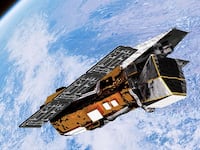
One of NASA’s leading space telescopes crashed down to Earth on Wednesday, less than three months after a last-ditch rescue mission failed. The Swift Observatory reentered Earth’s atmosphere at 7:39 a.m. ET over Indonesia’s North Sumatra region. Intense solar activity over the last few years dragged its orbit down. It is not yet clear how much of the 1.5-ton spacecraft burned up in the atmosphere. NASA said much of it did, though some components were expected to survive. It has not been confirmed whether any debris reached the ground. According to NASA, the odds of the debris harming anyone were about one in 2,100. Private company Katalyst Space had been hired to boost the telescope’s orbit. The company’s robotic craft launched in July but ran into trouble soon after, and it crashed back to Earth in September. Swift’s first launch was on Nov. 20, 2004. It was only supposed to be a two-year study of gamma-ray bursts and exploding stars. But it far exceeded expectations, lasting 11 times longer and capturing more than 2,000 gamma-ray bursts and 1,400 exploding stars. Its ability to swiftly swivel toward cosmic eruptions gave the telescope its iconic name.
Register below to read this article for free or subscribe
to unlock unlimited access to The Daily Beast.
Monthly
$1
First month then $5.99/month
Annual
$35
First year then $59.99/year
Premium
$79
First year then $119.99/year
*Substack access provided by the next business day, using your subscription email. Choosing the Premium plan constitutes your permission to share your subscription email with Substack and your agreement to Substack’s Privacy Policy.
Already have an account? Sign In
Looks like you already have a subscription!
You're all set!
Thanks for subscribing.