Obama's False Ally
Is the president's Afghanistan timetable about victory there in 2011—or here in 2012? M.J. Akbar on Obama's cynical calculation, and his missed chance to get India fighting on his side.

AP Photo
Get the Beast Digest newsletter delivered straight to your inbox
By clicking “SIGN UP” you agree to our Terms of Use and Privacy Policy.
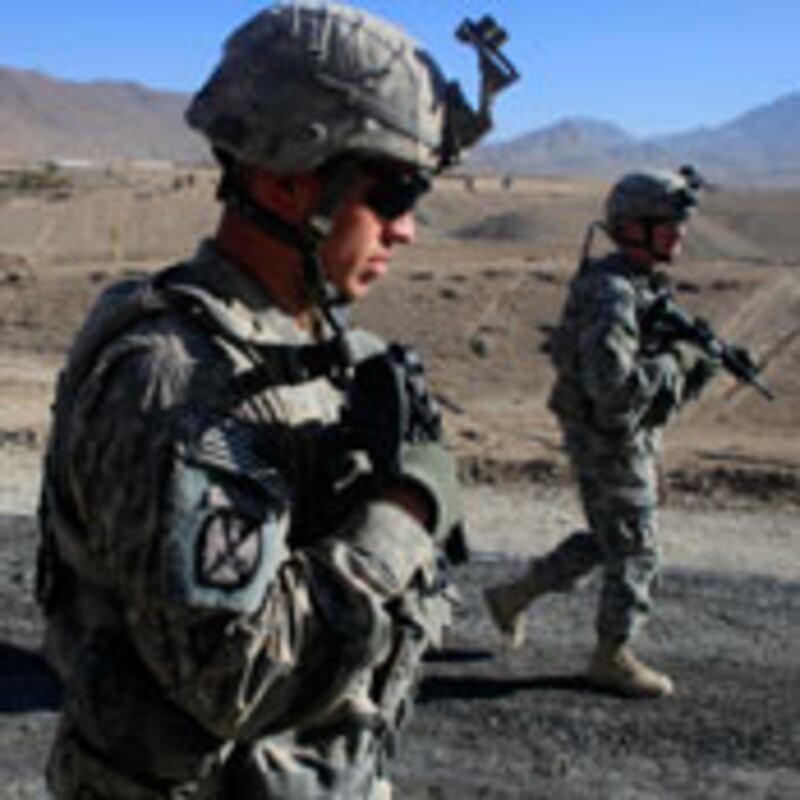
Barack Obama is clearly a postmodernist commander in chief. He announced the date of defeat in the Afghan war on the day he sent more troops in the hope of victory. The day American forces begin to leave Afghanistan in 2011, as promised by President Obama, the Taliban will begin its countdown to Kabul.
It is now clear to the Taliban what has been obvious to many observers. Obama is not interested in an American victory in Afghanistan by 2011. He is interested in an Obama victory in America in 2012. He wants to campaign as the president who brought the boys home without giving the impression that he has been weak in the process. He inherited an Afghan war with some 10,000 American soldiers in combat. That figure has been short-tracked to upward of 100,000, partly because Obama purchased his way into the muscular pro-war segment of the American vote by criticizing Iraq and upgrading Afghanistan into the war of necessity. He is paying his dues to that section of American opinion by fighting a cosmetic war. The Taliban have often said that while NATO has a clock, they have time. In 2011, irrespective of ground conditions, the NATO clock will go into reverse sweep.
Does Obama expect Hamid Karzai to surge toward Kandahar in 2011, wafting on doves of peace?
The enigma of this Afghan war, the fifth against a Western power since 1840, is located exactly where it was in the other four. It lies in the meaning of victory and defeat. For the occupier, victory means subjugation of the ruling authority to its will. For the defenders, it means the departure of foreign troops from Afghan soil. Afghan fighters in the 19th century did not want to shape the way the British Raj should be run, and they resented the idea that they should be told how Afghanistan should be run. In the 20th century, the jihadis did not want to destroy communism in Moscow (that they played a great role in actually doing so is incidental). They simply did not want communist soldiers in Kabul and Kandahar and Mazaar-i-Sharif.
• Ahmed Rashid: What Holbrooke Thinks• William R. Polk: The Militarization of AmericaThe Afghan war of the 21st century could have been, and should have been, different, because a terrorist group with sanctuary from the Taliban provoked America. Eight years later, roles are getting reversed for the Taliban and its allies have, in the Afghan mind, begun to occupy nationalist space. Washington made a basic error at the outset, when it confused al Qaeda with the whole of Afghanistan, gradually shifting the focal point of the war. This was understandable in the heat of 2001, but less so with the passage of time. Privately, former Pakistan President Pervez Musharraf would surely have suggested this, but subtleties were lost on the Bush White House.
Obama may be erring in the other direction. He has announced the three pillars of his Afghan policy: a strategic partnership with Pakistan empowered by finance and weapons; the creation of a “military condition” within 18 months that will enable “transition”; and “a civilian surge that reinforces positive action.” The third is the kind of gobbledygook that bemuses friends and consoles office-bearers of the speechwriters union. Does Obama expect Hamid Karzai to surge toward Kandahar in 2011, wafting on doves of peace?
The biggest problem may lie in the first proposition. Pakistan does not have the good fortune of being 8,000 miles from Afghanistan. Islamabad’s ruling elite, including the armed forces, will display full commitment in the war against al Qaeda, where and when it can be found, and against the Pak Taliban, because both are serious threats to the Pakistan state and system. But it will have unexpressed reservations about America’s war against the Afghan Taliban, since the latter have been and will continue to be Pakistan’s ally in the geopolitics of South Asia. Pakistan’s war within its own country has become, willy nilly, America’s war, but America’s war in Afghanistan has not become Pakistan’s war. Washington, for reasons unknown and incomprehensible, does not get this.
America’s primary partner in the war against the Afghan Taliban should be India, not Pakistan, since both nations have an ideological commitment against the forces of theocracy, as well as a strategic interest in keeping Taliban out of Kabul. Pakistan has no such motivation. The best period in the troubled history of Pak-Afghan relations was when Taliban was in power, since the Taliban looked at foreign policy through the prism of Islamic brotherhood rather than just the compulsions of national interest.
The real war in Afghanistan is between modernity and theocracy, but the wrong side is winning that battle. In the last eight years, for many Afghans, modernity has become synonymous and identified with corruption, cronyism, and non-Pakhtun warlords—the three hallmarks of the Karzai regime—while the Taliban has revived its image as God-fearing, honest, clean, and able to offer stability and security in the villages. It is an American tragedy that while it seeks friends across the world who reflect its own values, the country continues to join those who ruin its reputation.
Indian journalist M.J. Akbar is the editor of Covert, a fortnightly magazine of current affairs, a blogger and the author of many books, most recently Blood Brothers.
See more of our coverage in your search results.

Got a tip? Send it to The Daily Beast here.
Unlock a year of full access to The Daily Beast for $35.
Monthly
$1
First month then $5.99/month
Annual
$35
First year then $59.99/year
Premium
$79
First year then $119.99/year
*Substack access provided by the next business day, using your subscription email. Choosing the Premium plan constitutes your permission to share your subscription email with Substack and your agreement to Substack’s Privacy Policy.
Looks like you already have a subscription!
- Account (completed)
- Payment (completed)
- Confirmation (completed)
You're all set!
Thanks for subscribing.
- 1Account
- 2Payment
- 3Confirmation
Sign in or create an account
Register below to read this article for free or subscribe
to unlock unlimited access to The Daily Beast.
Monthly
$1
First month then $5.99/month
Annual
$35
First year then $59.99/year
Premium
$79
First year then $119.99/year
*Substack access provided by the next business day, using your subscription email. Choosing the Premium plan constitutes your permission to share your subscription email with Substack and your agreement to Substack’s Privacy Policy.
Already have an account? Sign In
Looks like you already have a subscription!
- Account (completed)
- Payment (completed)
- Confirmation (completed)
You're all set!
Thanks for subscribing.
- 1Account
- 2Payment
- 3Confirmation