Hollywood’s Most Humble Star on His Oscar-Worthy Triumph
The legendary actor talks about his phenomenal turn in “The Only Living Pickpocket in New York.”

Gareth Cattermole/Getty Images for IMDb
It’s impossible to find a movie John Turturro’s presence hasn’t improved. Yet over his five-decade career, the 69-year-old actor has only intermittently had the chance to play the lead—and with The Only Living Pickpocket in New York, he seizes that opportunity, delivering an Oscar-worthy performance that stands as one of the finest of his career.
As Harry Lehman, a New Yorker who earns a living with sleight-of-hand ruses to relieve citizens of their valuables, Turturro radiates a melancholic soulfulness that epitomizes Noah Segan’s five-boroughs neo-noir. His touch is light and nimble, but his mood is heavy, and the Do the Right Thing and Barton Fink veteran uses his character’s meticulous composure to manage a world that seems to slip through his fingers.
A relic of a different age who, aside from thieving, cares for his bed-ridden wife, Turturro’s Harry is almost a ghost, although reality comes crashing down upon him when he robs a young crime-empire scion (Will Price) and is forced to embark on a life-or-death quest.

Segan’s sophomore feature (after 2022’s Blood Relatives) pairs its headliner with nothing but great supporting players: Steve Buscemi as Harry’s pawn shop owner pal; Giancarlo Esposito as a friendly detective; and Tatiana Maslany as his estranged daughter.
But it’s Turturro—decked out in a big overcoat, a look of focused intensity and quiet desperation on his face—who transforms the film into a superbly affecting throwback. Whether he’s cutting a rug by himself in his apartment, bickering with a Chinatown underworld boss, or agonizingly reconnecting with the child he abandoned, the actor is simply mesmerizing, and he makes his latest into an undisputed 2026 highlight.
Sign Up for our Unmissable Newsletter
By clicking “SUBSCRIBE” you agree to our Terms of Use and Privacy Policy.
The Only Living Pickpocket in New York continues a Turturro hot streak that also includes his work on Severance and his upcoming scene-stealing turn in A Statement, reminding us that he’s one of cinema’s most idiosyncratically magnetic artists.
Ahead of its Oct. 23 theatrical debut (following celebrated showings at the Sundance, Toronto, and New York film festivals), we spoke with the star about his personal history with NYC thieves, carrying a movie, and the mounting Oscar buzz around him and the film.
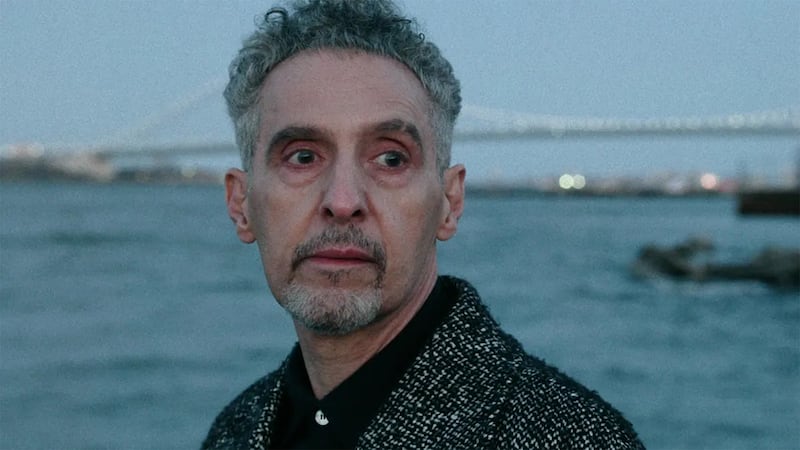
John Turturro in The Only Living Pickpocket in New York.
Sony Pictures Classics
As a native New Yorker, have you ever been pickpocketed?
I haven’t, actually. I’ve seen people rob people. I’ve been robbed. My wife’s been pickpocketed when we came out of a movie theater—someone stopped her, and then someone opened her purse and took her wallet. But everyone in my family has been robbed—sometimes pushed down, sometimes with a gun or a knife, although no one got hurt, thank goodness. My apartment was robbed. I had a studio apartment, and I put in an air conditioner, and the next day, it must have been a neighbor or someone, came in, and there’s a huge footprint, you know? It’s scary when someone’s in your apartment.
In the ‘70s and early ‘80s, it was all over. My father was pickpocketed once, where a guy tried to cut his pocket out at a racetrack. He was out of work and went to watch some horse races, and he grabbed the guy’s hand as he was cutting his pocket. I was a bartender, so I used to carry all my tips. I would separate them by taking a lot of ones and wrapping a $10 bill around them, so in case I got robbed, I could just give them the wad and have some [other money] in another pocket or in my shoe, because it was at night if you were walking home. That’s how it was.
Do you think it’s as prevalent now?
I guess it’s better now, but the whole art of pickpockets, when you read about the history, is that they don’t want you to know. It’s a magic trick, and it’s a non-violent violation. They’re stealing your weekly money, your tie pin, or your watch, and they usually work as teams too—a man and a woman a lot of times.
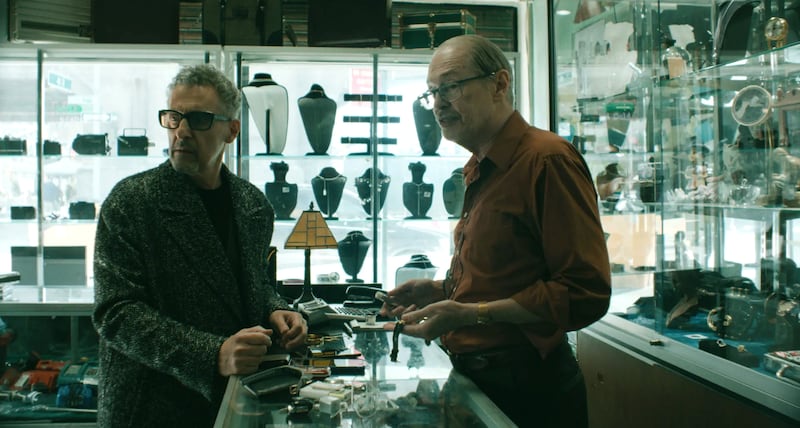
John Turturro and Steve Buscemi.
Sony Pictures Classics
My favorite moment in the movie might be the early scene of you in the diner, pulling a napkin close without taking your eyes off your reading material. Did you practice sleight-of-hand tricks and/or train with any pros?
It was this guy, Apollo Robbins. I read a profile about him in The New Yorker, and I got in touch with him. Magician, pickpocket, cybersecurity—he’s a really brilliant guy. I met with him, and he gave me all these exercises and videos. That [the napkin trick] was one of the exercises, as well as things with coins that he would do. But his hands are like a concert pianist’s. I have a physical ability to do certain things, but to get to that level, it would be really hard, because he could take anything from me. And he did [laughs].
Then I practiced just scouting people on trains. Everyone’s looking at their phone, so it’s kind of easy pickings. But the whole idea is that you don’t actually take it [the targeted goods] out. A lot of times, you just clip it, and when the person moves, they take it out. It’s about analyzing the person and the position. In the history of it, the pockets weren’t horizontal; they were more vertical. There were longer pockets, and they had inside vests, and jackets where men used to carry their wallets. That was a thing, where you could go in and out [of the inside pocket].
There’s a book called Whiz Mob—written by the guy [David W. Maurer] who wrote The Big Con, which The Sting was based on—and he interviews all these pickpockets, and it’s like a social workbook. A lot of them were from broken homes and orphanages, and they formed a little group family and would bail each other out. It’s fascinating reading.
What were the specific things about Harry that most spoke to you?
I think everybody has regrets. The world is changing, and in his case, it’s changed dramatically right in front of his eyes, and he’s navigating this technological world that he didn’t grow up in. Also, the idea of caring for someone, which the guy had never done, whereas I’ve always been responsible; I’ve been a guardian, and I took care of my older brother and my mom.
There were things that just resonated with me. You’re a certain age, and you’re surrounded by a lot of experiences—loss, achievement, regrets, not being there when you should be. You’re surrounded by lots of ghosts. You know what it is to be a parent, and how hard and humbling it is, and what it is to actually care about someone—not just fall in love with them, but to truly love someone, which is a very ambiguous word. You have all these experiences.
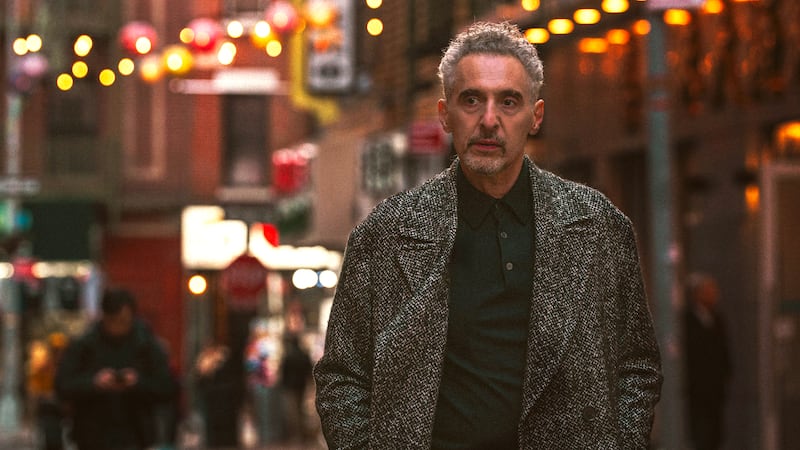
John Turturro in The Only Living Pickpocket in New York
Courtesy of TIFF
Noah’s script gets at a lot of that in subtle and powerful ways.
It has all this tension, but it has this tenderness too. It’s like a boxer. You talk to boxers, and some of them seem so gentle. It’s like, wow, how can you be that way and then knock someone out? There’s this contradiction, I guess, in all of us. There’s a competitive nature, and then there’s a feeling where you could go, I don’t want to be that way.
I like the psychological aspect of it. I used to make a list of everything I had in common, and everything I didn’t have in common, with a character. Now, I do that intrinsically. I know what I have to work on. But certain things resonate with you when you read a script like this, and working with Noah and Sam Levy, every little detail was interesting because it told you something.
Is there more pressure to headlining a film, especially when, as Noah has said, he wrote this with you in mind?
No, it’s a gift. I read so many bad scripts, and it’s a gift. You want to mine that for everything it’s worth, and you want to give something back to that person, and to surprise them and say, maybe we can go even further. That doesn’t mean changing the words; we changed two or three lines, maybe. That was it. It was the how. And also, all the scenes that are silent.
Sometimes when you do the whole movie—I’ve done this on certain movies and long projects like The Night Of— you can go deeper and deeper and grow more and more relaxed. Whereas when you come in for a day, like Tatiana did, it’s different. And she was amazing! That’s something really special. She’s a great actress. When you come in for a day, it’s your job to work with everyone, and that’s a wonderful thing. When you come in just for a couple scenes or whatever, you have to figure out where you fit in.
But sometimes it’s more relaxing to be there [the entire time], and I loved doing it. I loved just jumping on the trains without sound and doing these scenes, because I built a history [for Harry]. You just hope it’s all in your subconscious, because you’re working towards being not conscious.
The Only Living Pickpocket in New York conveys this amazing sense of the city. Was it important to shoot on location in the five boroughs—and to work with Steve Buscemi and Giancarlo Esposito—to give the film its authentic New York-ness? Because that can’t really be faked.
No, it can’t. And we [he, Buscemi, and Esposito] have a history, too. I ride the trains, I like to be around people, and I think it’s important to be part of the group and not be the separate person. To me, that was the joy. Sometimes being with real people, not extras, on the train, you’re like, wow, this is exactly where I want to be.
It’s a little bit like playing a game or being on a sports team. You’re part of the group, and you can grab a lot of energy from that. But what I loved about the whole project was that this is the underbelly of New York. These are the people who keep New York humming. Without them, it’s not the same city. And there’s always a new group that comes in. There are all these new immigrant groups, and when I go away and I come back, I don’t see how you can be a foreigner in New York City. I don’t get it. So, it was nice to go from the bus to the subway to huffing it on foot.
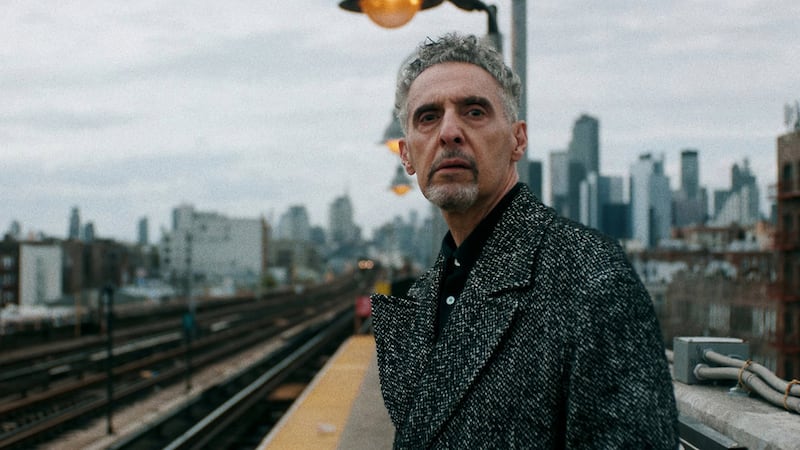
John Turturro in The Only Living Pickpocket in New York.
Sony Pictures Classics
The film has been enthusiastically received at numerous festivals, and now it’s coming out during awards season, and Oscar buzz is growing around you. Is that heartening, first and foremost, because it means more people will hear about—and hopefully see—the film?
That’s right. The whole idea is to reach people. That’s why you do it. You tell a story, you want to reach people. If it resonates with you or other people, that’s a wonderful thing, because sometimes, you can’t get to people. We made this film, we sold it at Sundance, and I’m tremendously appreciative because I know sometimes you can do something that actually has a lot of value, and is actually good, and people don’t see it. So it’s good for the movie, and everything else that comes with it will put more eyeballs and seats in the movie theater.
I don’t take that for granted, and I’m always surprised when people respond to it. You know how you felt, but you don’t know how it’s going to be received.
You’ve worked with countless great directors, including Spike Lee and Joel and Ethan Coen. Do you see yourself reuniting with any in the future? Or is it a more appealing prospect to work with newer filmmakers like Noah?
Return engagements are great, and I’d love to work with Noah again. This is almost like his first film, because his first film was made with very little, and this has been just a wonderful connection. But you never know. Maybe there’s a director I really want to work with, and then I work with them and they’re really mean to you [laughs]. Until you get on the floor, you don’t know how someone is going to handle or work with you. I like to feel like a collaborator.
There are wonderful directors that I’ve seen, such as the guy [Joachim Trier] who made Sentimental Value. I’ve seen all his movies, and he’s a wonderful director. I like his humanist approach. I loved working with Tom McCarthy, who’s just a terrific guy. So I’m having a good streak of working with good people and people that I would want to have a return engagement with.
Obsessed with pop culture and entertainment? Follow us on Substack and YouTube for even more coverage.

Got a tip? Send it to The Daily Beast here.
Register below to read this article for free or subscribe
to unlock unlimited access to The Daily Beast.
Monthly
$1
First month then $5.99/month
Annual
$35
First year then $59.99/year
Premium
$79
First year then $119.99/year
*Substack access provided by the next business day, using your subscription email. Choosing the Premium plan constitutes your permission to share your subscription email with Substack and your agreement to Substack’s Privacy Policy.
Already have an account? Sign In
Looks like you already have a subscription!
You're all set!
Thanks for subscribing.
Sign in or create an account
Login dialog
Loading comments…