Russian Opposition Leader Poisoned With Lethal Frog Toxin
The findings only confirm what most countries believed: Alexei Navalny was poisoned by the Russian state.

Anadolu/Getty Images
Get the Beast Digest newsletter delivered straight to your inbox
By clicking “SIGN UP” you agree to our Terms of Use and Privacy Policy.
Alexei Navalny, the Russian opposition leader who died in prison in February 2024, was “highly likely” poisoned with a frog toxin, five European countries said in a joint statement.
The foreign ministries of the United Kingdom, France, Germany, Sweden, and the Netherlands confirmed on Saturday, nearly two years to the day since Navalny’s death, that they are “confident” that he was poisoned.
“Epibatidine is a toxin found in poison dart frogs in South America. It is not found naturally in Russia,” the joint statement said.
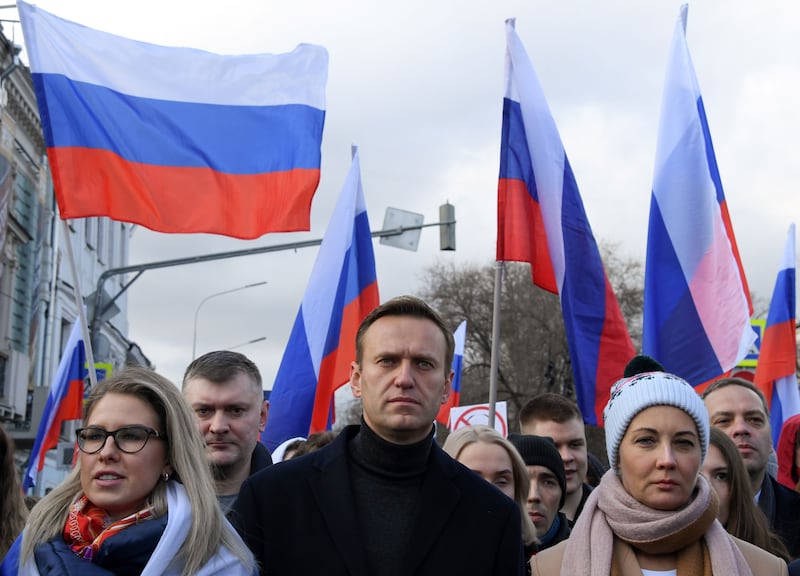
Navalny stood up to the authoritarianism of Putin, and paid for his bravery with his life.
Kirill Kudryavstev/AFP via Getty Images
“Given the toxicity of epibatidine and reported symptoms, poisoning was highly likely the cause of his death. Navalny died while held in prison, meaning Russia had the means, motive and opportunity to administer this poison to him,” the statement said.
Their findings directly counter the Kremlin’s claim that Navalny died of natural causes.

“Russia’s repeated disregard for international law and the Chemical Weapons Convention is clear,” the statement continued, outlining Russia’s previous documented use of poisons. “We are further concerned that Russia did not destroy all of its chemical weapons.”
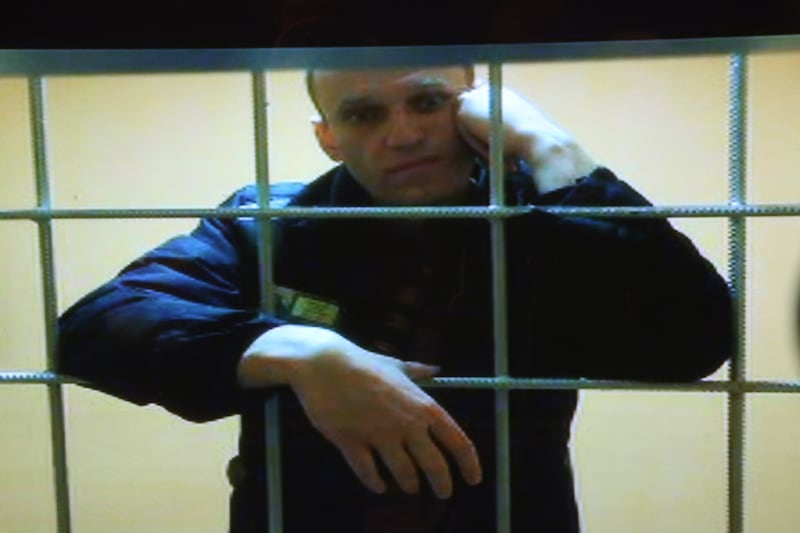
Navalny died in prison in 2024.
Contributor/Getty Images
Navalny, one of the few Russian figures to pose a direct threat to Putin’s leadership, died in a maximum security prison on Feb. 16, 2024. Shortly before his death, his supporters said his freedom was in the final stages of being negotiated in a prisoner exchange. Navalny’s death sent shockwaves around the world as dozens of countries condemned what they viewed as a state-sponsored murder.

Navalny’s widow, Yulia Navalnaya, said in a statement that Russian dictator Vladimir Putin must be held accountable for Navalny’s death.
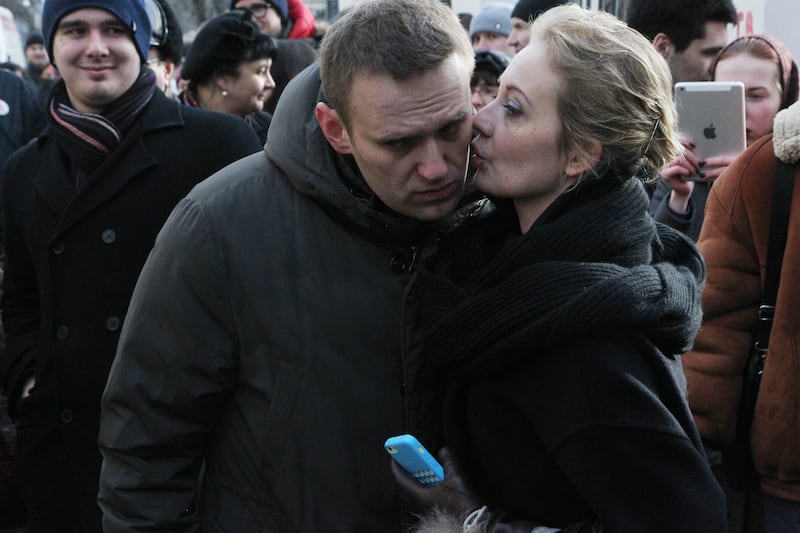
It was already largely suspected that the Kremlin had poisoned Navalny.
Sasha Mordovets/Getty Images
“I was certain from the first day that my husband had been poisoned, but now there is proof: Putin killed Alexei with chemical weapon,” she posted.
“I am grateful to the European states for the meticulous work they carried out over two years and for uncovering the truth,” the post continued. “Vladimir Putin is a murderer. He must be held accountable for all his crimes.”
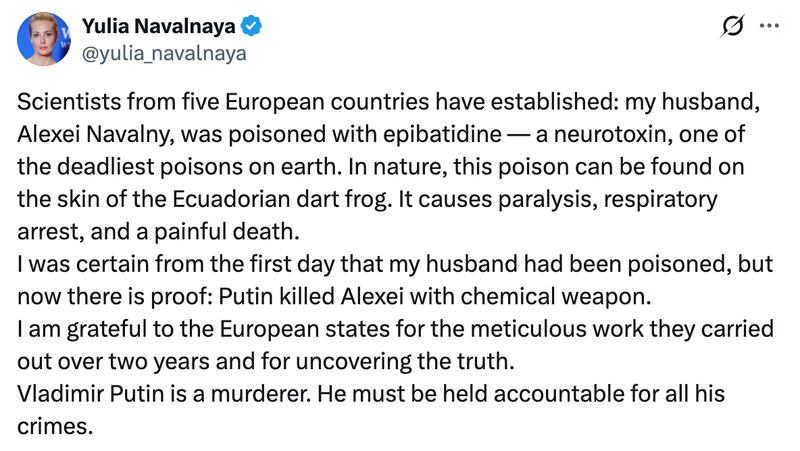
@yulia_navalnaya/X
On Saturday, Navalnaya spoke with reporters at the Munich Security Conference, the same event she was supposed to attend when she got word of his death in 2024. She reiterated that Putin was personally responsible for her husband’s death.
“I want to repeat: Vladimir Putin killed my husband, Aleksei Navalny, using a chemical weapon,” she said to the press. “Of course, it’s not news that Vladimir Putin is a killer, but now we have yet another direct piece of proof.”

The revelation from the five European nations regarding Navalny’s death in Russian custody comes amid ongoing negotiations between Russia and Ukraine to end the ongoing war. President Trump and his administration have been heavily involved in the discussion.
See more of our coverage in your search results.

Got a tip? Send it to The Daily Beast here.
Register below to read this article for free or subscribe
to unlock unlimited access to The Daily Beast.
Monthly
$1
First month then $5.99/month
Annual
$35
First year then $59.99/year
Premium
$79
First year then $119.99/year
*Substack access provided by the next business day, using your subscription email. Choosing the Premium plan constitutes your permission to share your subscription email with Substack and your agreement to Substack’s Privacy Policy.
Already have an account? Sign In
Looks like you already have a subscription!
- Account (completed)
- Payment (completed)
- Confirmation (completed)
You're all set!
Thanks for subscribing.
- 1Account
- 2Payment
- 3Confirmation
Sign in or create an account
Login dialog
Loading comments…