Somalia Drought: The Law That Is Preventing U.S. Aid
The law preventing much-needed U.S. aid to drought-stricken Somalia. By Eliza Griswold
AP Photo
Get the Beast Digest newsletter delivered straight to your inbox
By clicking “SIGN UP” you agree to our Terms of Use and Privacy Policy.
USAID and the U.S. Treasury Department have announced they will cut the snarl of red tape blocking food and other aid from reaching nearly 3 million starving Somalis. 29,000 children have died as a result of the famine so far, and money couldn’t reach the worst hit areas because they often lie within the strongholds of the militant group al Shabab. But the U.S.'s Office of Foreign Assets Control (OFAC) will now grant the necessary licenses to aid groups working in Somalia, which means, most importantly, the World Food Program can begin to work.
As The Daily Beast reported two weeks ago, Secretary Hillary Clinton’s office at the State Department had announced that the U.S. was willing to send humanitarian aid to Somalia despite the fact that much of the country is under the control of Al Shabab, a ragtag bunch of grifters and militants, some of whom have ties to Al Qaeda. But even though Clinton was ready to send help, the red tape wouldn’t allow it.
Somalia is bearing the brunt of the worst famine and drought in 60 years—the worst since Africa’s colonial period. Ten million people who live on the knobby spit off the East African coast called the Horn are suffering the famine’s effects: starvation and death. Somalia is bearing the brunt of this crisis, especially the nearly 3 million people who live in country’s south. The death toll could easily surpass that of Ethiopia in the '80s, which left 1 million people dead.
Famine, as we’ve learned over the past 30 years, isn’t only about a dearth of food. People starve as a result of economics and politics. Food serves as a weapon, particularly in Somalia, which has had no government to speak of for the past 20 years, longer than any other country on earth. When food prices began to spike several years ago in the Somali capital of Mogadishu, I watched “policemen” brandish AK-47s to muscle sacks of sugar away from a hungry mob—to give to their own families and friends or to sell them on the black market.
These days, Al Shabab functions as a virtual state in much of the south. In 2009, after the group targeted aid workers, banned foreign women from Somalia, and started to collect bribes and protection money they called “rent,” almost all international aid groups pulled out. Al Shabab, in turn, accused the groups of spying and being against Muslims, and banned all foreign-aid work.
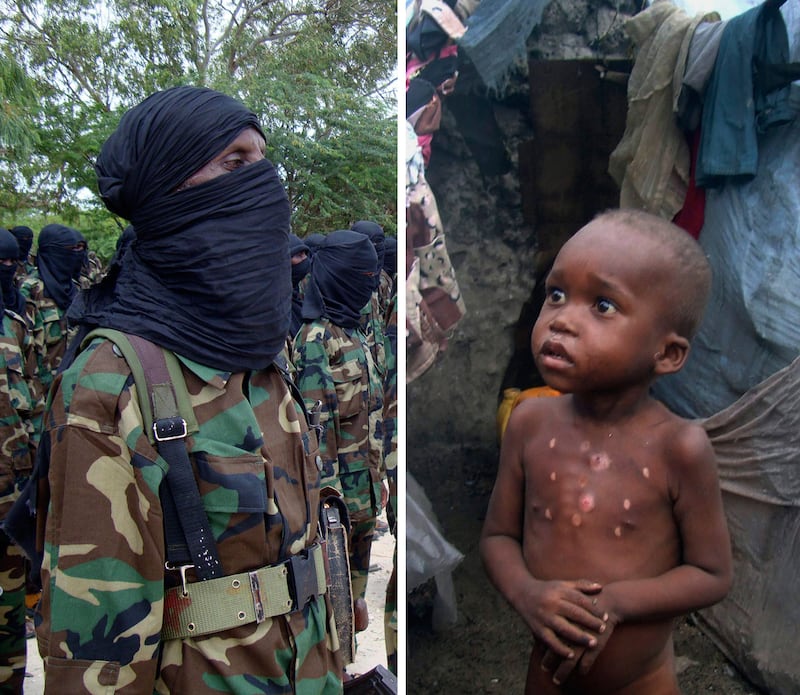
Shockingly, in July the group changed its mind. Alarmed by the deepening drought and famine, Al Shabab held a press conference in Mogadishu to announce foreign-aid groups were welcome to return—even non-Muslims—to work alongside Al Shabab’s drought committee. The decision was prompted, in part, by the rebels' desire to stop starving people from leaving their zones of control and flooding to areas controlled by the wobbly transitional government.
To her credit, Secretary Clinton promptly announced that the U.S. was willing to take Al Shabab up on its offer. In theory, she was willing to restart aid programs in Somalia. In reality, her hands were tied by paperwork. In places where U.S. aid might fall into the hands of terrorists, OFAC and the Treasury Department must issue any group working there a license. But OFAC wasn't issuing licenses for any group—including USAID—to work in south-central Somalia because of worries about running afoul of a murky law against giving money to terrorists. Because of this legal impasse, nearly 3 million people facing famine were out of the reach of U.S. aid.
Supplying aid to terrorists is an appalling prospect, one that alarms aid workers as much as it does the U.S. government. “Shabab doesn’t wear T shirts,” one relief worker said recently. There are a host of thorny questions about how to safeguard food and medicine from falling into Al Shabab’s control. These have to be worked out—and can be—by interlocutors in Nairobi before food flows. If Al Shabab is serious, the militants must demonstrate how they will let aid reach starving people before the U.S. can go forward. For the U.S., this is a risk worth taking. Without doing so, Somalis will continue to believe that the U.S. is using its bureaucracy to mask its hypocrisy toward Somalia. It will be impossible to prove them wrong.
Correction: This article previously stated that Hizbullah controls Gaza, when in fact Hamas controls the region.
See more of our coverage in your search results.

Got a tip? Send it to The Daily Beast here.
Unlock a year of full access to The Daily Beast for $35.
Monthly
$1
First month then $5.99/month
Annual
$35
First year then $59.99/year
Premium
$79
First year then $119.99/year
*Substack access provided by the next business day, using your subscription email. Choosing the Premium plan constitutes your permission to share your subscription email with Substack and your agreement to Substack’s Privacy Policy.
Looks like you already have a subscription!
- Account (completed)
- Payment (completed)
- Confirmation (completed)
You're all set!
Thanks for subscribing.
- 1Account
- 2Payment
- 3Confirmation
Sign in or create an account
Register below to read this article for free or subscribe
to unlock unlimited access to The Daily Beast.
Monthly
$1
First month then $5.99/month
Annual
$35
First year then $59.99/year
Premium
$79
First year then $119.99/year
*Substack access provided by the next business day, using your subscription email. Choosing the Premium plan constitutes your permission to share your subscription email with Substack and your agreement to Substack’s Privacy Policy.
Already have an account? Sign In
Looks like you already have a subscription!
- Account (completed)
- Payment (completed)
- Confirmation (completed)
You're all set!
Thanks for subscribing.
- 1Account
- 2Payment
- 3Confirmation