Is This the Most Dangerous Sport in the World?
Netflix’s documentary “The Deepest Breath” plunges you into the heart-pounding world of freediving.
Netflix
Like Free Solo in reverse, The Deepest Breath is a heart-stopping (and heartbreaking) documentary that immerses viewers in the perilous world of freediving, a sport in which daring men and women attempt to reach unfathomable depths of the sea on a single unassisted breath. Writer/director Laura McGann’s film (July 19 on Netflix, following its Sundance Film Festival premiere) is an illuminating primer on this most hazardous of pastimes, with a particular focus on two individuals who dedicated their lives to it: Italian athlete Alessia Zecchini and safety diver Stephen Keenan. Eliciting empathetic engagement through nail-biting tension, it’s a story of courage, trust, and tragedy, the last of which materializes in ways that are at once shattering and uplifting.
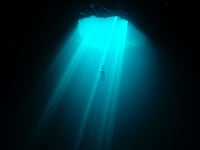
The Deepest Breath’s credit sequence is a montage of oceanic images—serpentine waves cresting and crashing into each other, crystalline water droplets spraying into the air—that have been shot, and slowed-down, so they look downright alien. That’s fitting, given that this real-life thriller is fixated on the deepest, darkest parts of the sea, where natural light dares not tread and extreme pressure threatens to crush human trespassers. These regions are not fit for travel—at least, not without an oxygen tank or a sturdy vessel—and that’s precisely what makes Alessia and her fellow freedivers’ feats so amazing and nerve-wracking.
Alessia knew from an early age that she was committed to this endeavor, and home movie footage of her as a young girl in the pool and the ocean illustrate her instinctive, imposing talent. When she topped the best mark of Italian national team member Homar Leuci as a teenager, Alessia made it clear to the field that she was the real deal. Nonetheless, a subsequent ruling that competitors had to be at least 18 years old slowed her rapid-fire ascent to the big leagues. So Alessia bided her time and trained for the future, all in the hope that she’d one day join the company of freediving’s elite, particularly its living legend Natalia Molchanova, who was the first woman to ever pass 100 meters on a dive.
Netflix
Through archival material and interviews with divers, judges, and her father Enzo, The Deepest Breath recounts Alessia’s efforts to become a peerless champion and the obstacles she faced along the way. Those included not only rivals such as Japan’s Hanako Hirose and ever-present diving threats to her health and safety, but also her own youthful ambition to push herself to, and past, her limits. The men and women featured in McGann’s film suggest that a diver’s worst enemy can often be their own fondness for (and comfort with) risk, since it results in recklessness and runs counter to the measured, trance-like calmness that’s demanded by safely plummeting to, and rising back up from, such monumental depths—which, in international competitions, can be equal to double the length of a skyscraper.

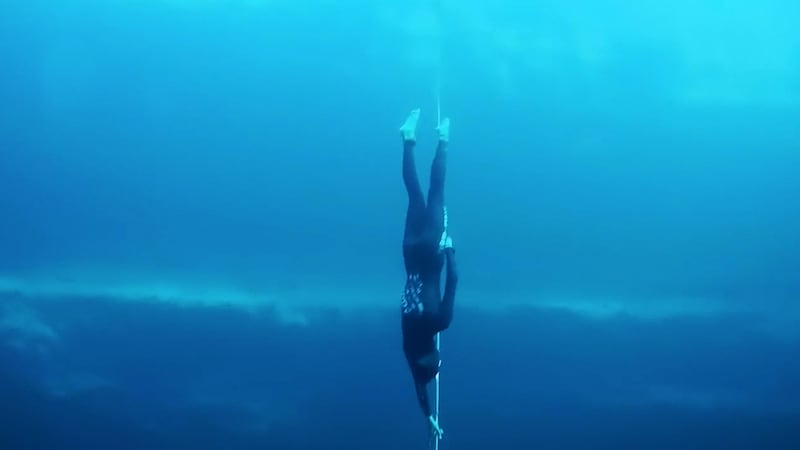
Watching Alessia plunge into the cold black void along a guide rope, acquire a tag at its bottom plate, and then slowly ascend is both breathtaking and edge-of-your-seat suspenseful. And the fact that she and others sometimes need assistance finishing the final few meters before blacking out—thereby necessitating immediate, life-saving medical attention—further underlines the jeopardy in which these men and women are willingly placing themselves. The Deepest Breath is acutely concerned with that aspect of this activity, detailing the various mechanisms in place to try to prevent fatal disaster. As such, it’s natural that its tale bifurcates from the start, splitting its attention between Alessia and Stephen, two people from different countries and backgrounds whose paths were fated to intertwine in ways that neither could have expected.
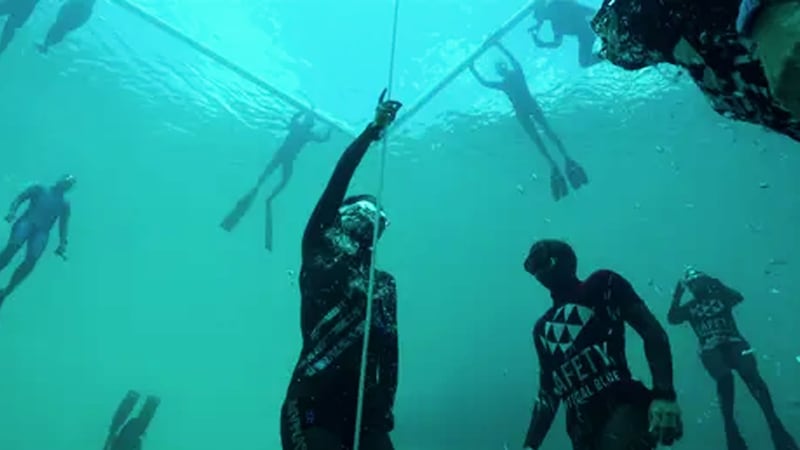
As his dad, Peter Keenan, recounts (alongside plentiful home movie clips and photographs), Stephen was a born explorer always in search of elusive fulfillment, and that quest led him across the globe, beginning in Africa. Eventually, he found himself in Dahab, Egypt, where he fell in love with freediving and, after setting the Irish record for a dive, became a safety diver. Stephen’s momentous rescue of Alexey Molchanov (record-setting son of Natalia) cemented his reputation in the community and allowed him to establish a renowned safety school in Dahab, which is additionally home to the Blue Hole and its perilous Arch, described here as the most lethal dive site on Earth, having claimed more than 100 lives. While working at the 2017 Vertical Blue freediving competition, Stephen bonded with Alessia, who was striving to set a new world record. They struck up a profound partnership—and apparent romance—and chose to stay together afterwards, working to train Alessia for a shot at the Arch.
Netflix
Though Alessia and Stephen’s voices are intermittently heard throughout The Deepest Breath, their general absence from the proceedings is an immediate omen about this tale’s less-than-happy end. McGann’s formal structure is, by its very nature, a tad manipulative and yet it also allows the material to generate a vital and truthful measure of danger. There are real lives at stake in this non-fiction odyssey and the director’s affectionate and well-rounded portrait of her subjects only heightens one’s fear about the mysterious denouement to come. When it arrives, it’s difficult not to be intensely shaken and moved, especially since everything pivots in a matter of seconds and culminates with tremendous loss and awe-inspiring heroism.
Get the best of The Beast delivered right to your inbox
By clicking “SUBSCRIBE” you agree to our Terms of Use and Privacy Policy.
In Alessia and Stephen’s separate, and later conjoined, narratives, The Deepest Breath captures the tranquility and terror of freediving, as well as its promise of liberation and its potential for misfortune. Buoyed by underwater footage that’s alternately up-close-and-personal and majestically panoramic, McGann’s film is expansive and intimate, conveying the thrill of these competitions and the camaraderie felt by all those involved in the sport, including judges, journalists, and the health professionals whose job it is to make sure that everyone lives to see another day—a task that sometimes means stopping athletes from putting themselves in harm’s way. Most moving of all, it’s a tribute to the magical bond forged by two like-minded people who were truly there for each other, even when doing so required making the most selfless sacrifice of all.
See more of our coverage in your search results.

Got a tip? Send it to The Daily Beast here.
Register below to read this article for free or subscribe
to unlock unlimited access to The Daily Beast.
Monthly
$1
First month then $5.99/month
Annual
$35
First year then $59.99/year
Premium
$79
First year then $119.99/year
*Substack access provided by the next business day, using your subscription email. Choosing the Premium plan constitutes your permission to share your subscription email with Substack and your agreement to Substack’s Privacy Policy.
Already have an account? Sign In
Looks like you already have a subscription!
You're all set!
Thanks for subscribing.