Trump Plots New Power Grab to Punish Banks Over MAGA Complaints
A draft executive order hands Trump the ability to slap lenders with hefty fines and other penalties.

Christopher Furlong/Getty Images
President Trump is planning a power grab with an executive order that would create punishments for banks over perceived bias against conservatives, according to a report.
A draft of the order states that lenders accused of stonewalling individuals and organizations over politics could be fined, according to the Wall Street Journal.
The newspaper reported that the order would instruct regulators to investigate whether banks violated the Equal Credit Opportunity Act, consumer finance laws, or antitrust statutes. The draft also orders regulators to look out for policies at banks that might contribute to certain customers being dropped.

The Trump family claims they’ve been targeted by debanking. The president said Tuesday two banks had “discriminated” against him. In her memoir, Melania, the First Lady wrote that her longtime bank “decided to terminate my account” after she left the White House in 2021—and refused to let her son, Barron, open one. Donald Trump Jr. has also said he was cut off from banking services.
The order could kick in as early as this week, with the order set to be signed imminently. However, insiders have told the Journal that timelines could shift.

Melania Trump has said she and son Barron have both had banking problems.
Samuel Corum/Samuel Corum/Getty Images
While no banks are named directly, the draft references allegations that Bank of America closed accounts belonging to a Ugandan Christian organization over religious beliefs. Bank of America denied wrongdoing, noting it doesn’t serve small, overseas businesses.
Get the best of The Beast delivered right to your inbox
By clicking “SUBSCRIBE” you agree to our Terms of Use and Privacy Policy.
The draft also highlights the role of banks in freezing accounts during the investigation into the Jan. 6 Capitol riot, in which a mob of Trump’s supporters stormed the building in an attempt to overturn the result of the 2020 election.
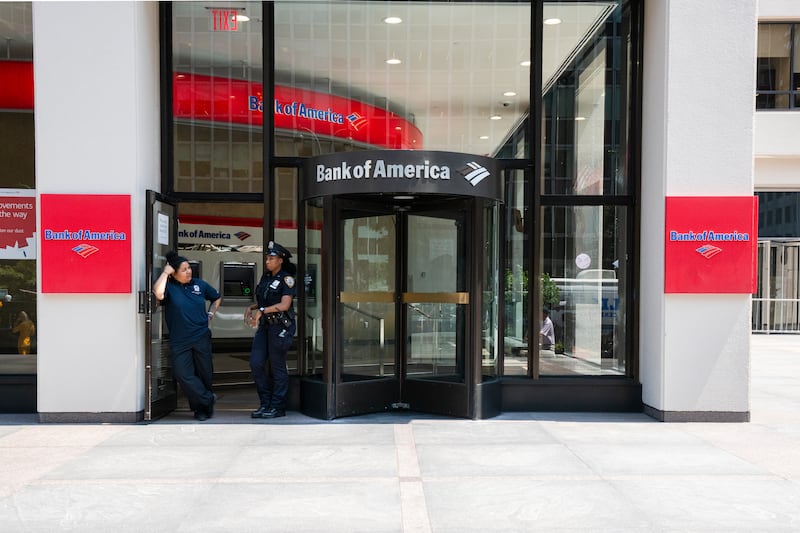
While no banks are named directly, the draft reportedly references allegations that Bank of America closed accounts belonging to a Ugandan Christian organization.
Craig T Fruchtman/Getty Images
The order empowers federal regulators to refer suspected violations to the Justice Department. The DOJ has already established a bank discrimination task force in Virginia to investigate credit denials motivated by “impermissible factors.”
Conservative voices and crypto firms have long claimed they were ostracized by the banking system, alleging that they were denied services based on their ideology or business model. Financial institutions say such actions stem from legal, regulatory, or risk-management considerations—not political censorship.
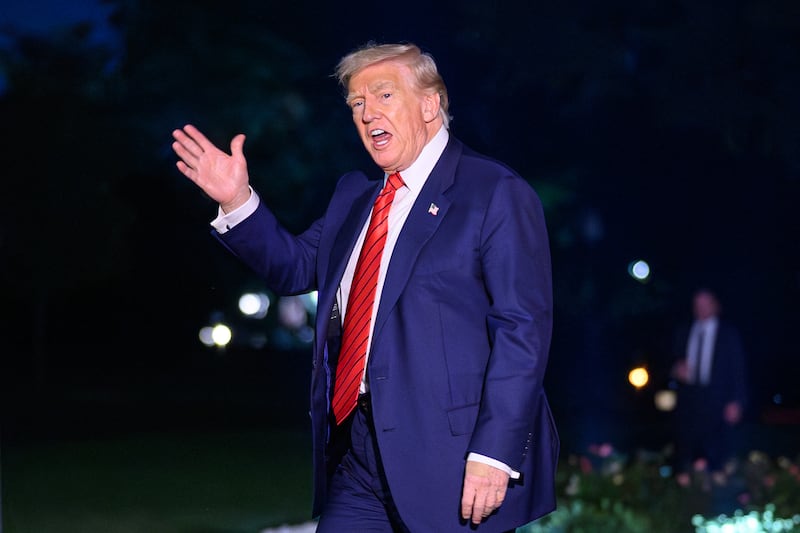
Trump claims he has personally been discriminated against by banks—claims which lenders have previously denied.
MANDEL NGAN/AFP via Getty Images
“We’ve provided detailed proposals and will continue to work with the administration and Congress to improve the regulatory framework,” a Bank of America spokesperson said, supporting the push for regulatory clarity.
Banks have sought to undercut potential federal action by meeting with GOP attorneys general and revising policies to explicitly state they do not discriminate on political grounds.

Bank of America chief Brian Moynihan has denied closing accounts for political reasons.
Getty/Getty Images
Asked about the order on Tuesday in an interview with CNBC, Trump accused two of the biggest banks in the country had “discriminated” against him “very badly.”
He claimed that he’d been “informed” by his “people” that JPMorgan Chase had asked him to close accounts within 20 days after he’d held them for decades, and accused Bank of America would not accept a deposit of over $1 billion. He also claimed that he believes banking regulators had been ordered under the Biden administration to “do everything you can to destroy Trump, and that’s what they did.”
Bank of America and JPMorgan have both previously denied refusing business over political beliefs.
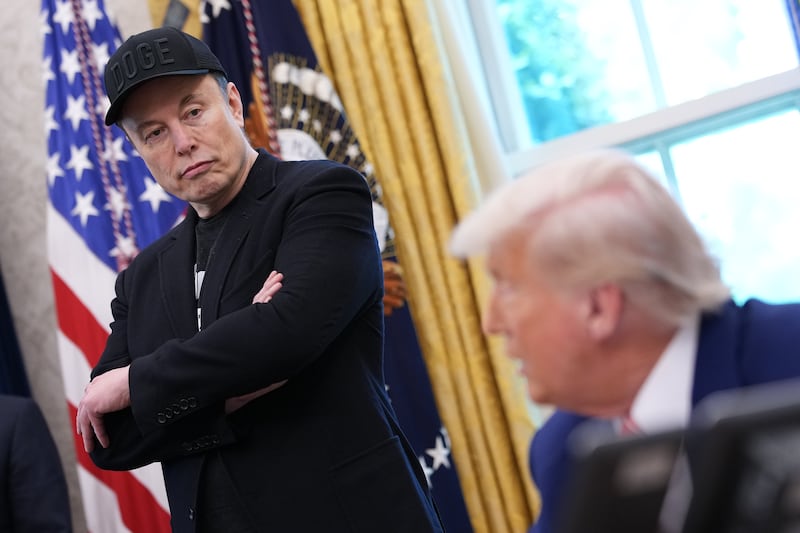
Elon Musk said on X that debanking is an example of “how evil the government has been.”
Kevin Dietsch/Getty Images
“We don’t close accounts for political reasons, and we agree with President Trump that regulatory change is desperately needed,” a JPMorgan spokesperson told Bloomberg. “We commend the White House for addressing this issue and look forward to working with them to get this right.”
Bank of America declined to comment on Trump’s comments, but said of the reported executive order: “We welcome the Trump administration’s efforts to provide regulatory clarity to banks. We’ve provided detailed proposals and will continue to work with the administration and Congress to improve the regulatory framework.”
Days before he re-entered the White House, Trump ranted about de-banking. “We’re also going to place strong protections to stop banks and regulators from trying to debank you from your, you know, your political beliefs,” he said at an event in New Hampshire.
JPMorgan Chase also denied closing accounts for political reasons.
Spencer Platt/Getty
A month after Trump’s inauguration, Bank of America CEO Brian Moynihan said, “We bank everybody... But the real question was about over-regulation, frankly.”
The concept of “debanking” had been obscure until Joe Rogan picked it up after he invited crypto tycoon Marc Andreessen onto his podcast in 2024. Andreessen, a billionaire investor and co-founder of now-defunct internet behemoth Netscape, told Rogan he knows 30 tech company founders who had been “debanked in the past four years.”
Other tech billionaires, like Elon Musk, amplified the claim that they had been victimized in some way. Musk said on X that debanking is an example of “how evil the government has been.”
The White House did not immediately respond to a request for comment.
See more of our coverage in your search results.

Got a tip? Send it to The Daily Beast here.
Register below to read this article for free or subscribe
to unlock unlimited access to The Daily Beast.
Monthly
$1
First month then $5.99/month
Annual
$35
First year then $59.99/year
Premium
$79
First year then $119.99/year
*Substack access provided by the next business day, using your subscription email. Choosing the Premium plan constitutes your permission to share your subscription email with Substack and your agreement to Substack’s Privacy Policy.
Already have an account? Sign In
Looks like you already have a subscription!
You're all set!
Thanks for subscribing.