

Russian dictator Vladimir Putin has been accused of concealing an alarming pneumonic plague outbreak as nearly 200 people have been forced into quarantine.
Authorities reported on Friday that 28-year-old Darya Shipilova, a lab tech at a research facility in Siberia, had died at the Shelekhov Hospital in a suspected case of the plague, according to The Moscow Times.
She had been hospitalized with acute pneumonia symptoms on Tuesday and was placed on a ventilator, with reports saying she died two days later on Thursday.
The incident prompted Shelekhov Hospital to quarantine, soon followed by several others in the Irkutsk region, even as health authorities reassured residents everything was fine, the outlet reported. The Irkutsk Aluminum Smelter in Shelekhov also instituted a mask mandate for “preventative measures,” according to its director, Artem Fominykh.

Residents told local outlet People of Baikal that doctors in the region were “openly talking about the plague.” A local maternity hospital blocked family from visiting birthing mothers, citing the “plague,” the outlet reported.
“If [federal health officials] said everything is fine, then why are the hospitals closing for quarantine?” one resident was quoted asking.
“Unfortunately, they don’t consider us human beings,” another told the outlet.
Public health officials, meanwhile, have insisted the epidemiological situation in the region is “stable” and walked back their earlier statements. The federal health watchdog said Sunday that Shipilova died from a case of “pneumonia of an undetermined origin.” Kremlin-controlled media deleted their earlier reporting on pneumonic plague.
On Saturday morning, the local government for the town of Baykalsk advised residents to avoid traveling to Shelekhov and other nearby towns because of a plague-related death, but the post was taken down shortly after, according to the Times.

Igor Kobzev, the governor of the Irkutsk region, did not identify the illness as the plague and referred to it only as “a dangerous infectious disease,” but shut down all public events in the region, according to the New York Post.
After meeting with Anna Popova, who leads Russia’s public-health watchdog, to organize safety measures, Kobzev urged residents to remain calm.
“All identified contact persons have been placed under medical observation. As of today, the contacts show no signs of illness, and their laboratory test results are negative,” he wrote on Telegram on Friday, without mentioning Shipilova’s death.
People of Baikal reported that Shipilova had been exposed to the disease after she had accidentally broken a test tube containing live bacteria on Sept. 25. She first developed symptoms during a work expedition near the Russian border with Mongolia, according to the outlet.

However, Russian epidemiologist Mikhail Favorov, who now lives in the U.S., alleged that the broken test tube story is a government cover-up.
“It’s laughable,” Favorov said, according to the Post. “Someone working at the anti-plague Institute in Irkutsk wears a protective anti-plague suit. If you break a test tube, the likelihood of infection is actually very low. In short, it doesn’t matter to the general public — they’ll believe the ‘dropped test tube story.’”
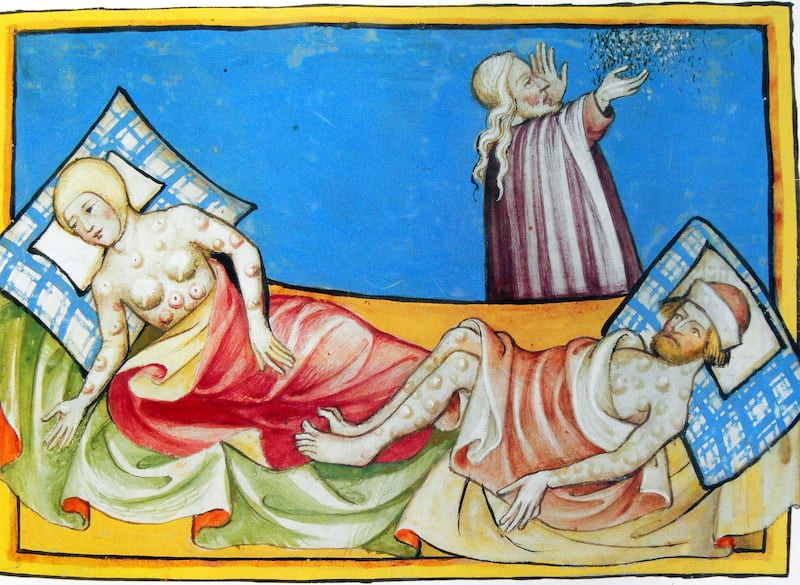
The plague has three main forms: bubonic, pneumonic, and septicemic. Symptoms include fever, chills, and eventual respiratory failure, but it can be treated with antibiotics if started within 24 hours of symptom onset.
Pneumonic plague is the deadliest form and the only one that can spread from person to person via airborne respiratory droplets.