The first clinical trial of a possible treatment for novel coronavirus commenced on Friday, having overcome the various bureaucratic hurdles in just days.
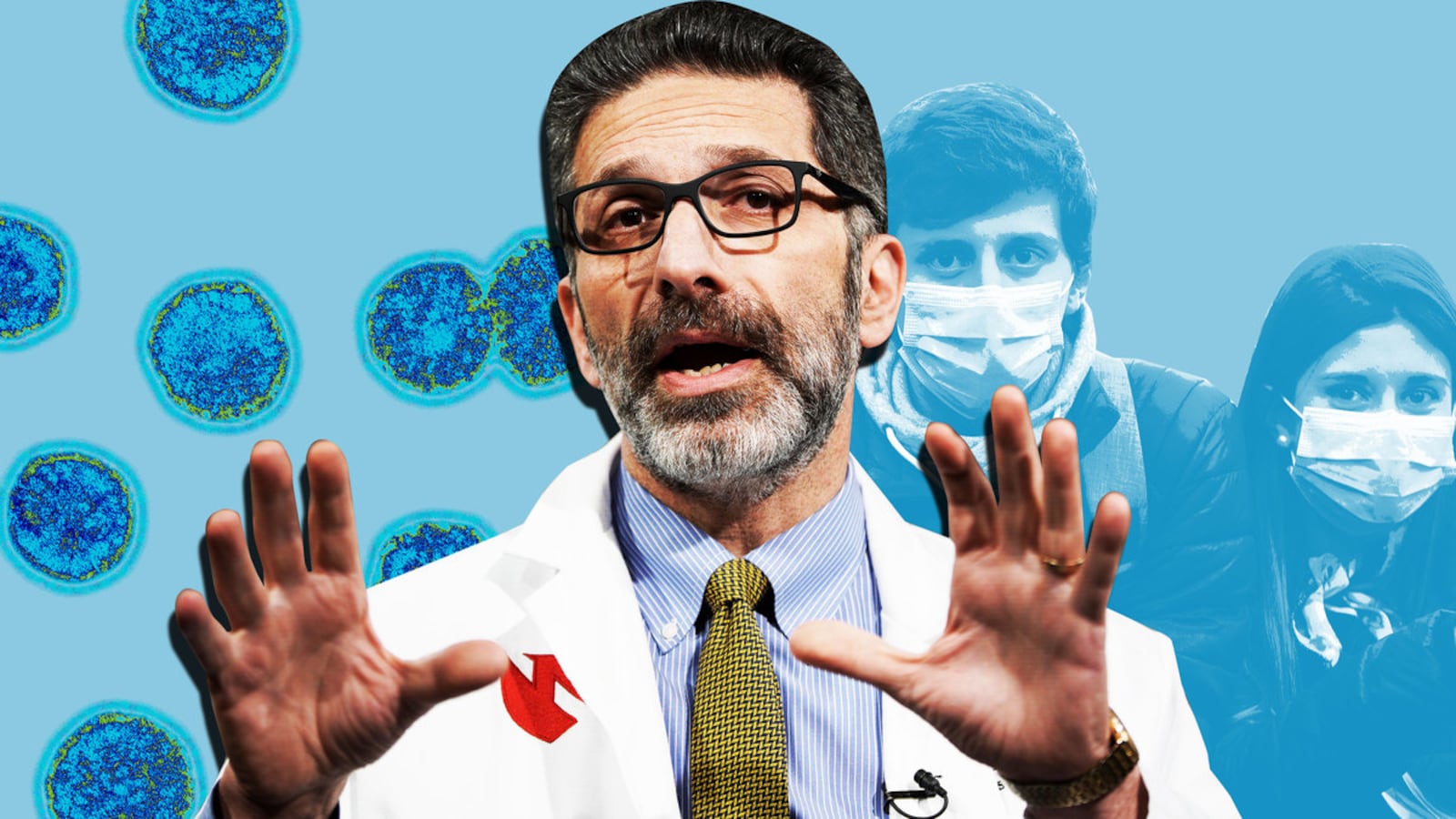
“Things that can take years,” Dr. Andre Kalil, who is overseeing the trial at the Nebraska Medical Center in Omaha, told The Daily Beast.
The 54-year-old infectious disease expert marveled, “The trial is up and running.”
The record-breaking speed is part of a strategy to meet the threat of novel coronavirus, officially known as COVID-19, however dire it may or may not prove.
“To run the right science at the right moment with efficiency,” Kalil said.
The first trial involves the antiviral drug remdesivir, which was not effective against Ebola. The trial will test if it fights COVID-19. The “primary outcome,” the result, is expected after just 15 days.
And the trial is designed to move on to other possibilities no matter what the outcome.
If the remdesivir is not effective against COVID-19, Kalil’s team will try something that might be.
If remdesivir is effective, the team will keep testing for a drug that performs even better.
All that for three years, involving 394 people in as many as 50 sites, whatever the outcome.
“Not restarting the clock,” Kalil said. “The clock keeps going.”

The first test subject is one of 14 people flown to the University of Nebraska Medical Center (UNMC) who were passengers on the Diamond Princess cruise ship in Japan and tested positive for coronavirus. Twelve of them are in the UNMC quarantine unit. The other two, including the first test subject, are evidencing symptoms of the illness and are in the hospital biocontainment unit. The subject is said to be a volunteer and the only one seriously ill enough presently to qualify for the trial.
The biocontainment unit was established by Dr. Phil Smith, a visionary infectious disease specialist who understood that Omaha is not so much in the middle of nowhere as in the middle of everywhere. The federal Centers for Disease Control and Prevention declared the facility “a national treasure” when it opened in March 2005.
“We hope we never have to use it, but if we do need to use it, it’s here,” the then CDC director, Dr. Julie Gerberding, was quoted saying.
The 40 members of the biocontainment staff trained and practiced for nine years before they were called into action, with the Ebola outbreak in 2014. The first patient was a doctor who had himself become infected while treating patients in Africa. He recovered, and nobody else in Nebraska got Ebola.
“Everything worked the way it was planned to work,” Kalil later said. “Nobody got infected.”
But another man was diagnosed with Ebola in Texas, and two nurses there were infected. This triggered a bit of a general scare in Nebraska.
“One biocontainment nurse’s daughter was disinvited from a birthday party,” Omaha magazine reported at the time. “Another was excluded from a family Thanksgiving dinner.”
The biocontainment unit had two more Ebola patients flown in from Africa. One was an NBC cameraman who also recovered. The second was another physician. He was desperately ill when he arrived and subsequently died despite the unit’s best efforts.
There were no additional cases in the United States, and Ebola was all but forgotten as the scare passed. Smith went ahead with pre-Ebola plans to retire as an active clinician and concentrate on teaching with emeritus status. But the team at the biocontainment unit kept training for year after year, staying ever ready.
Then came COVID-19 and a renewed need for the facility that the CDC hoped would never be used. Smith’s prescience of 15 years before combined with the team’s unflagging dedication through all the time since and with the record speed of the drug trial. The result was a chance to address the new threat even as it materializes.
“It gives me hope,” Kalil said.
And thanks to the same trial design that eventually produced two effective anti-Ebola treatments, they can continue testing drug after drug.
“We can keep modifying and doing better,” Kalil said.
In accordance with the dictates of good science, the trial will be “double blind,” meaning the subjects will be divided into two groups, one receiving the drug, the other a placebo. Not even Kalil will know which is which.
“We’re all blinded,” he said. “Otherwise, human bias settles in.”
That could possibly put Kalil in the position of being unable to tell seriously ill patients whether they are getting a possible treatment until the results are in.
“It’s tough,” he allowed. “But there is no other way… Doing the right science is the only way you are ever going to find out what works and what doesn’t work.”
He added that he and his team get to know the patients well and that each patient copes with serious illness differently.
“We are all so different from each other,” he noted.
“You really have to understand each individual to be a good doctor.”
Kalil and the biocontainment team will be working continually around COVID-19, which is believed to be more contagious than Ebola. The patients will be scored on a scale from 1 to 7.
- Death
- Hospitalized - invasive ventilation.
- Hospitalized - non-invasive ventilation. (mask)
- Hospitalized - supplemental oxygen
- Hospitalized - not requiring supplemental oxygen
- Not hospitalized, but with limitations
- Not hospitalized - no limitations.
Kalil told The Daily Beast, “It’s very straightforward, useful, meaningful. Are you alive? Are you in the hospital? Are you home?”
Kalil was asked if he is concerned about his own health.
“You never think it can be really harmful to you,” he said. “I’m in there to help.”
He sounded not unlike a firefighter or a cop.
“You go, man,” he added. “That’s your work.”
As he went back to work on the trial that commenced in record time, he offered praise for Smith, who had such foresight 15 years ago in the medical center that is in the middle of everything.
“He really had this vision,” Kalil said. “His idea was, ‘We have to be prepared.’”