DNA Tests on an Ancient Skeleton Reveal the First Briton Was Black, Not White
‘It really shows up that these imaginary racial categories we have... are not applicable to the past at all,’ said one project worker.
Channel 4
The first person known to have lived in Britain had dark skin, according to cutting-edge scientific analysis from London’s Natural History Museum.
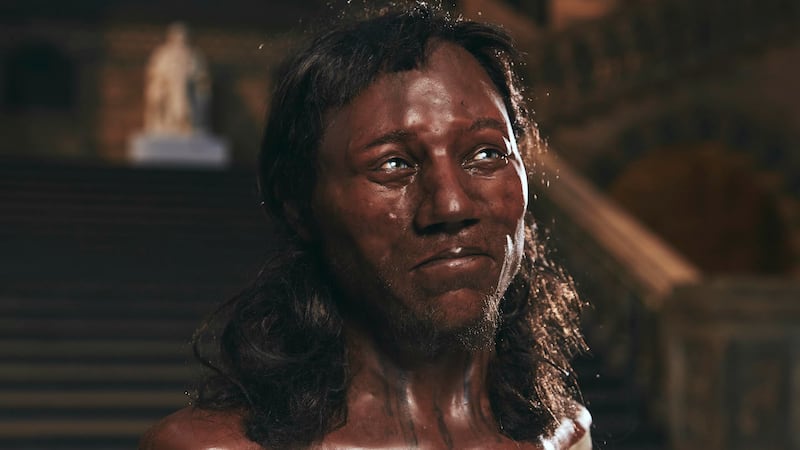
In research that may raise eyebrows among modern-day white nationalists, scientists used DNA analysis from Britain’s oldest nearly complete skeleton to reveal he had dark skin and blue eyes.
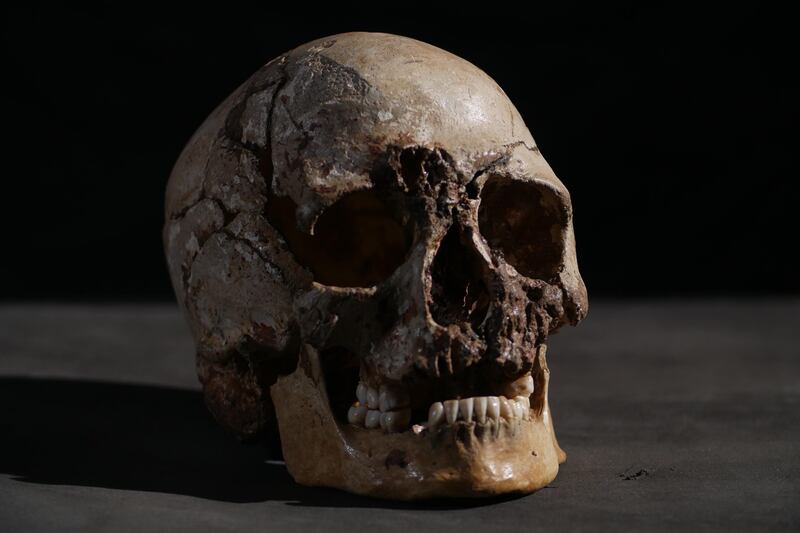
The skeleton was discovered in 1903 and is known as Cheddar Man, after the area where he was found, which is also where the cheese originated. He’s believed to have lived more than 10,000 years ago and is the oldest Briton to have ever had their DNA tested—with some surprising results.
The research suggests that light skin developed in ancient Britons much later than previously thought, with experts commenting that it flies in the face of modern perceptions of Britain, Europe, and race.
Tom Booth, a Natural History Museum archaeologist who worked on the project, told The Guardian: “It really shows up that these imaginary racial categories that we have are really very modern constructions, or very recent constructions, that really are not applicable to the past at all.”
Channel 4
Yoan Diekmann, a biologist at University College London and another project worker, added that the connection drawn by some between Britishness and whiteness was “not an immutable truth. It has always changed and will change."
Get the best of The Beast delivered right to your inbox
By clicking “SUBSCRIBE” you agree to our Terms of Use and Privacy Policy.
The discovery is embarrassing for white nationalists such as Richard Spencer, who has previously linked whiteness to Europe, saying previously that he wanted the U.S. to become “a homeland for all white people, all European people.”
According to the scientists who ran the project, it was previously assumed that Europeans developed paler skin thousands of years before Cheddar Man and he was previously believed to have had pale skin and fair hair.
However, they believe the research shows that the lighter pigmentation in Europeans is a “far more recent” phenomenon and that one in 10 modern-day Brits share ancestry with the dark-skinned Cheddar Man.
Channel 4
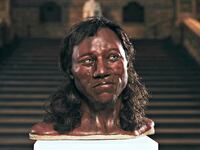
Scientists obtained the DNA sample by drilling a 2mm hole in the ancient skull, which allowed them to extract some bone powder. Using the “unusually well-preserved” DNA, they then constructed a likeness of his head using a 3D printer and a high-tech scanner.
Prof. Chris Stringer, a research leader at the Natural History Museum, said: “I first studied Cheddar Man more than 40 years ago, but could never have believed that we would one day have his whole genome—the oldest British one to date!"
“To go beyond what the bones tell us and get a scientifically based picture of what he actually looked like is a remarkable (and from the results quite surprising!) achievement.”
More will be revealed about the Cheddar Man in a Channel 4 documentary that will be broadcast in the U.K. called First Brit: Secrets of the 10,000 Year Old Man.
See more of our coverage in your search results.

Got a tip? Send it to The Daily Beast here.
Register below to read this article for free or subscribe
to unlock unlimited access to The Daily Beast.
Monthly
$1
First month then $5.99/month
Annual
$35
First year then $59.99/year
Premium
$79
First year then $119.99/year
*Substack access provided by the next business day, using your subscription email. Choosing the Premium plan constitutes your permission to share your subscription email with Substack and your agreement to Substack’s Privacy Policy.
Already have an account? Sign In
Looks like you already have a subscription!
You're all set!
Thanks for subscribing.