A-List Star’s Top Secret Role Should Make Oscar History
The move would be unprecedented—and totally deserved. WARNING: Major spoilers for “You Can See Everything” ahead.

A24
From the moment You Can See Everything appeared out of nowhere at the Telluride Film Festival, it’s been the only thing everyone in the movie world has wanted to talk about.
The three-hour documentary directed by Lance Oppenheim and Nathan Fielder is a no-holds-barred, intimate look at the lives of Elizabeth Holmes and her partner Billy Evans, as they spend 34 days together before Holmes is sent to prison for an 11-year sentence for “defrauding investors in Theranos, Inc. of hundreds of millions of dollars,” according to the U.S. Attorney’s Office.
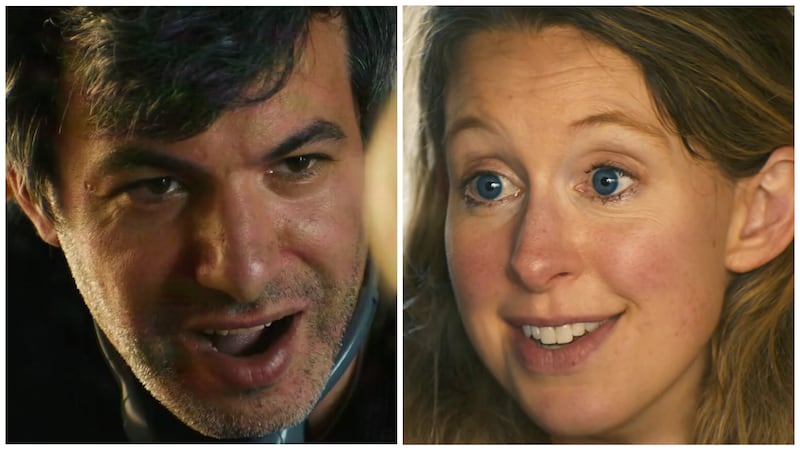
Nathan Fielder’s documentary about Elizabeth Holmes blurs genres in completely surprising ways.
YouTube/ A24
The reaction out of Telluride was nothing short of fanatic, and a subsequent screening at the New York Film Festival generated astonishing buzz. So much so that one big question emerged from these early screenings: Could You Can See Everything be the first-ever documentary to be nominated for Best Picture at the Oscars?
Now that the film is in theaters—with all its biggest secrets and twists available to the public—there’s an even bigger question. And if you don’t want the movie’s biggest surprise spoiled before you see it, stop reading here.
[WARNING: Spoilers for You Can See Everything below.]
Get the best of Obsessed delivered right to your inbox
By clicking “SUBSCRIBE” you agree to our Terms of Use and Privacy Policy.
Could this be the first documentary with an Oscar-nominated performance?

Let’s explain. The film’s second half takes place two years after Holmes enters federal prison and finds Fielder without access to his film’s central figure. How can you tell a story about a person who can no longer appear on screen? Well, this is Nathan Fielder, so you know something crazy is about to happen. And it does.
Fielder recruits someone who knows a little something about pretending to be Elizabeth Holmes: actress Amanda Seyfried, who won an Emmy portraying her in Hulu’s The Dropout. Things get weirder—and even more watchable—from here.
Seyfried joins the film to reenact moments Fielder shared with Holmes that weren’t on camera. And yet, it’s so much more than that. Seyfried becomes deeply invested not only in Fielder and Oppenheim’s film, but in Holmes’ life.
In one mesmerizing scene, Seyfried watches footage of Fielder watching The Dropout with Elizabeth and Billy. Soon, she becomes part of the overall mission to find out more about Billy, which leads to what might be the most compelling movie scene of the year, in which Fielder, Seyfried, and Evans have an exceptionally heated argument over dinner that wades into his treatment of Holmes, but also his devotion to MAGA and Charlie Kirk.
In this moment, Evans becomes the film’s villain and Seyfried its unlikely hero, trying to free Holmes from his proverbial (or not that proverbial, since he reveals that he has power of attorney over her) shackles.
The biggest question is this: Can Seyfried actually be nominated for acting in a documentary? That remains unclear. It’s never happened before, but no rules explicitly say it’s impossible. Vulture reported that she is specifically not eligible for the SAG Actor Award, but is technically eligible for the Oscars. And The Ringer’s Big Picture podcast couldn’t find anything in the rules that would exclude Seyfried from contention.
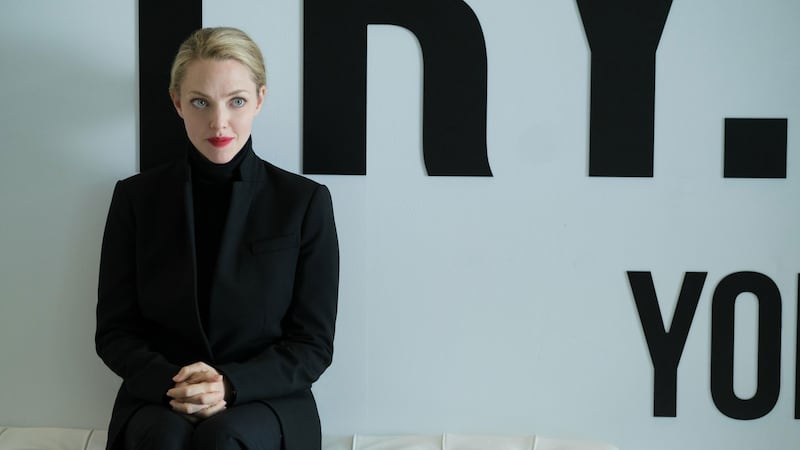
Amanda Seyfried stars as Elizabeth Holmes in Hulu's “The Dropout”
Beth Dubber/Hulu
Typically, people in documentaries aren’t considered for performance awards for the simple reason that they’re not performing. They are literally just being themselves on camera. But Seyfried’s work in You Can See Everything is more complicated than that.
Seyfried is remarkable as Holmes in the film’s several reenactment scenes, arguably eclipsing her Emmy Award-winning performance in The Dropout. But she is also incredible in scenes like the dinner with Fielder and Evans, entirely herself. There is no character there, just the real Seyfried trying to answer increasingly unknowable questions. Or is it a performance of herself?
That’s not a question we’ll likely ever get an answer to—and Seyfried is yet to even acknowledge that she appears in the film—but it calls into question the very foundation of what acting is. A camera is involved, of course. Does that make her character fundamentally different? Is it even a character? These are some of the gazillion questions that’ll race through your mind watching You Can See Everything, and it’s a credit to Seyfried that we’re asking them.
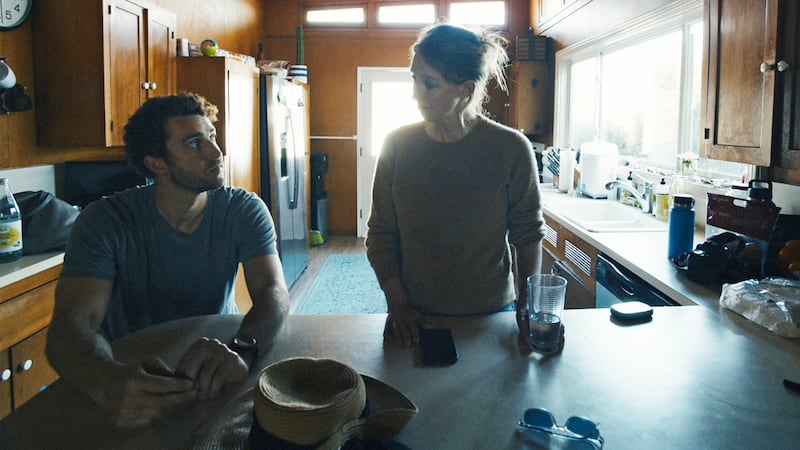
Billy Evans and Elizabeth Holmes in the documentary "You Can See Everything."
A24
The reenactments are different, but no less captivating. The distinction between actor and character is clear, and since we’ve spent over an hour staring at the real Holmes’ face, largely in extreme close-up, it’s a true testament to Seyfried’s gifts that she feels like the real Holmes even though they look quite different.
Cross-cutting between Fielder and Seyfried talking about Holmes, and Seyfried playing Holmes, is a genius move that highlights how impressive Seyfried is. As Holmes, she’s a completely different person, totally open yet inscrutable. The way she delivers certain lines, then tries the line again because Fielder can’t recall precisely how the real Holmes says it, shows off her range.
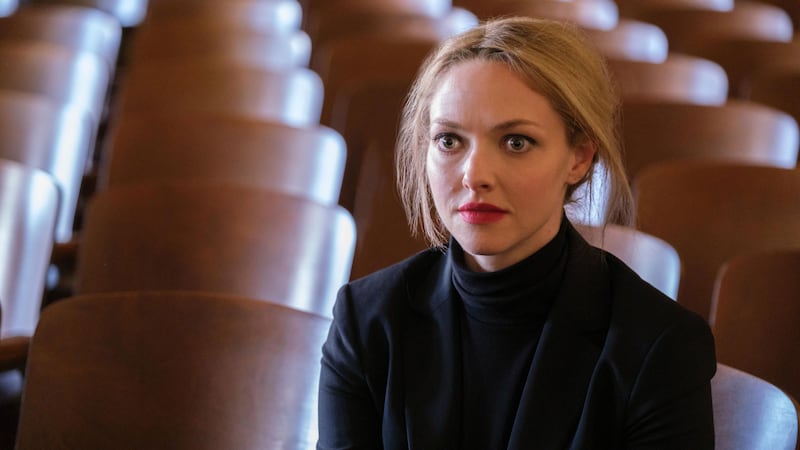
Amanda Seyfried as Elizabeth Holmes in Hulu's “The Dropout”
Beth Dubber/Hulu
If anything can get Seyfried a Supporting Actress nomination, it’s in these scenes, where there is no doubt she is capital-A acting. The Academy has nominated Seyfried before, for her role as Marion Davies in 2020’s Mank. But what she’s doing here is on another level.
As for Seyfried’s competition in that category, the industry’s best prognosticators are already placing Seyfried—often listed as [REDACTED] to avoid spoilers—alongside presumed frontrunners Anne Hathaway (The Odyssey), Penélope Cruz (The Invite and/or La Bola Negra), and Sandra Hüller (Project Hail Mary).
One thing’s for sure. You Can See Everything is a groundbreaking curveball that’s come just in time to shake up awards season. If we’re lucky, the biggest surprise won’t be a Best Picture nomination (which would be richly deserved), but the first-ever actor nominated for her role in a documentary.
Obsessed with pop culture and entertainment? Follow us on Substack and YouTube for even more coverage.

Got a tip? Send it to The Daily Beast here.
Register below to read this article for free or subscribe
to unlock unlimited access to The Daily Beast.
Monthly
$1
First month then $5.99/month
Annual
$35
First year then $59.99/year
Premium
$79
First year then $119.99/year
*Substack access provided by the next business day, using your subscription email. Choosing the Premium plan constitutes your permission to share your subscription email with Substack and your agreement to Substack’s Privacy Policy.
Already have an account? Sign In
Looks like you already have a subscription!
You're all set!
Thanks for subscribing.
Sign in or create an account
Login dialog
Loading comments…