‘The Bachelor’ Producers Have No Answer for Racism Controversies
Producers met questions from journalists about the show’s historic failings when it comes to race with stunning silence.
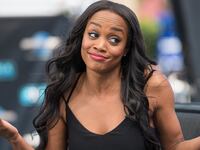
Noel Vasquez/Getty Images
Things turned more thorny when rosy when The Bachelor producers appeared on the Unscripted Storytellers panel at Saturday’s Television Critics Association press conference.
The afternoon began as a victory lap for The Golden Bachelor, the spinoff featuring 72-year-old Gerry Turner, which was ABC’s number-one season premiere and the most-watched unscripted series ever on Hulu. A sister series, The Golden Bachelorette was announced earlier in the morning. Producers Bennett Graebner, Claire Freeland, and Jason Ehrlich spoke with all the canned enthusiasm of one of the show’s contestants about being in the business of “happily ever afters.” But when journalists grilled producers Bennett Graebner, Claire Freeland, and Jason Ehrlich about diversity, demographics, and race controversies, their messaging was different: silence.
NPR’s Eric Deggans asked the producers about why The Bachelor has had so many controversies and issues when it comes to race. Matt James was the first Black Bachelor in 2021, and his season was overshadowed when photos of one contestant at an antebellum plantation-themed party surfaced and then-host Chris Harrison defended her—ultimating leading to Harrison’s departure from the show. Rachel Lindsay, the show’s first Black Bachelorette, has spoken about the show’s failings when it comes to race. Deggans asked if the show has learned anything from these past scandals.
“I can speak to where we are now,” Freeland said. “Our goal is to represent the fabric of the country not just with respect to diversity and ethnicity, but also ability and body types and representing where people are from in the country… I think so far we’re kind of putting our money where our mouth is and demonstrating that. So hopefully audiences are feeling that because it's something that we're always working on. And we’ll continue to do so as we go forward.”
That, obviously, did not answer the question, which is what Deggans followed up saying, reiterating, “Why does The Bachelor struggle to deal with race, particularly Black people, when they star on the show?”
Get the best of Obsessed delivered right to your inbox
By clicking “SUBSCRIBE” you agree to our Terms of Use and Privacy Policy.
The producers sat in silence, and when it became clear that no one was going to answer the question, journalists in attendance started gasping in surprise—and then giggling a little bit. “I guess we have our answer,” Deggans said, breaking the silence.
Earlier in the panel, we asked the producers if the success of The Golden Bachelor meant, with all due respect to the 25-year-olds on the original series who think they are at their last chance for love, that the franchise would explore installments or new spinoffs featuring those of us in our thirties, forties, or fifties who also happen to be looking for love. What, even, about a gay Bachelor or Bachelorette?
“Love is so universal,” Ehrlich said. “That’s what’s so wonderful about it. That’s why these stories resonate…I think there’s a lot of stories out there to tell, love stories… That’s what the show is all about. Taking 25 people who are all in search of love with this one person. Anything and everything is going to happen in that search and in that journey. That’s what’s so exciting. So to see that play out with different stories and different backgrounds? Yes, please.”
Graebner told a story about his dentist, who is 35, single, and told him that she can’t find someone to date. “The conversation I’m having with her at 35 is so different than the conversations we have with someone who’s 25 or who’s 65,” he said. “By the way, if anyone is single and available for her, she’s amazing.
As for the gays? That part of the question wasn’t addressed. But fingers crossed for the dentist.
Update: In a follow-up interview with Decider’s Nicole Gallucci following the awkward panel, Graebnar said, “I was there for Matt James’ season. I was there for Rachel Lindsay’s season. I was also there for Michelle Young’s season, Tayshia Adams’ season, Charity Lawson’s season,” Graebner added. “I think as stewards of this franchise, which has been such a part of the cultural zeitgeist for over two decades, there’s a tremendous responsibility to have conversations on camera that are difficult and challenging — conversations about race, conversations about class, conversations about gender. We have done that. Have we always done it perfectly? No. We’ve certainly made some mistakes along the way. But moving forward we’re going to do everything in our power to correct this.”

Got a tip? Send it to The Daily Beast here.
Register below to read this article for free or subscribe
to unlock unlimited access to The Daily Beast.
Monthly
$1
First month then $5.99/month
Annual
$35
First year then $59.99/year
Premium
$79
First year then $119.99/year
*Substack access provided by the next business day, using your subscription email. Choosing the Premium plan constitutes your permission to share your subscription email with Substack and your agreement to Substack’s Privacy Policy.
Already have an account? Sign In
Looks like you already have a subscription!
You're all set!
Thanks for subscribing.