The Arctic Is Warming Nearly Four Times Faster Than the Rest of the World
The current estimate “clearly underestimates the situation.”
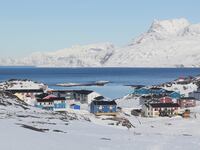
Hada Ajosenpää / Finnish Meteorological Institute
Get the Beast Digest newsletter delivered straight to your inbox
By clicking “SIGN UP” you agree to our Terms of Use and Privacy Policy.
The Arctic is warming like never before, nearly four times faster than the rest of Earth—and twice as fast as scientists previously thought. Finnish researchers drew from observed climate data from the past four decades and published their discovery of this systematic undercount on Thursday in the journal Communications Earth & Environment.
“Numerous recent studies report the Arctic having warmed either almost twice, about twice, or more than twice as fast as the global average. However, the warming ratios reported in these
and many other studies have usually been only referenced from older, possibly outdated, estimates and have not included recent observations,” the authors wrote in the study.
The reason the Arctic warms faster than the rest of the globe—a phenomenon known as Arctic amplification—has to do with a number of factors we’re still trying to understand. Theorized about as early as 1896, Arctic amplification seems to rely in part on sea ice melting. When the bright ice gives way to darker-colored water, polar environments are less able to reflect heat from the sun and end up absorbing it at higher rates. Other factors that may contribute to Arctic amplification include a lack of heat-absorbing thunderstorms, the presence of pollution and soot on snow, and increases in cloud cover.

In the recent study, the researchers averaged observed temperatures over time from four different sources in a range of Arctic locations. Depending on where they considered the southern bound of the Arctic to be, their estimates for the average rate of warming compared to the rest of the globe varied from three to four times as fast. But they found the region of the Arctic Ocean near Svalbard to be warming seven times faster than the rest of the world, or up to 1.25ºC per decade.
By comparing the observed data to simulations from standard climate models, the researchers made another disquieting discovery: The models struggled to simulate four-fold Arctic amplification. Climate models run on massive supercomputers and are updated every few years to more realistically simulate Earth’s conditions. Based on their results, the researchers proposed that tomorrow’s models should aim to understand and more accurately simulate Arctic amplification.
But one change can be made immediately: The old metric that suggested Arctic warming was only two times faster than the rest of the planet, the researchers wrote, “clearly underestimates the situation during the recent 43 years.”
See more of our coverage in your search results.

Got a tip? Send it to The Daily Beast here.
Unlock a year of full access to The Daily Beast for $35.
Monthly
$1
First month then $5.99/month
Annual
$35
First year then $59.99/year
Premium
$79
First year then $119.99/year
*Substack access provided by the next business day, using your subscription email. Choosing the Premium plan constitutes your permission to share your subscription email with Substack and your agreement to Substack’s Privacy Policy.
Looks like you already have a subscription!
- Account (completed)
- Payment (completed)
- Confirmation (completed)
You're all set!
Thanks for subscribing.
- 1Account
- 2Payment
- 3Confirmation
Sign in or create an account
Register below to read this article for free or subscribe
to unlock unlimited access to The Daily Beast.
Monthly
$1
First month then $5.99/month
Annual
$35
First year then $59.99/year
Premium
$79
First year then $119.99/year
*Substack access provided by the next business day, using your subscription email. Choosing the Premium plan constitutes your permission to share your subscription email with Substack and your agreement to Substack’s Privacy Policy.
Already have an account? Sign In
Looks like you already have a subscription!
- Account (completed)
- Payment (completed)
- Confirmation (completed)
You're all set!
Thanks for subscribing.
- 1Account
- 2Payment
- 3Confirmation