What Obama Should Have Said
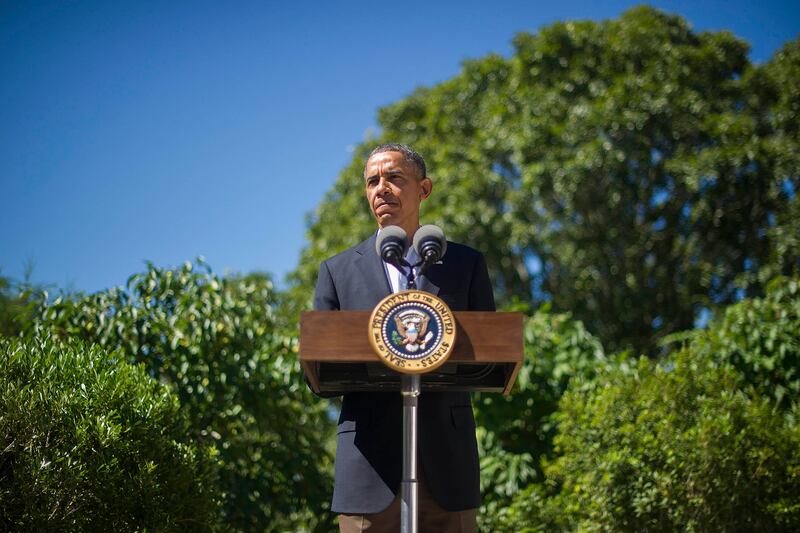
Jim Watson/AFP/Getty
Get the Cheat Sheet newsletter delivered straight to your inbox
By clicking “SIGN UP” you agree to our Terms of Use and Privacy Policy.
There was a lot to like in President Obama’s statement Thursday about the calamity in Egypt. He walked a crucial line between calling on Egypt to return to “a democratic path,” while also implicitly acknowledging that democracy and liberal democracy are two very different things. In a decent political system, “the rights of women and religious minorities”—two groups menaced in Egypt today—cannot be subject to majority vote.
He also talked about America’s own brutal, winding road toward greater political freedom. It’s one of his most appealing rhetorical tropes. George W. Bush talked about American democracy as an accomplishment. Obama talks about it as a struggle. That’s important for Egyptians to hear, and for Americans—especially in places like North Carolina—to hear as well.
Obama announced the cancellation of a military exercise with Egypt, but did not cut off aid in general. That’s OK, too. Cutting off aid might have made a difference the moment the coup happened. Now, tragically, it’s too late, so there’s no harm in taking the time to think things through.
Obama’s statement did, however, miss one critical note. When it comes to the Middle East, perhaps the biggest debate in America today is over whether the United States should support the right of Islamist parties to run in democratic elections. Since Morsi’s victory in Egypt—and subsequent authoritarian moves—a growing cadre of American commentators have argued that the U.S. should oppose Islamist rule even if that means supporting coups, military regimes, even massacres in the streets. As David Brooks wrote after last month’s coup, Islamists “lack the mental equipment to govern. Once in office, they are always going to centralize power and undermine the democracy that elevated them.”

I doubt Obama believes that. And he shouldn’t. Analytically, “Islamism” is about as useful in analyzing Middle Eastern politics today as “communism” and “socialism” were in analyzing political parties and movements during the Cold War. The term conceals vast differences of national tradition and political culture. To make “Islamism” America’s litmus test, rather than respect for free elections, minority rights, nonviolence, and the rule of law, would be to repeat the paranoid, Manichean tendency that led the U.S. to support coups against democratically elected regimes that we deemed “communist” in countries like Iran and Guatemala during the Cold War.
Yet across the Middle East today, many think that is precisely America’s policy. We winked at a coup that overturned free elections in Algeria in 1992. We tried to foment one against Hamas after it won democratic elections among the Palestinians in 2006. And now, in the eyes of many, we’ve done the same in Egypt.
At this point, few will still believe Obama. Still, he should have said bluntly that the U.S. supports the rights of Islamist parties to peacefully seek power as long as they respect democratic norms. Freely elected Islamist governments, as Mohammed Morsi showed, can be frightening. But the alternative, Obama should have said, is worse. For the evidence, just turn on your TV screen.
See more of our coverage in your search results.

Got a tip? Send it to The Daily Beast here.
Unlock a year of full access to The Daily Beast for $35.
Monthly
$1
First month then $5.99/month
Annual
$35
First year then $59.99/year
Premium
$79
First year then $119.99/year
*Substack access provided by the next business day, using your subscription email. Choosing the Premium plan constitutes your permission to share your subscription email with Substack and your agreement to Substack’s Privacy Policy.
Looks like you already have a subscription!
- Account (completed)
- Payment (completed)
- Confirmation (completed)
You're all set!
Thanks for subscribing.
- 1Account
- 2Payment
- 3Confirmation
Sign in or create an account
Register below to read this article for free or subscribe
to unlock unlimited access to The Daily Beast.
Monthly
$1
First month then $5.99/month
Annual
$35
First year then $59.99/year
Premium
$79
First year then $119.99/year
*Substack access provided by the next business day, using your subscription email. Choosing the Premium plan constitutes your permission to share your subscription email with Substack and your agreement to Substack’s Privacy Policy.
Already have an account? Sign In
Looks like you already have a subscription!
- Account (completed)
- Payment (completed)
- Confirmation (completed)
You're all set!
Thanks for subscribing.
- 1Account
- 2Payment
- 3Confirmation