‘Adolescence’ Star Comes Roaring Back to TV Screens in ‘A Thousand Blows’
Their characters never met in “Adolescence,” but you can see Stephen Graham and Erin Doherty face off in “A Thousand Blows.”

Hot off the heels of their acclaimed turns in last year’s Adolescence, Stephen Graham and Erin Doherty reunite for Season 2 of A Thousand Blows, a Steven Knight period piece (January 9, Hulu) that will immediately remind viewers of the creator’s beloved Peaky Blinders.
And yet, this 19th-century series is ultimately a feeble crime-fiction contender in its second go-round, courtesy of perfunctory plotting and a habitual desire to imagine the past in preachy present-day terms. For all its ragamuffin working-class English bluster, it is—with regards to character and politics—about as fantastical as any Avengers or Avatar epic.
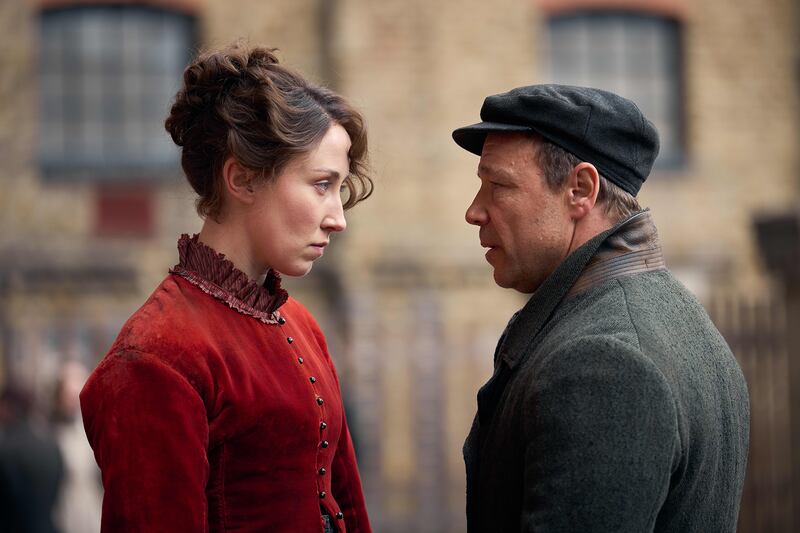
Erin Doherty and Stephen Graham.
Disney
A year after last season’s events, Jamaican transplant Hezekiah Moscow (Malachi Kirby) remains banned from professional boxing thanks to his accidental mid-bout killing of the sport’s (white) champion. He now gets his aggression out by throwing fists in the hold of a boat docked near Wapping, his East End of London stomping grounds.
Hezekiah is in an awful way, albeit not as bad as Henry “Sugar” Goodson (Graham), whom Hezekiah discovers is a blotto drunk who’s spent the past 12 months living on the streets (referred to, in one of the series’ best turns of phrase, as “the cobble”). Having alienated himself from everyone, including his brother Treacle (James Nelson-Joyce)—who runs their bar and fight venue The Blue Coat Boy—Sugar is a shell of a man whose sole friend is Jack Mac’s (Gary Lewis) whiskey.
Graham embodies him with a compelling mixture of despair, self-loathing, and fury, the last of which is mostly directed at Hezekiah, who bested him in the ring and in the heart of crime syndicate bigwig Mary Carr (Doherty).
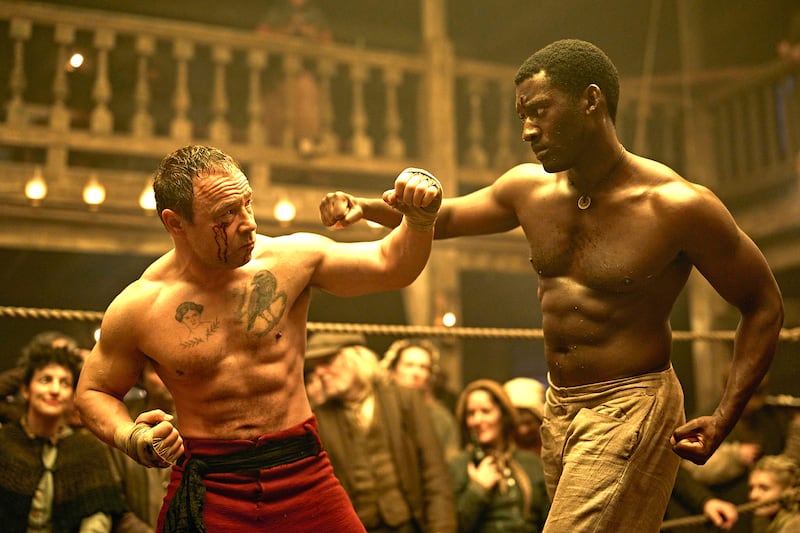
Stephen Graham and Malachi Kirby.
Robert Viglasky/Disney
Mary and Hezekiah, however, aren’t speaking because of her culpability in the slaying of Hezekiah’s brother, and at the outset of A Thousand Blows, Doherty’s protagonist is less concerned with making amends with the pugilist than reclaiming her place as the “queen” of the Forty Elephants gang.
Sign Up for Our Obsessed Newsletter
By clicking “SUBSCRIBE” you agree to our Terms of Use and Privacy Policy.
Trouble is, her crooked mates have abandoned her, so she sets about putting the band back together for one of those big scores around which tales such as this inevitably revolve. Knight’s show takes its time laying out the particulars of that ruse, and while such teasing is initially intriguing, it concludes with no grand payoff, as Mary’s scheme is merely another theft that requires infiltrating high society and stealing from the rich to give to the poor—namely, themselves.
Everyone is fighting the white, wealthy, racist, colonialist powers-that-be in A Thousand Blows, most notably Hezekiah, who kicks off the action by seeking vengeance for the wrongs done to him and his family. Even once that motivation subsides, he continues to be a righteous avenger on behalf of the little man, which aligns him with Mary and her band of merry pranksters, whose entire purpose is sticking it to upper-crusters.
It also makes him a natural ally of Charles Duval (Alexandre Blazy), a Parisian bank robber and anarchist who arrives in Wapping intent on killing the working class’s oppressors, and his stash of dynamite proves that he means business—as well as puts him on the radar of Vance Murtagh (Tim Steed), a detective whose fixation on the Frenchman is only matched by his dedication to taking down Mary.
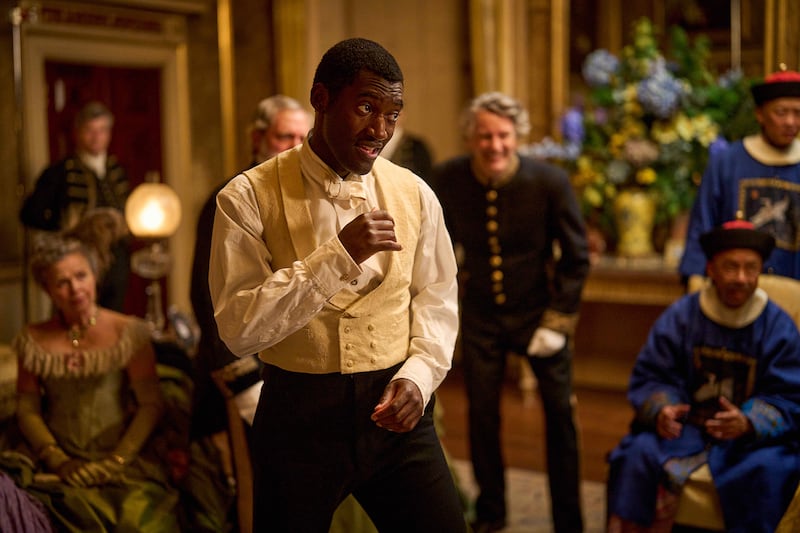
Malachi Kirby.
Disney
Knight’s story is purportedly inspired by real East End men and women, but it resounds as reheated Peaky Blinders leftovers, gussied up with endless chatter about standing up for the subjugated, be they Black, destitute, or—in the case of the ruthlessly committed feminist Mary—women.
That such groups were marginalized in the 1880s isn’t in doubt. Yet the show’s attempts at grimy knockabout realism are undercut by its dedication to sermonizing in a distinctly modern way. A Thousand Blows’ foregrounded social conscience makes the 1880s feel, in spirit, a whole lot like 2026. Epitomized by Hezekiah carrying himself like the most virtuous man in London and suffering no consequences for it from the white men he actively looks down upon—a preposterous situation, given the era—the proceedings transplant today to yesterday, pretending that then was just like now.
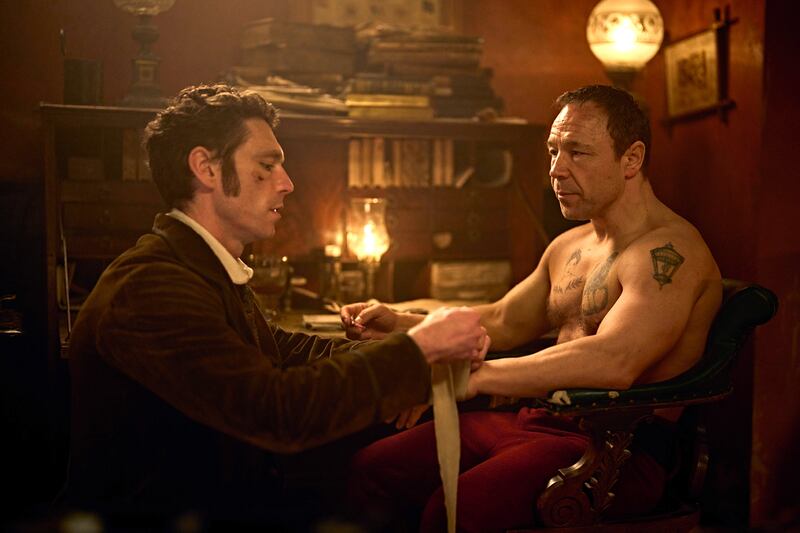
James Nelson-Joyce and Stephen Graham.
Robert Viglasky/Disney
The result is a historical drama that prioritizes espousing contemporary values over presenting an authentic vision of 19th-century London life. The material’s few intolerant characters practically spit their vitriol while everyone else marvels at Hezekiah and Mary. And though Knight seems to think this is a clever revisionist take that upends the period’s traditional power dynamics, it mostly comes across as facile pandering to 21st-century attitudes.
Not helping matters is a lack of depth, with everything obvious and simplistic, as well as a compendium of narrative threads that slowly come together and then conclude in underwhelming fashion. It’s the rare small-screen venture that would have benefited from additional episodes. At a brief six installments, it’s far too sketchy.
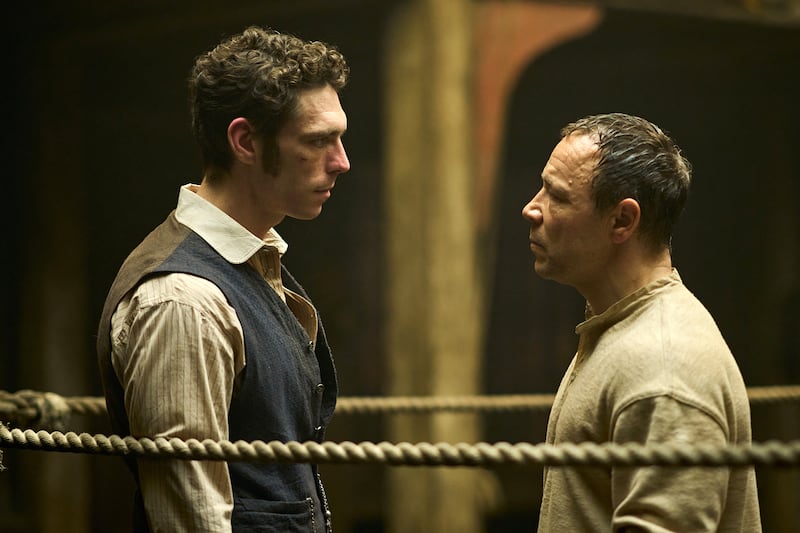
James Nelson-Joyce and Stephen Graham.
Robert Viglasky/Disney
The accents are the weightiest thing about A Thousand Blows, whose zigs and zags are easy to see coming and whose brash swagger is simply a façade designed to conceal the fact that, deep down, it’s got a pretty soft center, to the point that with a seemingly tragic death, it embarrassingly pulls its punches.
Even the intimidating Graham is asked to do more moping than raging this time around, his Sugar reduced to an alcoholic mess caught uneasily between redemption and damnation. And his moral crisis, which should be this saga’s focus, is treated with the same hastiness as everything else.
Graham’s magnetism, along with Doherty’s feistiness, is just enough to prevent the show from going completely off the rails. Nonetheless, neither one is served well by respective (intertwined) storylines that have been modeled after better underworld-set predecessors.
Characters come and go, conflicts are easily and cutely resolved, and a genuine sense of danger never materializes, with A Thousand Blows more interested in poses and attitude, clichés and corny declarations, than providing a unique window onto this gritty milieu and its inhabitants.
Graham and Doherty make for a charismatic pair, but Knight stumbles with his series’ sophomore run—and, in doing so, makes one slightly more nervous about his forthcoming trip back to this world with Peaky Blinders: The Immortal Man.

Got a tip? Send it to The Daily Beast here.
Register below to read this article for free or subscribe
to unlock unlimited access to The Daily Beast.
Monthly
$1
First month then $5.99/month
Annual
$35
First year then $59.99/year
Premium
$79
First year then $119.99/year
*Substack access provided by the next business day, using your subscription email. Choosing the Premium plan constitutes your permission to share your subscription email with Substack and your agreement to Substack’s Privacy Policy.
Already have an account? Sign In
Looks like you already have a subscription!
You're all set!
Thanks for subscribing.
Sign in or create an account
Login dialog
Loading comments…