Director Defends Resurrecting Anthony Bourdain With AI
The filmmaker behind Bourdain’s documentary believes that artificial intelligence aligns with the chef’s iconic authenticity.

The documentarian who captured Anthony Bourdain’s barrier-breaking life believes the acclaimed chef would have approved of him using AI to recreate the chef’s iconic voice.
“It was done trying to kind of creatively honor his irreverence in a way,” Morgan Neville, the director of Roadrunner: A Film About Anthony Bourdain, said on Obsessed: The Podcast.
In 2021, Neville, 58, came under fire for his use of generative AI to recreate Bourdain’s voice for parts of the film’s narration.
But Neville, whose latest film is the Paul McCartney doc Man on the Run, told Obsessed that he believed Bourdain may have been on board with the decision, given his “punk” rock attitude and desire to “break every rule.”

In the documentary about Bourdain's life, "Roadrunner," Neville claims he used AI to recreate the chef's voice three times.
Courtesy Focus Features
“I talked to all of his friends about it. It wasn’t like a secret to any of his friends or the producers or anybody. And nobody kind of blinked about it,” the Oscar-winning director said. “It just felt like a little, like an Easter egg or something.”
Because Bourdain died by suicide three years before the film was made, Neville pieced together its narration using thousands of hours of archival footage and audio of the Emmy-winning chef.
Get the best of Obsessed delivered right to your inbox
By clicking “SUBSCRIBE” you agree to our Terms of Use and Privacy Policy.
All of the narration is in Bourdain’s real voice, except for three written quotes that the documentarian couldn’t find him saying aloud. So, the director commissioned a software company to develop an AI-generated version of Bourdain’s voice to fill in the gaps.
When news broke of Neville’s use of AI, viewers and critics alike erupted in anger, many of whom cited Bourdain’s authenticity as a signifier of his supposed disapproval.
In the New Yorker’s coverage of the controversy, staff writer Helen Rosner weighed in.
“A common refrain on Twitter in recent days has been that Bourdain would surely have hated the use of his A.I.-generated voice. He is often considered a champion of ‘authenticity,’ and some fans have criticized the technology as antithetical to that standard,” Rosner wrote. “But authenticity is a slippery concept, especially in the world of food and travel—something that Bourdain himself knew.”
Speaking at a conference about ethics in documentary filmmaking last fall, AI expert Dominic Lees said, “Personally, I can’t watch another Morgan Neville documentary without thinking: ‘You deliberately deceived me.’ The trusting relationship between me, the audience, and you, the filmmaker, is completely gone.”
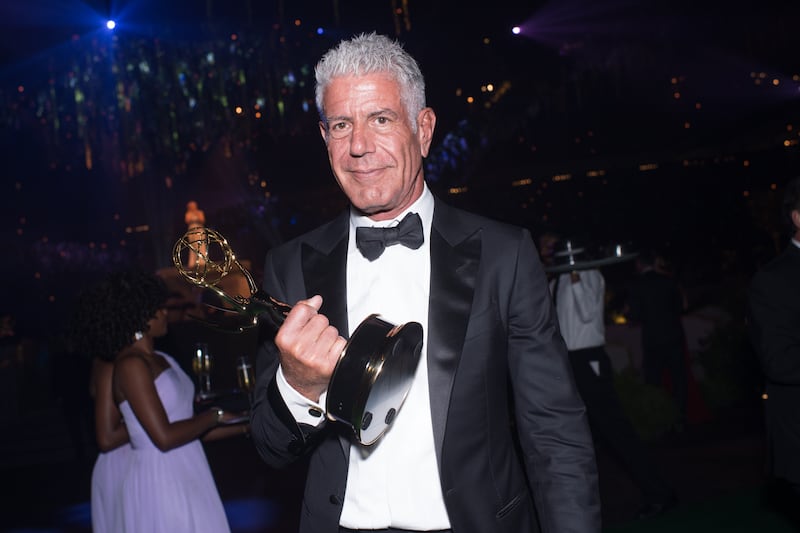
Bourdain became an iconic chef through his barrier-breaking books and documentary cooking shows. He won several Emmys for his shows, particularly "Parts Unknown."
Emma McIntyre/Getty Images
Neville revealed that one of the three uses was for an email Bourdain wrote to his friend, artist David Choe. He has not revealed the other two instances.
In the years since, the use of generative AI has become a hot-button issue in Hollywood. Oscar-winning films are marred with controversy, AI actors have arrived to take acting jobs, and writers are striking over its use.
“It became part of a much bigger debate, and we’re only at the beginning of that debate still,” Neville noted.
The documentarian, whose work has profiled some of the entertainment world’s biggest names like Steve Martin, Paul McCartney, and Johnny Cash, said he would be hesitant to use such techniques again. He said he hasn’t used the controversial technology in his documentaries since.

Bourdain first made a name for himself through his behind-the-scenes look at the culinary world in his book "Kitchen Confidential."
Bruce Gilbert/Newsday via Getty Images
“AI is a big, sloppy label for all kinds of things, you know? 20 years ago, if you were mixing something and were trying to bring out some frequencies, you were using some version of AI,” Neville said. “Nuance is kind of lost when you get into these discussions, so I’ll leave it to others.”
Neville’s latest documentary about Paul McCartney’s life in the decade between the Beatles’ breakup and John Lennon’s death is in theaters on February 19 and 22. It will begin streaming on Amazon Prime on February 27.
Subscribe to our YouTube channel to watch new episodes of ‘Obsessed: The Podcast’ every Monday, Wednesday, and Friday. And follow our feed to listen to the show the next morning on your favorite podcast platform.


Register below to read this article for free or subscribe
to unlock unlimited access to The Daily Beast.
Monthly
$1
First month then $5.99/month
Annual
$35
First year then $59.99/year
Premium
$79
First year then $119.99/year
*Substack access provided by the next business day, using your subscription email. Choosing the Premium plan constitutes your permission to share your subscription email with Substack and your agreement to Substack’s Privacy Policy.
Already have an account? Sign In
Looks like you already have a subscription!
You're all set!
Thanks for subscribing.
Sign in or create an account
Login dialog
Loading comments…