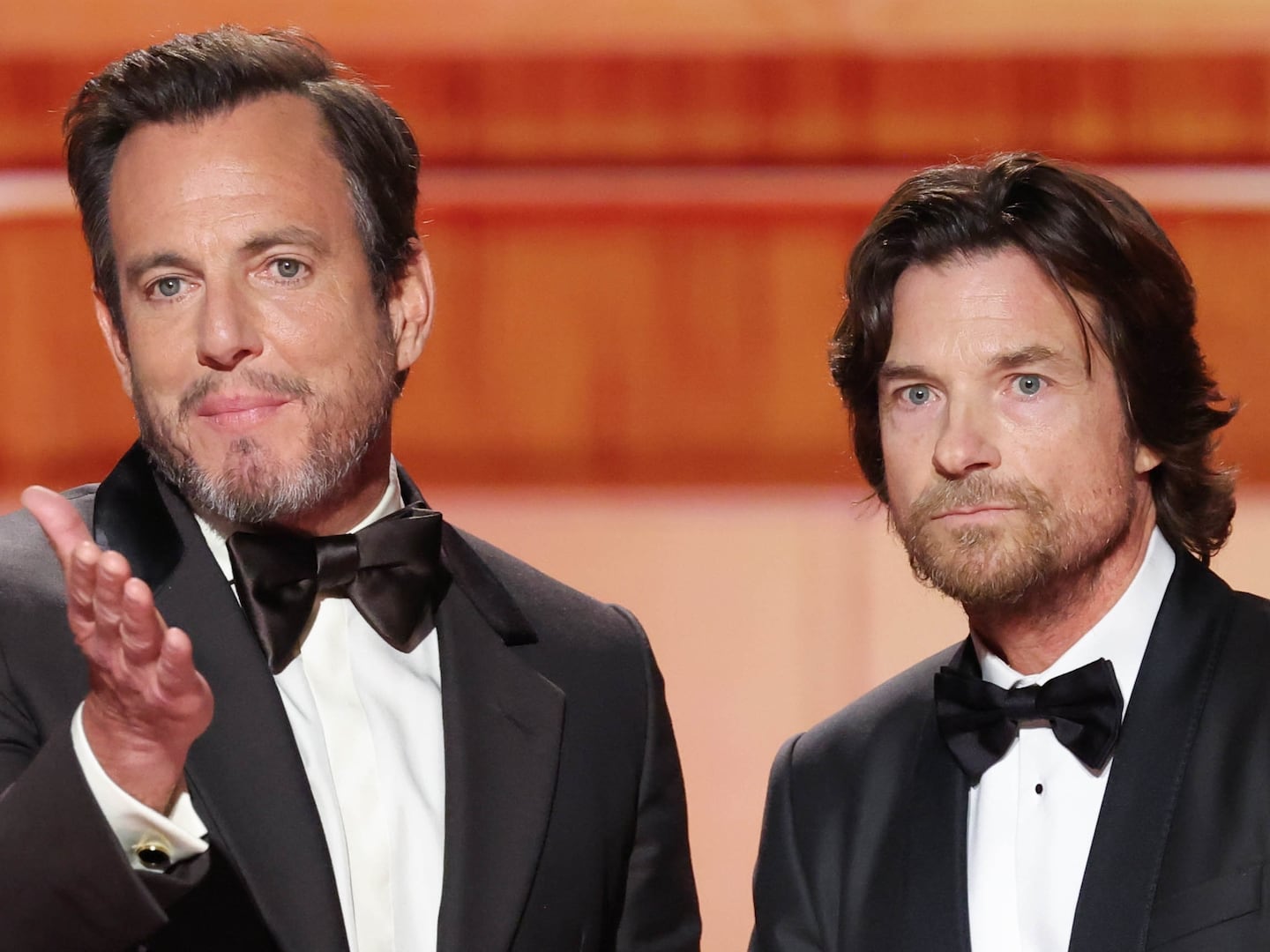
A century’s worth of filmmakers have squeezed every last drop of blood out of Count Dracula, and yet the desire to bring Bram Stoker’s infamous nightwalker to the screen seemingly cannot be killed
The Professional and The Fifth Element auteur Luc Besson is the latest to try his hand at resurrecting the monster with Dracula (February 6, in theaters), a retelling of the legend that puts a premium on the fanged fiend’s romantic yearning. And even the typically welcome presence of two-time Oscar winner Christoph Waltz can’t revive this lifeless corpse.
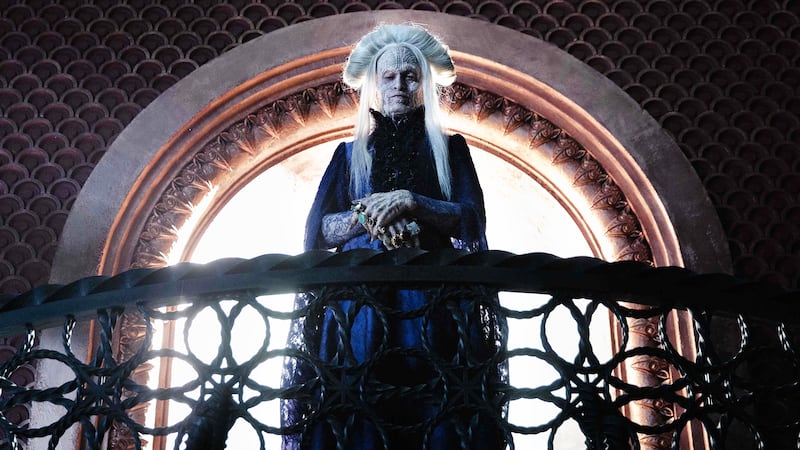
Only slightly less silly than 2024’s Dogman, his prior collaboration with Caleb Landry Jones, Besson’s newest takes a page (or three) from Francis Ford Coppola’s Bram Stoker’s Dracula, beginning with its conception of the eternal Romanian as an aged creep with a giant head of white hair and an everlasting longing for his beloved.
In this case, that would be Princess Elisabeta (Zoë Bleu), whom, as a pre-damned young man, Dracula adores in a sequence full of sex, firearm practice, pillow and food fights, and synchronized dancing. With these brief snapshots, Besson suggests the childishness, violence, and passion that defines their relationship, but it’s simply the last two of those that really matters once Dracula is called away to war against the Ottomans, during which he’s unable to save Elisabeta from death at the hands of his enemies.
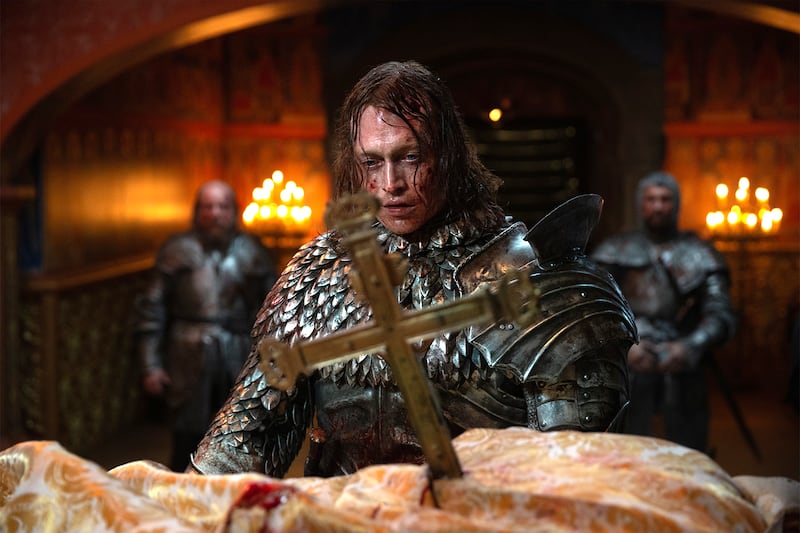
Since he’d asked the church to protect his beloved, Dracula takes his fury out on it, stabbing a cardinal with a cross as he seethes, “Tell your god that until he brings me back my wife, my life no longer belongs to him!” This blasphemously bold act is in keeping with Besson’s staging, in which everything—including battle scenes featuring the title character in an animal helmet, heads on spikes, and walls of fire—is staged with maximum opulence.
The director’s widescreen vistas and heady camera rotations (a recurring aesthetic motif) aim for grandeur. Yet the over-the-topness of it all, enhanced by Danny Elfman’s ornate score, resounds as less magnificent than corny, as if this were the most expensive Saturday Night Live digital short ever produced.
Jones has never been an actor associated with restraint, and he’s completely in harmony with Besson’s exaggerated impulses in Dracula, his performance defined by its outsized deviousness.
This is especially true once the film fast-forwards 400 years to find Dracula entertaining Jonathan Harker (Ewens Abid) at his gothic castle, the villain’s every word and gesture accompanied by a ridiculously devilish grin. Not helping things, Harker (who, eschewing canon, doesn’t arrive via ghostly carriage) is an upbeat buffoon who’s barely perturbed by his grotesque host or malevolent surroundings, such that when Dracula, at dinner, magically slides a plate to him, he merely states with mild curiosity, “Nice trick!”
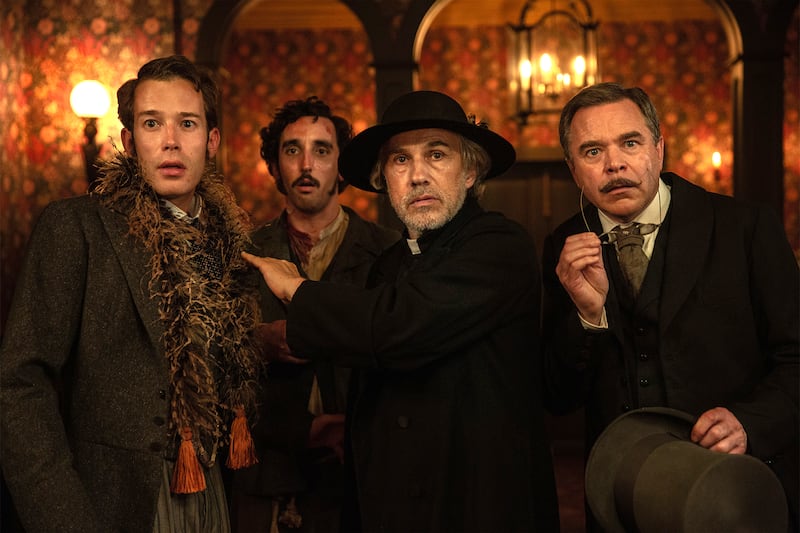
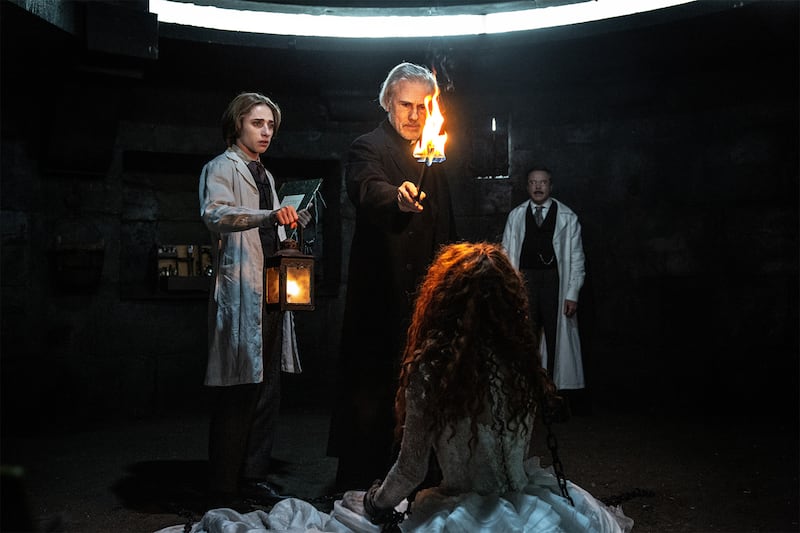
Back in Paris, an unnamed Bavarian priest (Waltz) is summoned by Dr. Dumont (Guillaume de Tonquédec) to his madhouse-y hospital, where he’s caring for a woman named Maria (Matilda De Angelis) who went crazy at her wedding to the queen’s great nephew Henry Spencer (David Shields) and who, records indicate, is 130 years old.
Couple that with her possessed-by-the-devil behavior and bite marks on her neck, and the Priest—who functions as this tale’s de facto Abraham Van Helsing—deduces, with scientific reasoning he likens to “a criminal investigation,” that Maria is a victim of the demon he and his churchmates have long sought.
Waltz is an apt actor for this wise, seasoned vampire-hunter role, but Dracula makes him a flippant do-gooder prone to cutesy quips (upon learning Spencer is related to royalty, he dryly remarks, “The queen? Exciting.”).
It treats the rest of its characters similarly, whether it’s Jonathan Harker hearing that Dracula has been waiting 400 years for his wife’s return and remarking, “That’s pretty long!”, or Maria, once freed from captivity by her master, telling Jonathan’s fiancé Mina (also Bleu) that Dracula has been “dying to meet you”—a groan-worthy comment related to the fact that, per Stoker tradition, the Count is convinced this woman is the reincarnation of his deceased spouse.
Jones and Bleu’s undying love should be the spark that ignites Dracula, so the fact that the two share no chemistry is a near-fatal blow.
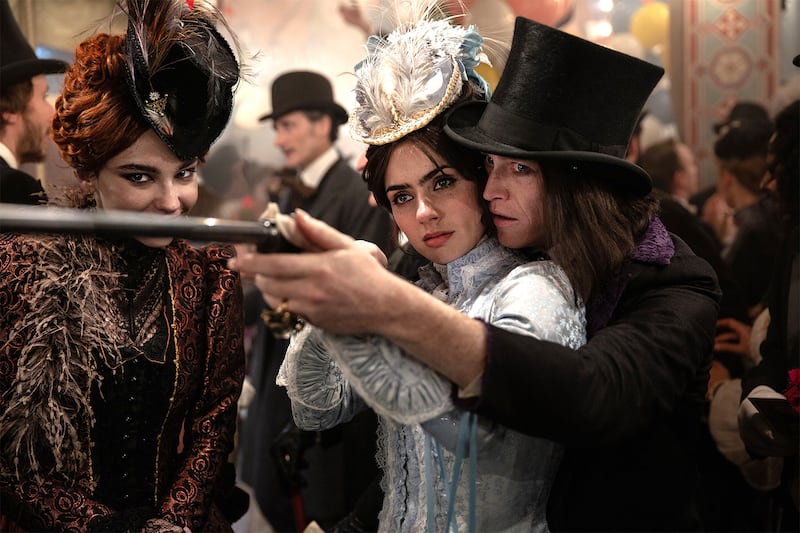
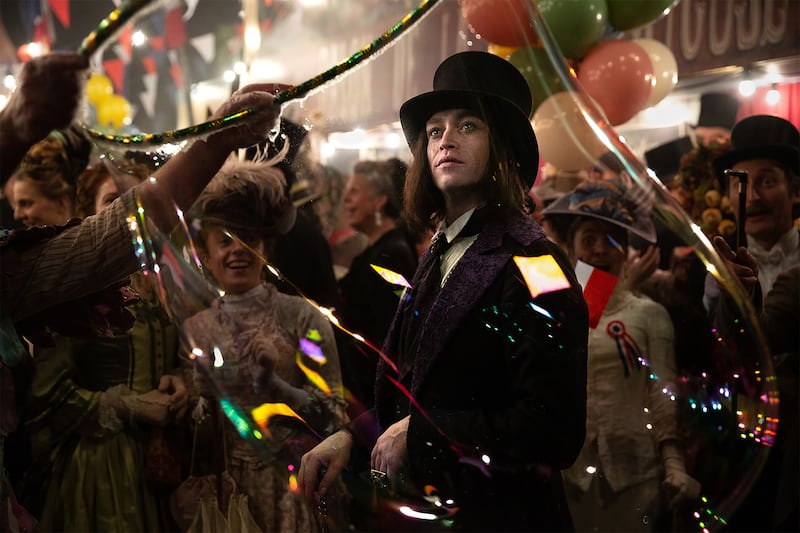
Just as troublesome is the general cartoonishness of every performance, aesthetic flourish, and pronouncement, with the headliner leading the way, notably during a laugh-out-loud montage in which his Dracula, wearing a collection of big hats (and occasional mustaches), visits various sumptuous international courts and balls to try out a unique perfume that enchants any woman in his vicinity.
The tone that Besson strikes at this and other moments is deliberately comical, and when paired with his disinterest in suspense—there isn’t a single instance in which he attempts to generate unease, much less terror—the film feels decidedly unserious, regardless of the splendor of Hugues Tissandier’s production design.
Dracula’s most absurd touch is a collection of gargoyles that serve as Dracula’s mansion minions, and whose CGI appearance is as slipshod as their bouncy physicality is unintentionally funny.
In a wannabe showstopper, Besson spins around a dining room table as the animated winged statues pile up gold and valuables for Dracula, and the effect is so look-at-me ludicrous that it’s difficult not to chuckle. A subsequent rampage in which Dracula uses his aromatic elixir to bewitch a convent full of nuns almost achieves the baroque beauty the director seeks, with the Count ultimately standing atop a towering column of holy women. Even that, though, is undermined by an air of farcical showiness.
Besson has always been a wild stylist who paints in bold colors, and Dracula’s go-for-broke energy keeps it from ever being an outright bore.
Whereas his finest works boasted thrillingly original sights, his take on the Stoker classic largely relies on the familiar to reach its finale, whose stabs at amorous tragedy prove dull. His creature of the night may be more of a lover than a fighter—albeit one who routinely must assume the latter role—but for the most part, he’s just a pale imitation of scarier bloodsuckers gone by.