After four years, Euphoria is back, as tawdry and titillating as ever. And yet also, somehow, better.
With its first two seasons, Sam Levinson perfected a particular brand of high-gloss trash, cramming every possible scary, sleazy, screamy, sexed-up teen issue into a multipronged story that was dialed to 100 and pitched as the most pretentious show in television history.
The creator/writer/director never met a young girl he didn’t want to droolingly ogle and/or put through hell, and with his HBO hit, he lustily indulged in goofy, inane, exploitative maximalism. Yet for all the grating posturing, its self-conscious over-the-topness occasionally resulted in bracing drama. The show was totally phony, lurid, gross, and look-at-me ridiculous, except on those intermittent occasions when it was startling, invigorating, and real.
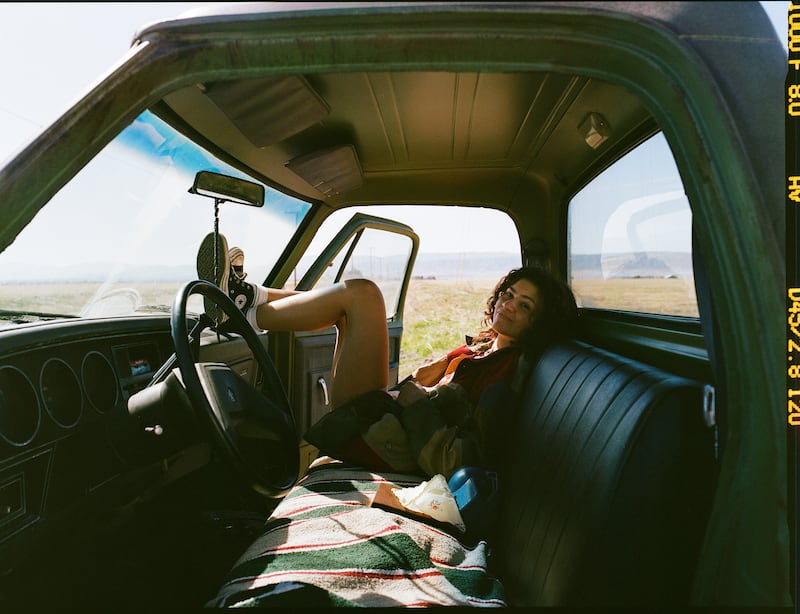
That push-pull between the affected and the authentic remains intact in Euphoria’s long-awaited third season (April 12), whose protagonists, now out of high school, find themselves navigating a modern world where sex is the most valuable commodity, and selling it is the quickest, easiest, and best means of achieving their dreams.
Levinson’s series, you won’t be surprised to hear, is happy to sell it too, in great, sensationalistic doses. More than before, though, his plotting is rigorously streamlined and his characters piercingly defined, making this eagerly anticipated return (at least on the basis of the three episodes provided in advance to press) its finest to date.
Euphoria gets off to an adrenalized start in the Chihuahua desert, with Rue (Zendaya) operating as a drug mule for Laurie (Martha Kelly), who didn’t let her previous faux pas with a suitcase full of drugs slide. In a comical and shrewdly telling image, Rue’s car gets—literally—stuck on the top of a U.S.-Mexico border fence, precariously teetering backward and forwards.
Regardless of her own prior shakiness, Rue handles this crisis with aplomb, making it back to her boss, who proceeds to have her and wanton addict Faye (Chloe Cherry) continue making similar runs with baggies of lethal substances stuffed down their throats.
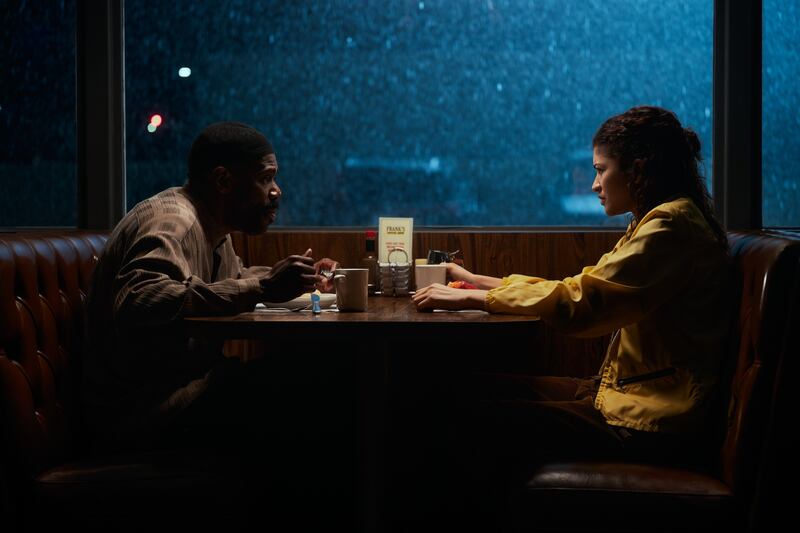
Rue’s situation isn’t ideal, but at least she’s largely in control of her addictions. And following a diner sit-down with Ali (Colman Domingo), she decides to give God a try. No sooner has she embraced the Lord than her fortunes take a fortuitous turn courtesy of an encounter with Alamo (Adewale Akinnuoye-Agbaje), a rich and powerful pimp whom Rue convinces to hire her—a move that Laurie agrees to because of a tragedy for which she’s responsible.
Thus, Rue gets a shot in the strip club industry, and Zendaya’s performance, always marked by asphyxiating narco-darkness, becomes infused with a newfound light and buoyancy, thereby affording the material a heretofore-elusive stability.
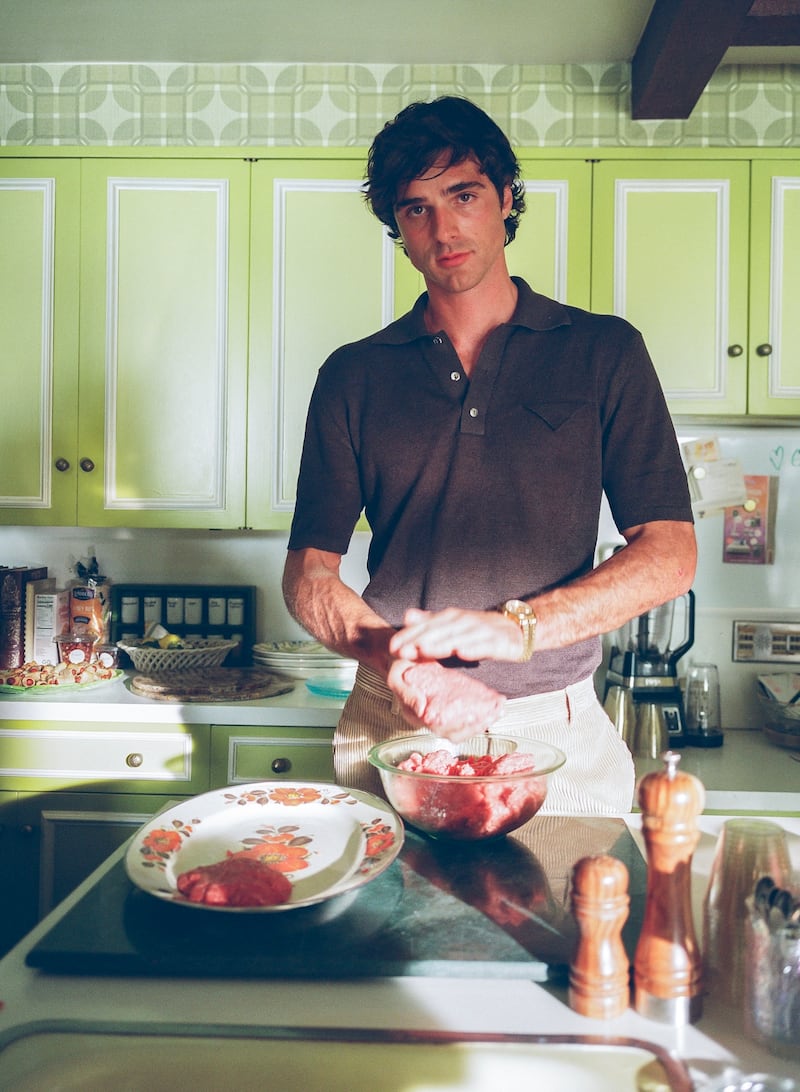
Not that everything is even keeled in Euphoria, since Nate (Jacob Elordi) and Cassie (Sydney Sweeney) continue to be the mess of all messes. Having taken over his dad’s real estate development business, Nate is trying to build a retirement community, and his positive, professional demeanor is a mask that hides his mounting financial strain.
Fiancé Cassie neither knows nor cares about such problems. All she wants is a lavish wedding decked out with $50,000 worth of flowers. When Nate won’t agree to that insane sum, she takes her racy Instagram posts—of herself as a dog, a baby, and soaking wet in the Stars and Stripes—to OnlyFans, which she roundly defends as not pornographic despite her own evidence to the contrary.
Sweeney’s mastery of crying like a hysterical child is employed to amusing effect in Euphoria, as is Elordi’s cool callousness, and the show makes similarly strong use of its other cast members.
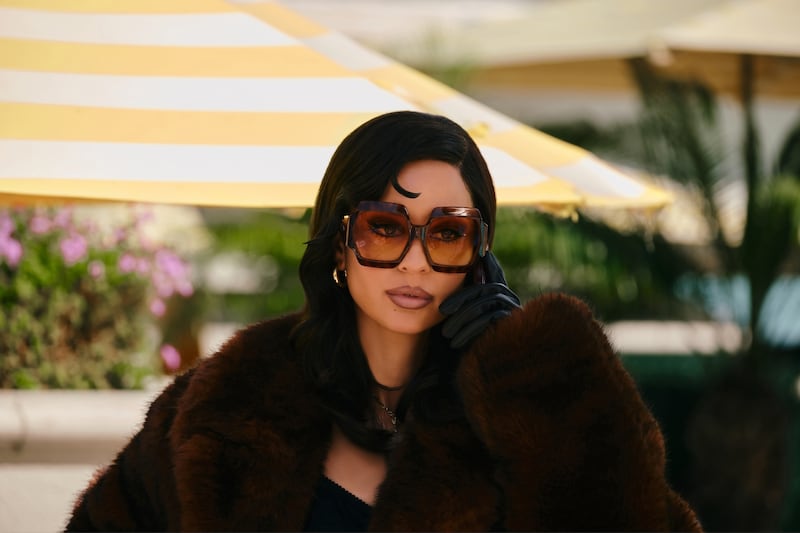
Alexa Demie is driven and calculating as Maddy, who’s now working for a talent agent, and Hunter Schafer is composed and ambitious as Jules, whose art-school education has taken a backseat to paying the bills as a de facto call girl.
Everywhere you turn, Levinson’s characters are unabashedly using their bodies (or someone else’s) to make a living. And if this comes across as an overly cynical portrait of today’s 20-somethings, it’s in keeping with the prior seasons’ fondness for imagining Gen-Z in the crudest and flashiest of manners.
Most, but not all, of Euphoria’s existing stars participate in this latest engagement. Due to the untimely 2022 death of Angus Cloud, Fezco is MIA (in prison, for 30 years), and Barbie Ferreira’s Kat is neither seen nor mentioned.
Still, the late Eric Dane does make recurring, touching appearances as Nate’s hopelessly screwed-up dad Cal. And Levinson adds a collection of captivating new players—including Akinnuoye-Agbaje’s Alamo, his stone-faced right-hand man Bishop (Darell Britt-Gibson), as well as his club manager (Kadeem Hardison) and dancers (Priscilla Delgado and Spanish pop star Rosaliá)—to compensate for the notable absences.
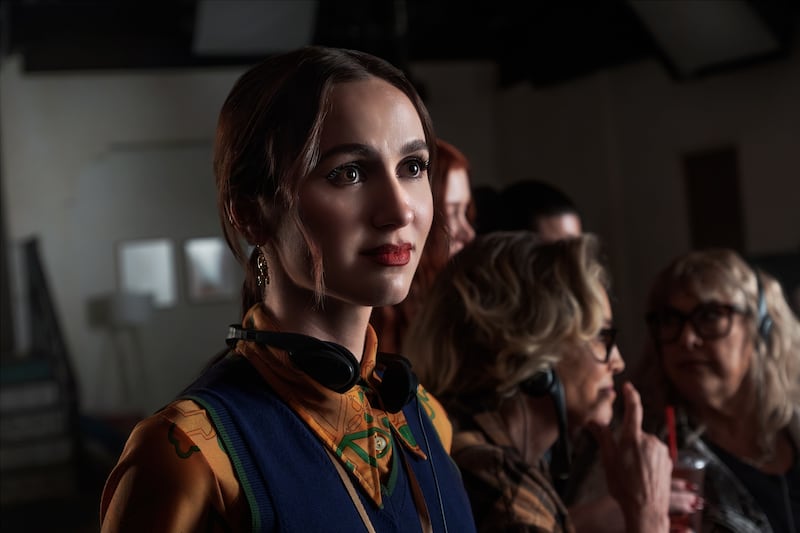
Sharon Stone additionally pops up as Lexi’s (Maude Apatow) Hollywood-producer superior, and though she does little in the season’s initial three chapters, she manages to serve as Levinson’s mouthpiece when she states, “People underestimate the power of entertainment. What you see on television directly impacts the way we see one another.”
For all the performative empathy he exhibits toward his protagonists, Levinson sees them as just this side of cartoonish, which makes it easier to saddle them with outrageous dilemmas. Those don’t always ring true in Euphoria’s third go-round. However, these episodes boast far fewer dead-weight subplots than in the past, helping offset the fact that, without high school as a central tether for its characters, the action is a bit less cohesive.
Euphoria is the antithesis of subtle, but Levinson tones down the directorial showmanship (relatively speaking) and his writing is reasonably assured —a byproduct, it seems, of moving into an adult landscape where his histrionic theatricality feels slightly more at home.
That’s truest in the third episode, set at Nate and Cassie’s wedding, where a variety of unexpected encounters both fan the flames of old rivalries and heal scabbed wounds, and the arrival of an uninvited guest sends things in a perilous direction.
By the conclusion of that installment, the series has fully tapped into the laugh-out-loud madness that first made it a small-screen sensation. Whether it can maintain that verve is, for now, unknown. Nonetheless, like his wayward youths, Levinson appears to have learned a mature thing or two since his last outing—even if he hasn’t lost his taste for the crazy and vulgar.