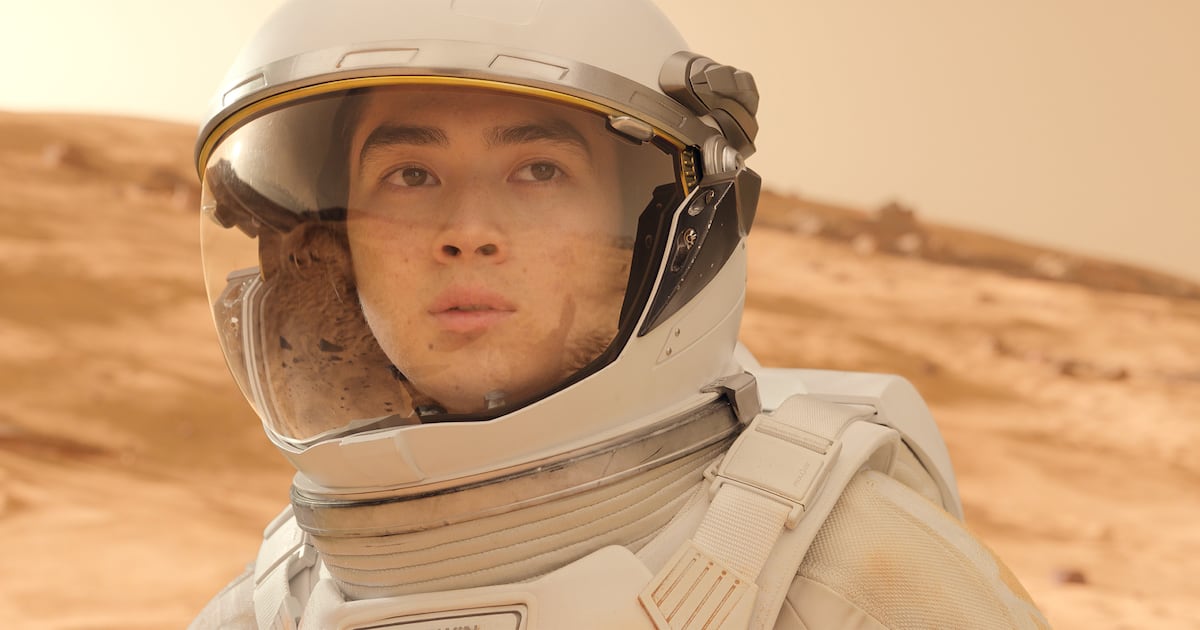
For All Mankind initially hooked viewers with its clever alternate-history conceit about a 20th-century timeline in which the Soviet Union beat the United States to the moon, instigating a space race that eventually led to the creation of a colony on Mars.
Yet the reason Ronald D. Moore, Matt Wolpert, and Ben Nedivi’s series is so beloved is its nuanced, earnest, and heartbreaking portrait of the men and women whose personal struggles, dreams, and hardships help shape mankind’s fate.
More than any sci-fi show on television, Apple TV’s hit is about how the little picture informs the big, and in that regard, it remains confidently on course in its fifth season (streaming Mar. 27).
Continuing its story of humanity’s quest to boldly go where no man has gone before, For All Mankind says goodbye to old favorites, introduces new ones, and grapples with age-old concerns—about ambition, exploitation, independence, and tyranny—through a futuristic lens, all with a heart that enlivens its out-there action. Even when its narrative turns a tad staid, its profuse empathy carries the day.
As always, For All Mankind begins its fifth chapter with a recap of the revisionist world events that have taken place since its last outing, complete with humorous headlines about the alternate state of Earthly affairs (the best: John Lennon and Jay-Z perform at the Grammys, where their “Grey Album” wins Album of the Year).
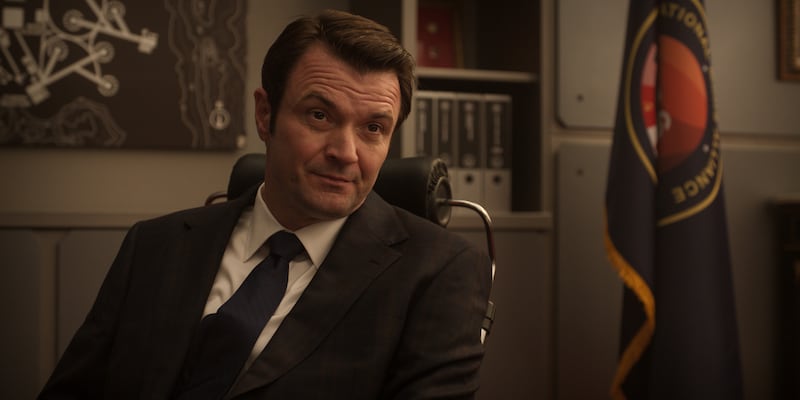
Thanks to the heist of the Goldilocks asteroid and its ultra-valuable deposits of iridium, Mars’ Happy Valley colony is flourishing under the leadership of an alliance of six countries known as the M-6 and its current governor, Leonid Polivanov (Costa Ronin). Nonetheless, things aren’t hunky dory on the Red Planet, as the M-6’s authoritarian space-cop “peacekeepers” are viewed as thuggish, and an underground “Free Mars” rebel movement is taking shape.
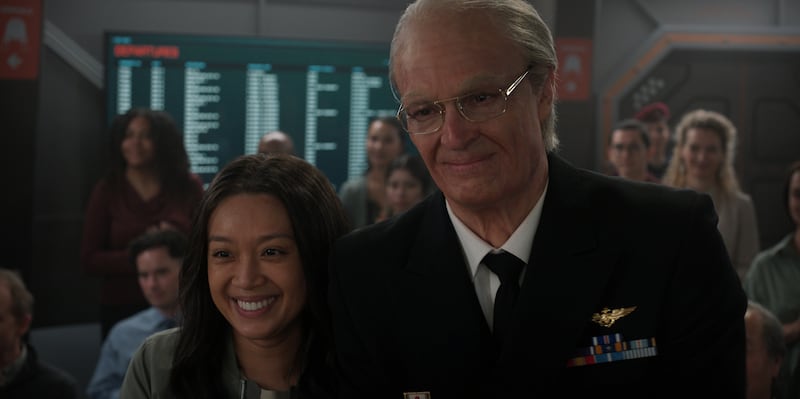
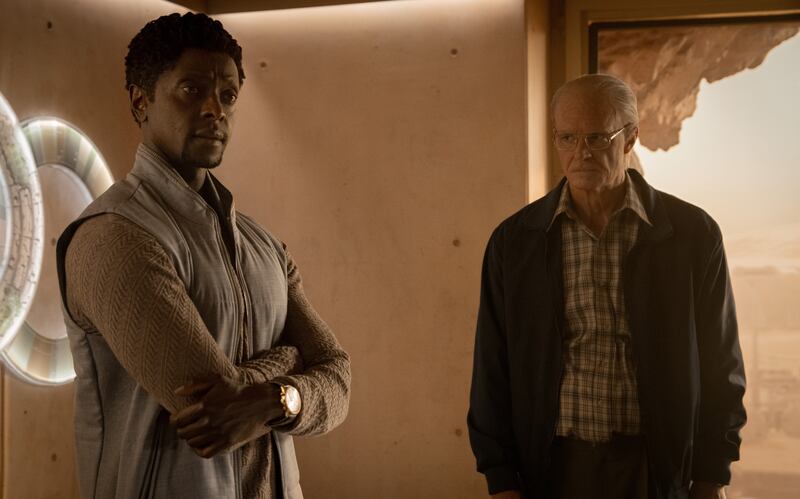
A group of Mars residents has banded together as the “Sons and Daughters of Mars,” spearheaded by local hero Miles Dale (Toby Kebbell) and supported by the elderly astronaut legend Ed Baldwin, whom Joel Kinnaman now portrays beneath unconvincing facial prosthetics.
Ed is an even bigger jerk than before, unwilling to compromise with the powers-that-be on the issue of Mars autonomy—a testy subject, since people have been living in the colony for decades while being supported by Earth. He’s also tough on his grandson Alex (Sean Kaufman), whom he wants to take more initiative as he graduates high school, and his daughter Kelly (Cynthy Wu), who’s searching a Mars crater for signs of extraterrestrial life.
Kelly’s quest is shared by Mars’ two rival corporations, America’s Helios and the Soviet Union’s Kuragin, and it becomes a competition once both determine that the best chance of finding intergalactic life lies on Saturn’s moon, Titan.
For All Mankind consequently introduces a new goal for the world’s superpowers to chase, thereby allowing it to tap into the grand exploratory spirit that’s always guided its drama. Also striving for a better tomorrow is Helios’ billionaire founder Dev Ayesa (Edi Gathegi), who wants to build a self-sufficient million-person Mars city, known as Meru.
His epic ambition, however, is at odds with the financial realities of his company, overseen by CEO Aleida Rosales (Coral Peña), who, in her free time, visits and seeks advice from her former mentor-turned-incarcerated traitor, Margo Madison (Wrenn Schmidt).
For All Mankind is an out-of-this-world adventure that largely keeps its focus on the ground, where things are complicated by illegal immigration, corporate corruption, political squabbling, and fights for sovereignty and workers’ rights.
Showrunners Wolpert and Nedivi don’t shy away from present-day parallels, underlining that no matter the era or venue, the same problems and conflicts inevitably arise. Yet they simultaneously balance those topics with the up-and-down travails of their numerous characters, with Alex and Miles’ daughter, Lily (Ruby Cruz), caught in a crisis that threatens to thrust Happy Valley back into civil war.
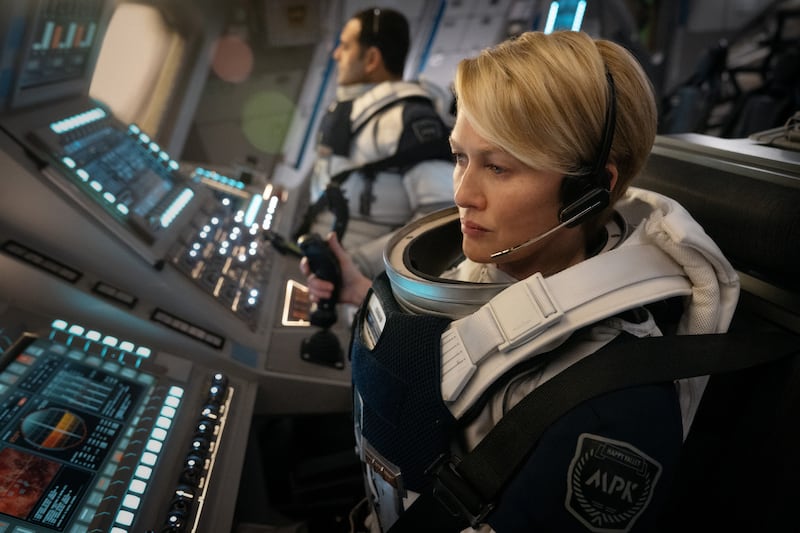
There’s a lot more to For All Mankind’s fifth go-round, such as the introduction of peacekeeping officer Celia Boyd (Mireille Enos, reuniting with her The Killing partner Kinnaman) and the mysterious murder of a worker that’s initially pinned on North Korean defector Lee Jung-Gil (C.S. Lee).
Familial and romantic difficulties are matched (and compounded by) geopolitical strife, and it’s not long before Ed is putting himself squarely in the middle of everything. The show is overstuffed with plotlines, though that busyness doesn’t necessarily give it vigor. Only once it reaches its halfway point does the series kick into urgent gear, thanks to the discovery of a conspiracy and, after it’s made public, an escalation in tensions.
While Kinnaman’s turn as the crotchety Ed is still the proceedings’ backbone, For All Mankind’s performances don’t hit a single wrong note, and in every case, the showrunners imagine their characters in complex and endearing three-dimensions—including their villains, whose motivations and objectives are fully developed.
The result is that they elicit sincere emotional engagement with their multifaceted plights as well as that of Happy Valley, whose precarious position is reminiscent of the colonies in pre-Revolutionary War America.
Few shows are more adept at pulling at the heartstrings than For All Mankind, and it reconfirms that fact with an early-season moment that will have fans reaching for the nearest box of tissues. Far from gratuitous, however, this turn of events is merely part and parcel of a long-running saga, which understands that progress is achieved not simply through daring, determination, and sacrifice, but by the examples set by the current generation for those that follow.
Moreover, it recognizes that leading the way often requires a heroic measure of courage, especially given the numerous domestic, social, and governmental forces, out of fear and self-preservation, dedicated to maintaining the status quo.
Fifty episodes into its run, For All Mankind has managed to stay afloat despite losing many of its most vital players—a testament to writing and acting that puts a premium on humanizing the spectacular. Without having seen its finale, it’s impossible to know the precise destination of Apple TV’s sci-fi gem. But there’s no doubt that wherever it’s headed, going along for the ride will be well worth it.