Oscar Winner Reveals How She Avoided Hollywood Sex Abuse
Jodie Foster explained how she found herself in a “different category.”
Marc Piasecki/WireImage
Jodie Foster, 63, has been active in Hollywood for more than 50 years, and she thinks that’s been key to her survival in the industry.
In a career that began in 1968, when the actress was only six, Foster was never involved in Hollywood’s notorious cycles of sexual abuse.
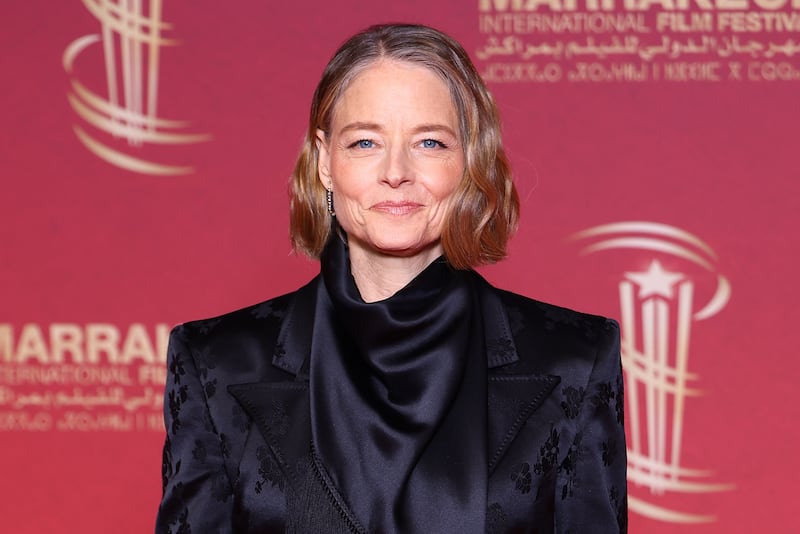
According to Jodie Foster, her early acting success made her "too dangerous to touch."
Marc Piasecki/WireImage
“What I came to believe … is that I had a certain amount of power by the time I was, like, 12,” the two-time Oscar winner told NPR today. “So by the time I had my first Oscar nomination, I was part of a different category of people that had power, and I was too dangerous to touch.”
Foster received her first Oscar nomination at age 12 for her role as a teenage prostitute in Martin Scorsese’s ‘70s classic Taxi Driver. She would win the first of her two Academy Awards a decade later for her leading role in The Accused.
Though Foster never had to wield her “power,” she always believed she had the ability to do so. “I could’ve ruined people’s careers or I could’ve called ‘Uncle,’ so I wasn’t on the block,” Foster posited.
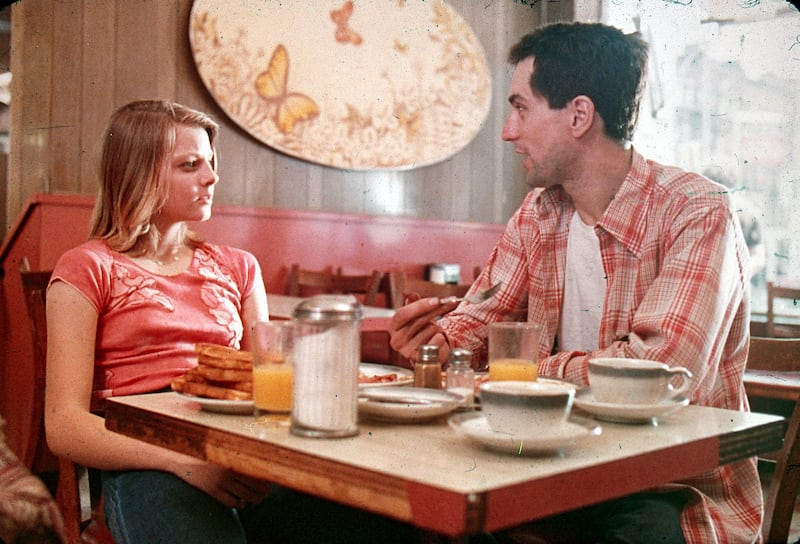
Jodie Foster's breakout role was as a teenage prostitute in Martin Scorsese's 'Taxi Driver.'
Columbia Pictures/Getty Images
The star of the new film A Private Life also theorized that her “head-first” personality was what “saved” her.
Get the best of Obsessed delivered right to your inbox
By clicking “SUBSCRIBE” you agree to our Terms of Use and Privacy Policy.
“It’s very difficult to emotionally manipulate me because I don’t operate with my emotions on the surface,” Foster said. “Predators use whatever they can in order to manipulate and get people to do what they want them to do. And that’s much easier when the person is younger, when the person is weaker, when a person has no power.”

Throughout her 50-year career, Foster has used a calculated approach to every facet of her personality, purposefully staying out of the public spotlight. Her first public acknowledgement of her sexual orientation was at the Golden Globe Awards in 2013, more than two decades after her co-parenting relationship with producer Cydney Bernard began.
“I did not want to participate in celebrity culture. I wanted to make movies that I loved. I wanted to give everything of myself on-screen, and I wanted to survive intact by having a life and not handing that life over to the media and to people that wished me ill,” Foster told NPR.

The intensely private Jodie Foster first publicly acknowledged her queer identity at the 2013 Golden Globe Awards.
Paul Drinkwater/Getty Images
Foster said she never wanted to be a “pioneer,” or use her star power for anything beyond making great art. “I benefited from all of the pioneers that came before me that did that hard work of having tomatoes thrown at them and being unsafe,” the Emmy-winning True Detective actor said. “They did that work, and I have thanked them. I thank them.”
“We don’t all have to have the same role. And I think my role was making movies that mattered and creating female characters that were human characters,” Foster continued. “I think that will be valuable someday down the line, that I was able to keep my life intact and leave a legacy.”

Got a tip? Send it to The Daily Beast here.
Register below to read this article for free or subscribe
to unlock unlimited access to The Daily Beast.
Monthly
$1
First month then $5.99/month
Annual
$35
First year then $59.99/year
Premium
$79
First year then $119.99/year
*Substack access provided by the next business day, using your subscription email. Choosing the Premium plan constitutes your permission to share your subscription email with Substack and your agreement to Substack’s Privacy Policy.
Already have an account? Sign In
Looks like you already have a subscription!
You're all set!
Thanks for subscribing.
Sign in or create an account
Login dialog
Loading comments…