Yellowstone pioneered Taylor Sheridan’s idiosyncratic brand of gung-ho New West melodrama. So it’s more than a bit disappointing to discover that Marshals—the first franchise spin-off that isn’t a prequel—is merely a standard-issue CBS procedural gussied up with some Dutton polish.
Spencer Hudnut’s sequel (Mar. 1 on CBS) is in most respects no different from the various NCIS, FBI, Blue Bloods, and Criminal Minds series that came before it, except that in this case, it has Luke Grimes’ Kayce Dutton joining a U.S. Marshals team that partakes in the mixture of banter and badassery that has become the network’s cookie-cutter trademark.
Executive produced by Sheridan, it’s as unadventurous as they come, although given its predecessors’ ratings success, that may be just what its fans crave.
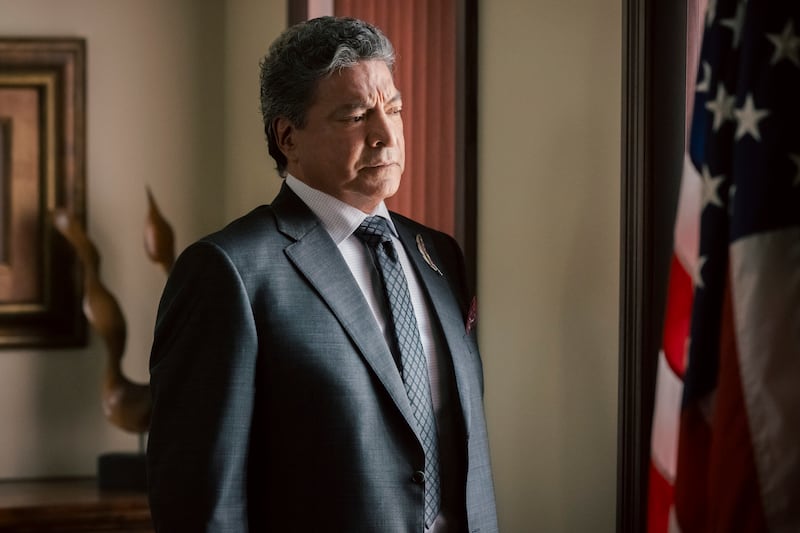
At the conclusion of Yellowstone, Kayce sold the Dutton ranch to Thomas Rainwater (Gil Birmingham) and the Broken Rock Indian reservation, keeping a small parcel for himself to live on and work with his wife, Monica (Kelsey Asbille), and son, Tate (Brecken Merrill).
Marshals, however, begins with the bombshell that Monica is dead and Kayce, still nursing a broken heart, is struggling mightily as a single father. Worse, the cause of his spouse’s untimely cancer demise may be the toxins being dumped beneath the reservation by a mine—a scandal that’s escalated tensions between the area’s Native Americans and ranchers.
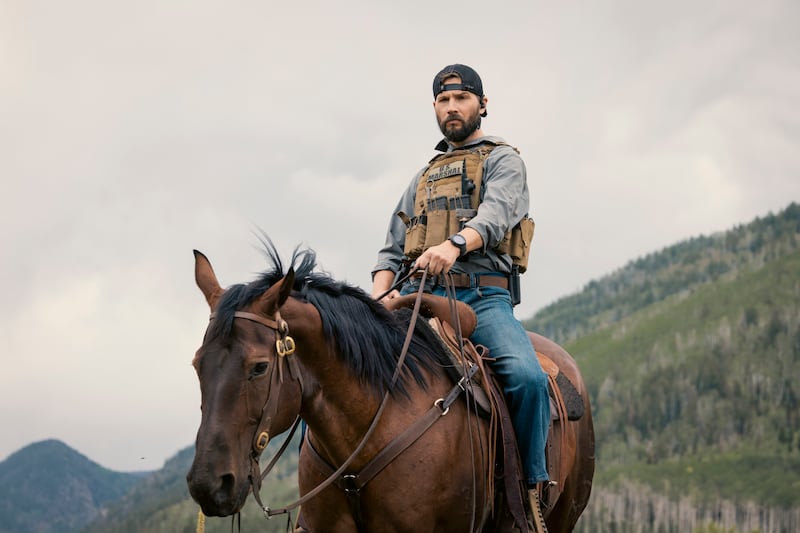
Tate wants to join the campaign to protect the reservation, while Kayce believes that running their East Camp ranch is their fight. Nonetheless, he’s quickly drawn into the thick of this conflict courtesy of Pete Calvin (Logan Marshall-Green), his former US Navy SEAL team leader, who’s heading up a U.S. Marshals squad tasked with keeping the peace in Montana.
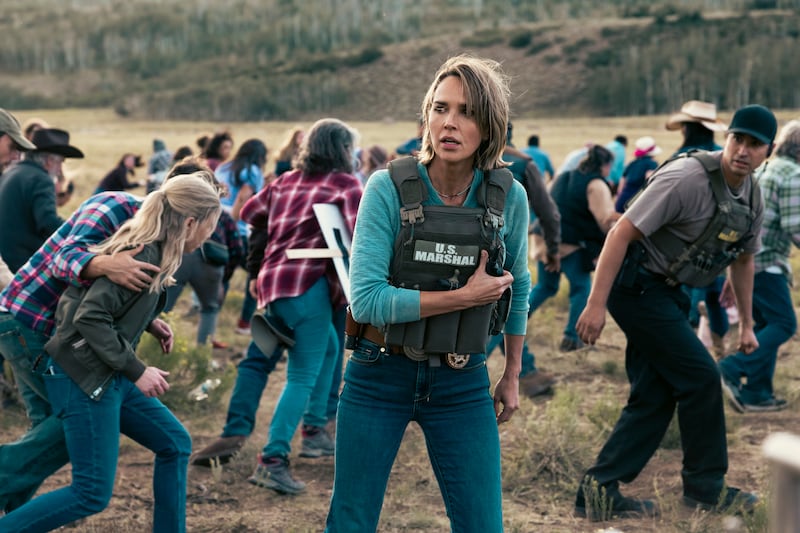
After one target-shooting outing, Pete convinces Kayce to give the Marshals a chance, since he needs a new “door-kicker” and he believes the gig might help the Dutton scion overcome his “demons.” Considering that the Marshals’ next assignment is to oversee an upcoming mine protest that Tate will attend, Kayce agrees. That’s fortuitous, as the event is literally blown up by an assassination attempt on Rainwater’s life that thrusts Kayce into derring-do duty.
In his new mission, Kayce partners with a trio of Marshals: ex-NYC cop Andrea (Ash Santos), ATF veteran Belle (Arielle Kebbel), and Native American Miles (Tatanka Means). Like Pete, they’re all jovial, tough-talking do-gooders with a single individual character trait. Andrea is in search of vengeance for her dad’s death, Bell has changed her name and identity for mysterious reasons, and Miles is wet behind the ears and grappling with split allegiances to the Marshals and his Broken Rock brethren.
As for Pete, he’s wrestling with a secret pill addiction and is miserable about his estrangement from his family—issues that simply color the periphery of Marshals, whose focus is Kayce’s integration into the team.
Grimes’ character was never the most charismatic element of Yellowstone, and here, he does little more than brood about his troubled past, his cursed nature, and his discomfort with giving up a solitary life for one with the Marshals.
“You brought me here to crush skulls, not hold hands,” says Kayce to Pete, but there’s no doubt that he’s destined to find a new beginning, purpose, and family with this crew, so all his moping comes across as self-indulgent hot air, meant to underline that he’s a tormented soul.
Marshals is as obvious as they come, with every line of dialogue either functioning as exposition or character-building chitchat, and its metronomic balance of blather and action makes it astoundingly generic. Its fights, chases, and shootouts are CBS-grade lackluster, and the particulars of its stories are of no consequence.
It never matters what’s specifically going on, given that everything eventually leads to a rote rough-and-tumble skirmish that concludes with Kayce proving his mettle and, in the process, impressing his mates, who spend at least half their screen time talking about him.
The attempt on Rainwater’s life is part of a bigger battle brewing between white and indigenous Montana residents, and that serves as the connective tissue for Marshals’ bland stories about the Marshals fighting this drug dealer or that Aryan hatemonger, all of whom are featureless pawns designed to give Kayce someone to punch, shoot, or tackle.
Pete habitually praises Kayce for his awesomeness while cautioning him not to be a lone wolf. So naturally, the leaden series has its protagonist actually face off with a literal lone wolf (a device borrowed from Yellowstone).
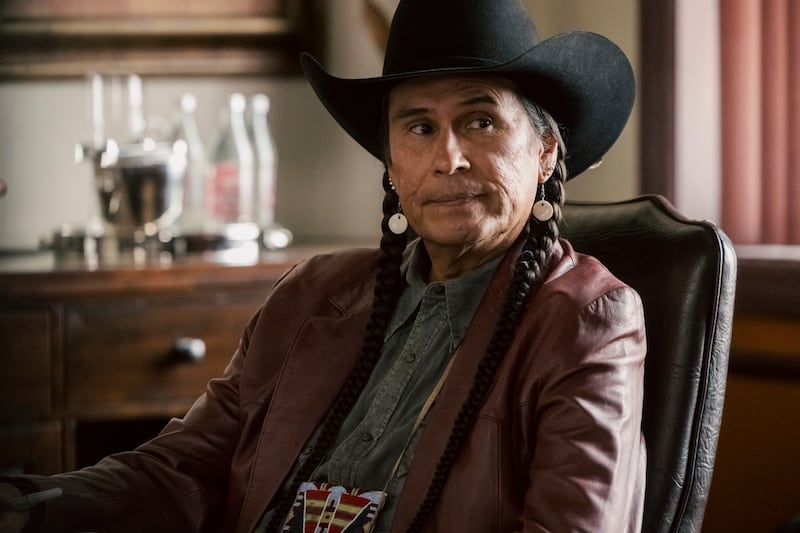
For his part, Kayce muses that you “gotta keep moving. No matter how cruel this life is,” and he laments that “being close to me comes at a cost”—a sentiment shared by Rainwater’s right-hand man, Mo (Mo Brings Plenty), who reminds audiences that “violence has a way of finding the Duttons.”
Marshals strives to create tension about Kayce’s true nature—is he a “protector” or a “chip off the old block?”—and, in its second episode, it has its hero commit an act that suggests it might be serious about calling his virtue into question.
Yet the show’s lack of originality makes one doubt that Hudnut has any real interest in gray areas. Kayce is a man on a pretty clear path toward redemption, and all the speedbumps in his way are just feints and filler.
Worse, they’re universally dull, with adrenaline in short supply as he takes down villains, schools his comrades in the art of war (lessons they eagerly accept), and squabbles with his superior Harry Gifford (Brett Cullen).
The Duttons’ primary appeal was their gangster-ish belief that they were above the law, and Marshals would be wise to lean into the friction between Kayce’s ruthless heritage and ex-soldier nobility.
However, in its first three episodes (the only ones provided to critics), the series only pays lip service to that tension. Perhaps in the future, Kayce’s solo odyssey will evolve into a morally complex study of one man’s effort to reconcile the angel and devil on his shoulders.
For now, though, it seems content to be merely another in a long line of CBS affairs that prize simplistic good-vs-evil formula above all else.