Not often does a new show run such a slam-bang season-one race, only to catastrophically stumble at the finish line. But that was most certainly the case with Paradise, whose seventh-episode stunner was followed by a deflating finale in which its murder mystery was resolved with a lame out-of-left-field cheat.
Thus, Hulu’s hit returns with a not-inconsiderable task: to reclaim the mojo that made it, for a time, a TV sensation.
Alas, that is not to be.
Charting a narrative course that’s sloppy, derivative, and ill-advised, Dan Fogelman’s series continues making egregious missteps in its sluggish and unfocused sophomore outing (February 23), squandering whatever goodwill remained from its early highs. This once-tantalizing show appears to have permanently lost its way.
Like the awful, sad, slow covers of pop hits that it inexplicably keeps employing for emotional embellishment—a device that, at this point, is beyond parody—Paradise plays an overwrought and unoriginal game in its latest eight-episode stretch, whose attention is split in three.
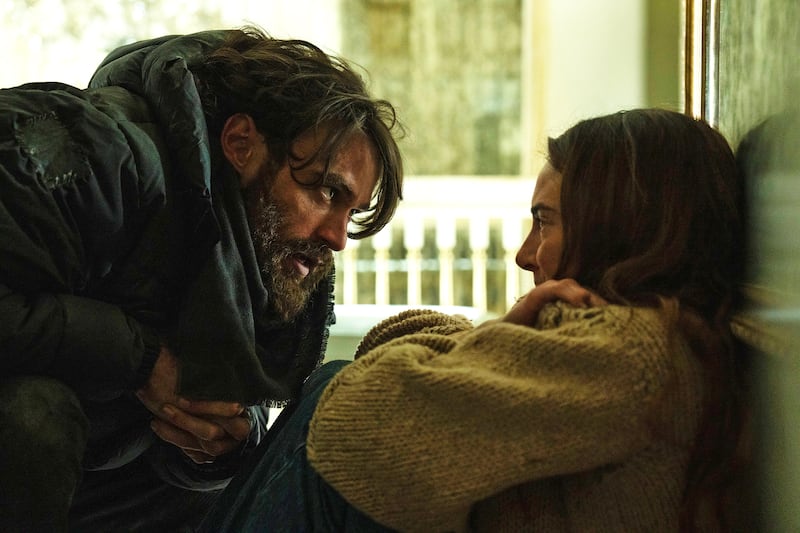
It’s a newbie who takes center stage in its premiere: Annie (Shailene Woodley), who in the past drops out of med school to become a tour guide at Graceland, and who takes shelter in the basement of Elvis Presley’s home once the you-know-what hits the fan. There, she lives for more than two years off a magically endless stash of beans (apparently, the museum stockpiled 700+ cans?) and without any visits from fellow post-apocalyptic refugees, who supposedly never considered raiding the famous mansion for supplies.
Annie’s story is the catalyst for Paradise’s latest go-round, and it’s painfully wobbly, asking audiences to suspend disbelief at so many turns that none of it rings true. No one demanded that the series become a survivalist drama, but since Fogelman goes in that direction, it’s almost shocking how little care is given to the basic logic of that scenario.
In its copious passages outside the underground bunker that was, in its first season, its main setting, everyone always has tons of food, water, supplies, shelter, know-how, and intel about the wider world (despite there being no electricity and, therefore, no means of telecommunication). Consequently, weathering the prolonged, cataclysmic (literal and figurative) storm is a piece of cake.
Even when Annie is eventually joined at Graceland by a band of strangers led by Link (Thomas Doherty), they wind up being a cool crew with plentiful eggs and wild boar bacon (How? Who knows!) who are just making their way to Colorado to find the fabled bunker.
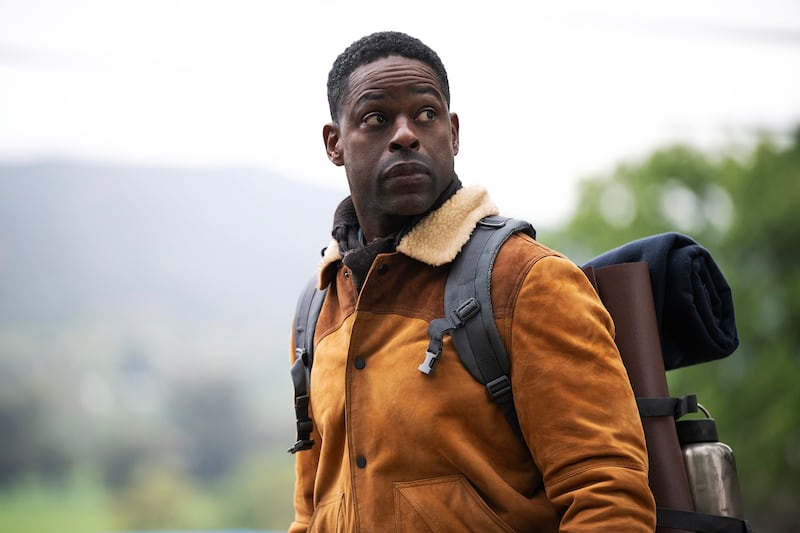
Link is the key to Paradise’s second season, and he’s a clunky construct, and not just because he’s named himself after The Legend of Zelda’s protagonist and yet has never heard of Jaws (a schism that’s emblematic of the proceedings’ carelessness).
As Annie gets close to Link and debates whether to join him on his quest, the show simultaneously follows its main character, Secret Service superhero Xavier (Sterling K. Brown), as he flies through a hail storm in a plane destined for Atlanta, where his wife Teri (Enuka Okuma)—whom he thought, until recently, was dead—made her last radio broadcast. Xavier spends the vast majority of these installments on that odyssey, which in structure and spirit (and occasionally specific details) plays as a wan rip-off of The Last of Us, except with a positivity that reeks of phoniness.
Via a raft of implausible incidents, Paradise imagines Xavier as the embodiment of the idea that a brighter future is possible if everyone just works together, is courageous, and believes and trusts each other—a fancifully optimistic outlook considering the situation, and one that extends to every aspect of this creaky venture.
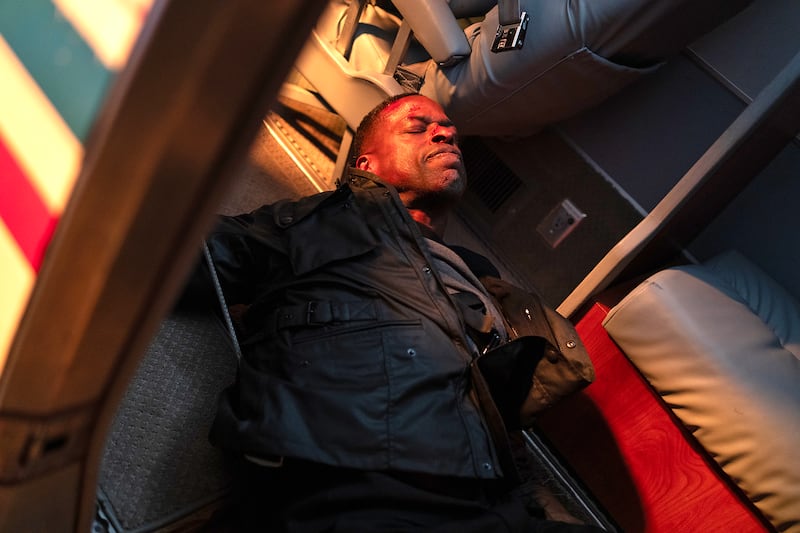
Brown is still a charismatic presence, but the scripts ask him (and everyone else) to deliver a nonstop stream of corny speeches, frequently involving relevant anecdotes from the pre-apocalypse days. Along with the ungainly, easy-bake plotting—defined, like Annie’s thread, by ceaseless leaps-of-faith-demanding developments—they render his tale a drag.
Only one of Paradise’s initial five episodes takes place in the bunker, and that misstep is italicized by the fact that the action there is the show’s most captivating by a country mile.
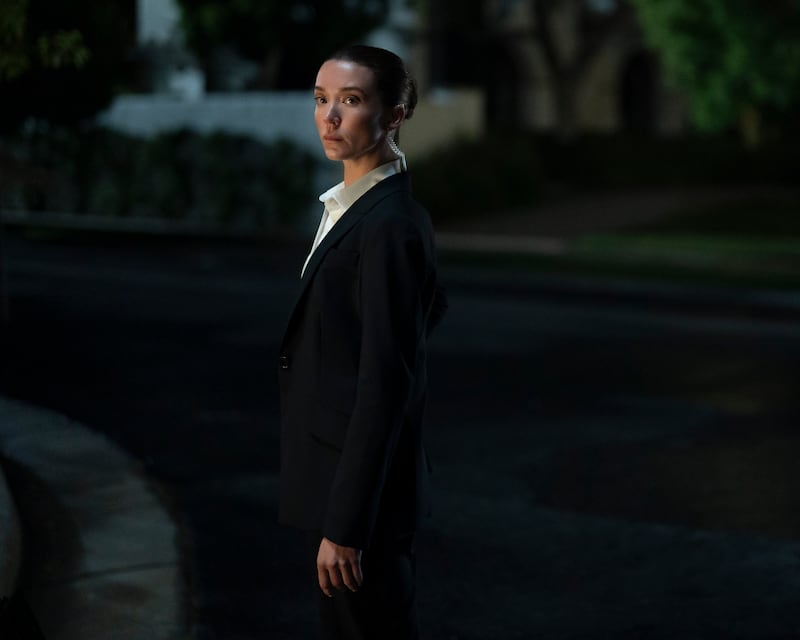
In the subterranean enclave, sunshiny domesticity has given way to quasi-authoritarianism under President Baines (Matt Malloy), complete with multiple instances of ICE-style terror. He’s not the sole individual with power-mad designs, as scheming billionaire Sinatra (Julianne Nicholson), once recuperated from her near-fatal gunshot wound, tries to reclaim power while dealing with psychopathic minion Jane (Nicole Brydon Bloom) and psychotherapist and disgruntled former friend Gabriela (Sarah Shahi).
Sinatra is also trying to keep a lid on a very big secret known as “Alex” that is Paradise’s new overarching mystery, and if that twist is inelegantly introduced, it at least gives the material a little intrigue.
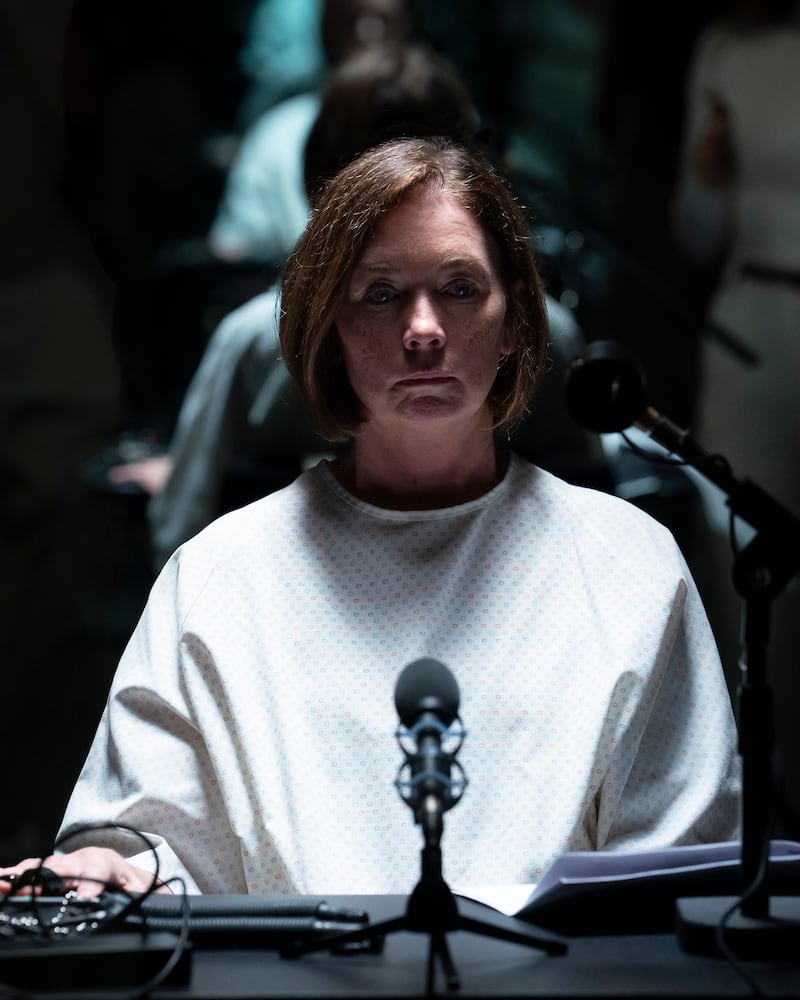
Nicholson is the undisputed star of this season. Her imperious attitude and unbreakable will are fueled by inconsolable grief and, additionally, supposed altruism, as Sinatra is convinced that her covert operation is the sole means of protecting the bunker population and, by extension, humanity. Whenever she’s on screen, the series’ energy rallies, and fortunately, she assumes a larger role as things near the end.
Nonetheless, Nicholson’s cryptic deviousness isn’t enough to offset storylines that habitually elicit confused and frustrated “how is that possible?” reactions. Cutting corners is such a fundamental facet of Paradise that it all becomes a pale imitation of superior speculative sagas.
Moreover, its intimations about supernatural (or spiritual?) forces in this ravaged world—courtesy of recurring visions, chronic nosebleeds, and an early flashback vignette which hinges on the question of whether fate exists or everything is random—are perplexingly out of place, undermining any lingering sense of this scenario’s reality.
Once a self-contained The Truman Show-by-way-of-Fallout tale of people attempting to rebuild in a creepy facsimile of American suburbia (all with a touch of Lost, in its constant cross-cutting between the past and present), Paradise expands its purview to become, in Season 2, a scatterbrained and slipshod affair whose every strand—including those concerning Krys Marshall’s Secret Service Agent Nicole and Charlie Evans’ rebel president’s-son Jeremy—is threadbare.
There may yet be time for a redemptive course correction, but it’ll require a measure of Sinatra-grade bold ingenuity that, for the most part, is wholly missing from this slapdash return engagement.