There’s no killing Tommy Shelby (Cillian Murphy), leader of Birmingham, England’s notorious early 20th-century Peaky Blinders gang. And four years after he rode off into the ambiguous sunset at the conclusion of his small-screen series, he once again rises from the ashes to confront demons and settle scores in Peaky Binders: The Immortal Man.
A franchise resurrection that closes one chapter while opening a new one, Steven Knight’s Netflix film (March 6 in theaters; March 20 on the streamer) is a rousing elegy to an underworld saga par excellence and, in particular, to a ruthless and tormented gangster whom, in Murphy’s expert hands, stands as an undisputed crime-fiction icon.
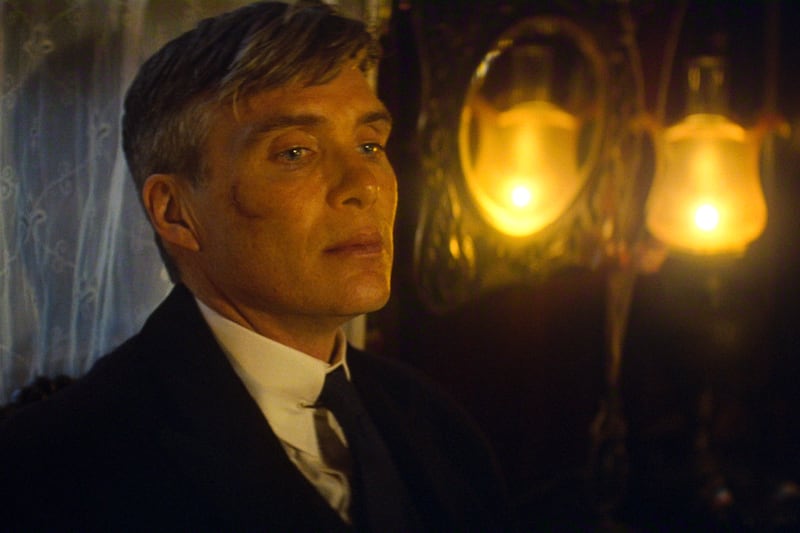
Tommy has always been a tormented soul: wracked by WWI PTSD and myriad losses; beleaguered by the pressure of maintaining a criminal empire amidst constant threats; and committed to—and yet ceaselessly frustrated by—his wild and dangerous family.
Nonetheless, he’s never been quite as lost as he is at the start of The Immortal Man. Locked away, in 1940, in a remote mansion which he shares with loyal comrade Johnny Dogs (Packy Lee), Tommy has retreated from his old stomping grounds and, with it, his prior life as the baddest man in England—an era which he now revisits only through the autobiographical book he’s writing as an attempt at exorcising his demons.
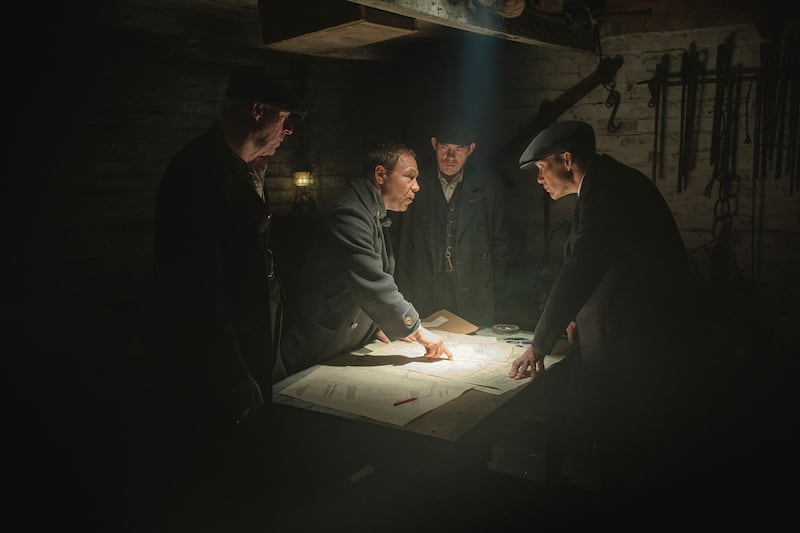
It’s not working, alas, as Tommy is perpetually plagued by the ghosts of his dearly departed, including his young daughter Ruby, whose spirit draws him outside to a graveyard where, in the first of The Immortal Man’s big shocks, it’s revealed that Tommy’s lovably scary brother Arthur has been dead for the better part of two years.
The nature of Arthur’s untimely demise is a secret that Tommy holds close to the vest, as does the film. Still, there’s no mistaking the grief in the former kingpin’s eyes, with a graying Murphy exuding a mixture of marrow-deep sorrow, guilt, and rage that’s so intense, it appears to be literally weighing him down as he stalks his misty property and the cold, barren manor (a reflection of his desolation) he calls home.
Tommy doesn’t care about the world, but, as is so often the case, the world won’t leave him be, much less afford him the tranquility he covets. Back in Birmingham, the Nazis’ bombing of an arms depot grants the Peaky Blinders’ new leader, Duke (Barry Keoghan), an opportunity to swoop in and steal guns and dynamite, regardless of the fact that they’re needed for his country’s war effort.
This infuriates Tommy’s sister Ada (Sophie Rundle), now a member of Parliament, and she turns to Tommy for assistance because Duke (who was introduced in season six, played by Conrad Khan) is Tommy’s illegitimate first son, having been raised by the Romani gypsies following the death of his mom Zelda.
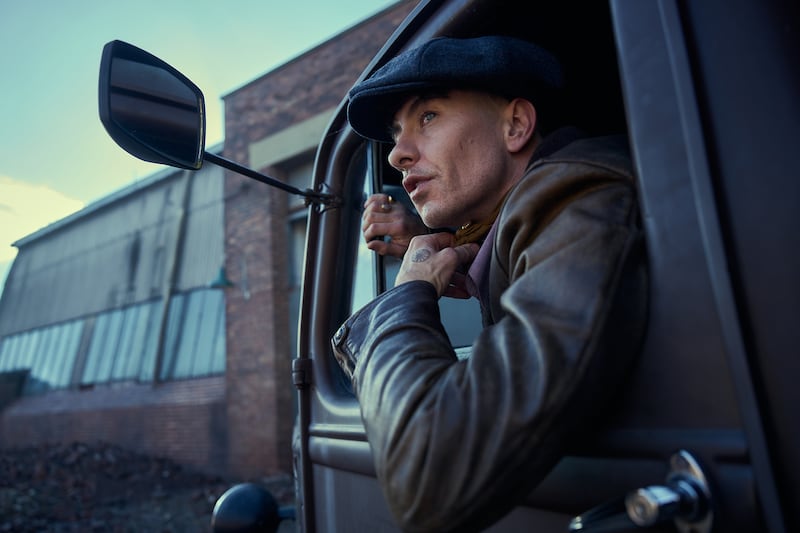
Keoghan embodies Duke as a devil-may-care hood with a predilection for violence. However, he refrains from making him just another in a long line of loose-cannon Shelbys; instead, he’s an angry wannabe-godfather with severe daddy-abandonment issues. Duke’s inner tumult is visible behind Keoghan’s placid façade, and so too is the cunning of Kaulo (Rebecca Ferguson), Duke’s aunt, who visits Tommy and, employing her gypsy “magic,” channels Zelda, who tells the hermit that he’ll have peace if he returns to Birmingham to help his son, who’s tangled himself up with evil forces.
That he has, in the person of Tim Roth’s traitorous Brit, who convinces Duke to introduce hundreds of millions of counterfeit pounds (printed by the Third Reich) into the U.K. financial system in order to crash the economy and win the war for Germany. Since Roth’s baddie is a potential surrogate father figure, Duke is enticed by this deal, but it comes at a high cost, and whether Duke is willing to pay it turns out to be the crux of one of The Immortal Man’s thrilling centerpieces.
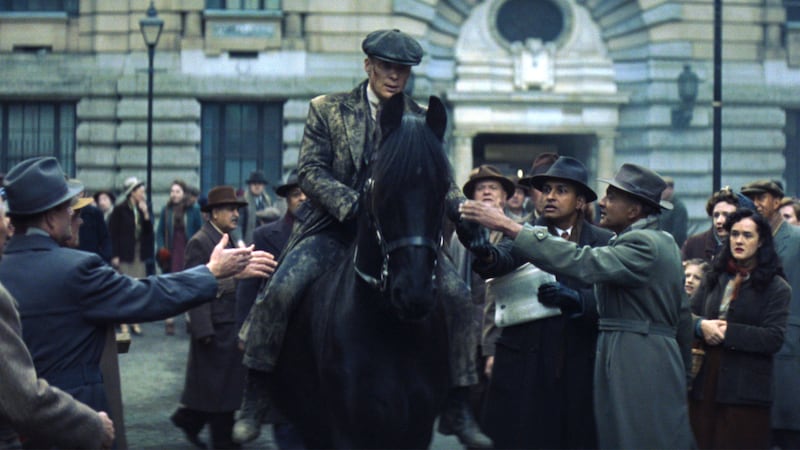
Director Tom Harper stages that sequence with a widescreen flair that’s more overtly cinematic than (if still faithful to) the TV series, and he’s aided by a soundtrack of typically jangly guitars, rat-a-tat-tat percussion, and rock songs (including Nick Cave and the Bad Seeds’ “Red Right Hand” theme) that—along with slow-mo shots of Tommy strutting into battle—give the action its knockabout verve.
With most of the Shelbys six feet under, The Immortal Man leans heavily on newbies Keoghan and Ferguson, all while bringing back a few familiar faces—including Stephen Graham’s dock bigwig Hayden Stagg and Ned Dennehy’s devoted cohort Charlie Strong—to maintain continuity.
Nonetheless, Murphy shoulders the burden of carrying this return engagement, which, like Deadwood: The Movie, El Camino: A Breaking Bad Movie, and The X-Files film before it, aims to simultaneously provide a satisfying ending to its primary narrative and lay the groundwork for future endeavors—in this case, a forthcoming 1950s-set spin-off series that Netflix has already greenlit.
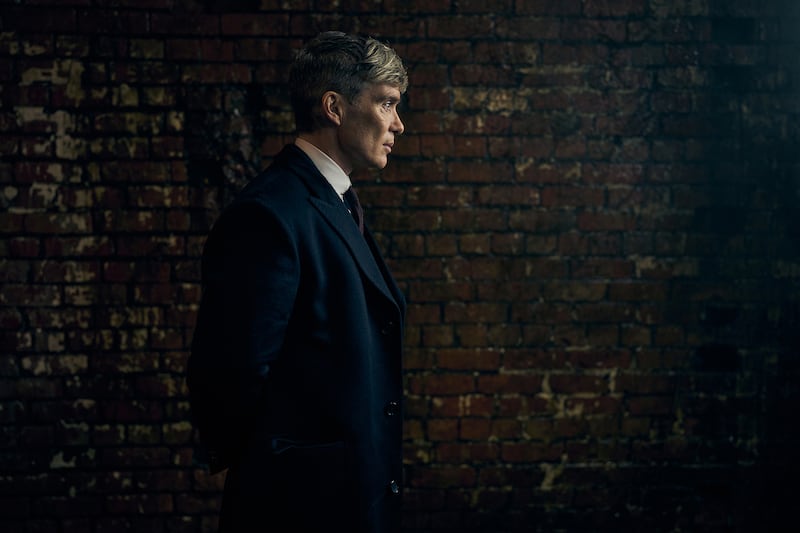
As in his Oscar-winning Oppenheimer turn, Murphy is an expressive wonder in The Immortal Man’s numerous close-ups, his far-off gaze and barely suppressed misery and fury setting the tone for the agonized and enraged proceedings.
Fueled by crippling hang-ups involving the war, his deceased loved ones, and his voracious ambition, Tommy remains a captivatingly complex head-case (and powder keg), equal parts savage and noble, selfish and altruistic, cutthroat and steadfast. Those contradictions are at the root of the film’s twisted relationships between fathers and sons, brothers and sisters, and citizens and country, the last of which has routinely been a central element of Peaky Blinders, with Tommy looking out for the welfare of both himself and his nation.
Deadly shootouts and bombings, blustery confrontations and cathartic lovemaking, and ugly betrayals and virtuous sacrifices all factor into The Immortal Man, which doesn’t try to reinvent the Peaky Binders template so much as slightly expand its stylistic scope and serve as a bridge to a new phase.
More than anything, though, it’s an attempt to bestow its protagonist with the sort of grace that has long eluded him. To that end, there’s an undeniable forlorn quality to this fond farewell to Tommy’s reign, and courtesy of Knight, Harper, and Murphy, it’s a goodbye that captures the muscular-and-melancholic spirit that has long been this franchise’s trademark—and will hopefully continue to be going forward.