Following up on an iconic TV character—one that brought an actor into millions of viewers’ homes for years, if not decades—may be the most difficult trick in the entertainment industry game. And few know that better than Steve Carell.
Since retiring The Office’s Michael Scott for good in 2013, the beloved star has tried his hand at drama (Foxcatcher, Beautiful Boy, Welcome to Marwen, Last Flag Flying, The Morning Show), repeated a hit animation routine (in the Despicable Me franchise), and sought new comedic avenues on both the big (Irresistible) and small screens (Space Force, The Four Seasons)—all of them to modest ends, if not worse.
In search of a new act, he’s only found parts that take mediocre advantage of his charm and versatility.
Enter Rooster, a half-hour HBO comedy (March 8) from Matt Tarses and Bill Lawrence, the latter the mastermind behind Scrubs, Ted Lasso, and Shrinking. Playing a “beach read” novelist who accepts a gig at the liberal arts college where his daughter teaches, Carell makes his latest stab at TV reinvention. Unfortunately, it’s yet another strikeout, highlighting the headliner’s easygoing likability without providing him with a project that’s truly, uniquely funny.

Carell is Greg Russo, whose “Rooster” novels are pulpy best-sellers rather than critical darlings. Thus, he’s somewhat uncomfortable speaking before poetry professor Dylan Shepherd’s (Danielle Deadwyler) class.
The questions he receives from students about the sexism in his books are emblematic of Rooster’s mildly pointed take on extreme campus political correctness, as Tarses and Lawrence try to split the difference between being trenchantly timely and feel-good jokey.
The result is tap-water weak humor that’s too timid to wade into the various gender-, race-, and age-related tensions that are currently roiling higher education, even after Greg reluctantly joins the faculty as a writer-in-residence and continues saying and doing unsuitable things in front of his Gen-Z charges.
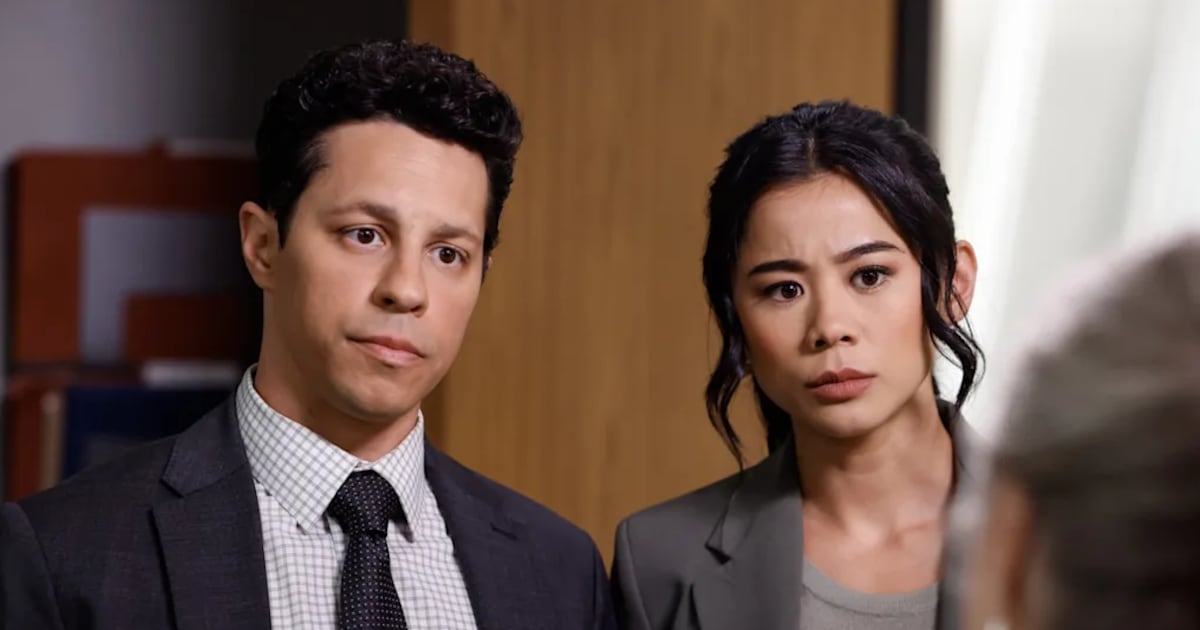
Instead, the show’s overriding focus is Greg’s attempt to support his daughter Katie (Charly Clive), an Art History professor who’s embroiled in a scandal courtesy of her Russian Studies professor husband Archie (Ted Lasso’s Phil Dunster), who’s left her for graduate student Sunny (Lauren Tsai).
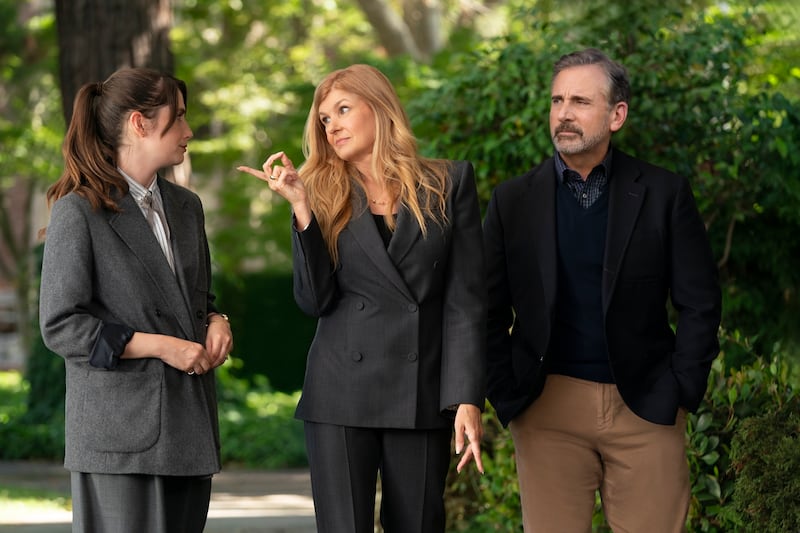
Considering that Greg is still smarting, five years later, from his split from adulterous wife Elizabeth (Connie Britton), he’s sympathetic to his daughter’s plight, although thanks to the series’ squishiness, he counsels her to not seek vengeance but, instead, to “be kind.”
That’s easier said than done, because before any reconciliation can be struck with Archie—a pompous intellectual who wants to reunite with Katie—their relationship is thrown for another gigantic loop. Rooster uses Katie’s mixed-up feelings about Archie as consistent comedic fodder, but as befitting its wishy-washiness, it wants audiences to sympathize with her and dislike Archie (as Greg wholeheartedly does) while simultaneously viewing Sunny as an agreeable part of the ensemble. This is a deeply misguided tack given that, due to her odious behavior and dour disposition, she’s both distasteful and unamusing.
There’s no reason to care about, much less like, Sunny, although the same can’t be said about Rooster’s other supporting players. Deadwyler is a ray of sunshine as Dylan, exhibiting a relaxed wittiness that turns her bond with Greg—with whom she shares sparks that seem destined to burst into flames—into a high point.
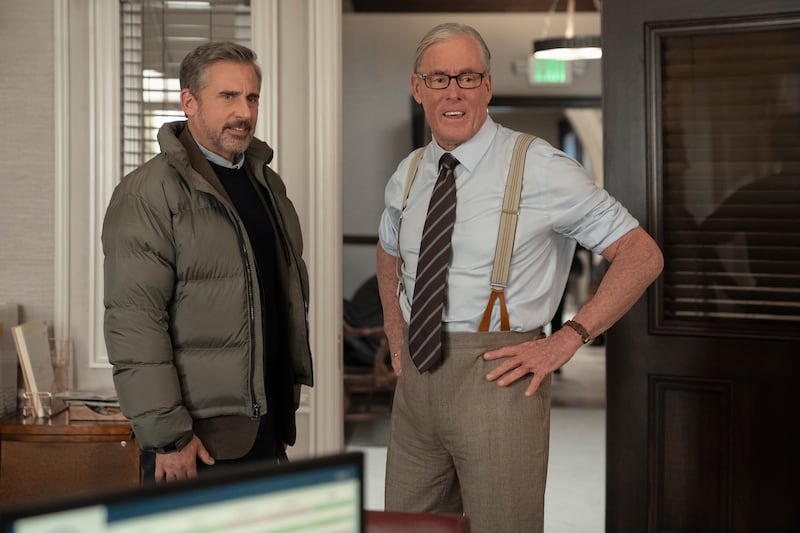
As college president Walter Mann, Scrubs alum John C. McGinley is a regular scene-stealer, his weirdo bluntness and confidence balanced nicely with his open-heartedness, particularly toward Greg. And as Walter’s assistant, a campus police officer, and a rampantly insensitive dean, respectively, Annie Mumolo, Rory Scovel, and Alan Ruck elicit more laughs than everyone else combined.
There’s nothing offensive about Rooster, and that’s part of the problem. Tarses and Lawrence strive to cast these proceedings in Ted Lasso-ish fish-out-of-water terms, but aside from the occasional choice gag (like Greg misspelling his name “Grg” on the white board, thereby earning himself a new nickname), its geniality dampens its silliness.
On intermittent occasions, the show manages to pick up some absurd steam by sticking Greg in inapt settings, such as a night out with student Tommy (Maximo Salas) and his mates, which instigates an unlikely friendship. Nonetheless, it too often keeps things cute and harmless, including with regard to Carell’s writer, whose habit of saying or doing something inappropriate, and then immediately recognizing it and apologizing, is part and parcel of the material’s gun-shy innocuousness.
Comedy can be nice, yet only in small doses, and the show’s oh-so-earnest empathy for Greg, Katie, and the rest is a wet blanket that kills any craziness. At least its protagonists are a pleasant bunch, and the series becomes more assured once its bedrock scenario is established and it begins bouncing its characters off each other.
Still, whereas its finest moments recall Old School, most of Rooster resembles Shrinking, with Greg a sad sack whose moping and over-protective parenting are cloying affectations that garner few chuckles, and whose aww-shucks chemistry with Dylan and Katie lacks an edge.
Rooster is just affable enough to make one think it’s on the precipice of transforming into a riot. In the first six installments of its 10-episode season, however, it rarely gets over that hump, content to coast along on good vibes and charismatic personalities. There are complications aplenty as Greg ensconces himself in his new environs, be it his fling with a faculty member or an accidental act of arson that further muddies Katie and Archie’s on-again, off-again rapport.
Alas, they can’t enliven a tale that wants, more than anything, to be the sort of pleasant Sunday night diversion that appeals to twentysomethings, moms, and grandmas alike.
Through it all, Carell remains an innately jovial presence, albeit little more than that, and the sight of him gliding through a bland affair such as this grows more frustrating with each passing chapter. As he’s proven many times before, he can carry a soft-and-cuddly show like Rooster in his sleep. What he deserves and needs, however, is a legitimately inspired vehicle that understands he’s at his best when he’s as prickly and unpredictable as he is lovable.