A hypnotic thriller whose atmosphere of inexorable doom still doesn’t prepare one for its heart-stopping shocks, Sirât made a splash at last year’s Cannes Film Festival and has been rattling nerves and eliciting screams ever since.
Finally arriving in U.S theaters on Friday, Feb. 6, the critically acclaimed import—recently nominated for two Academy Awards (for Best International Feature and Best Sound) and chosen as one of our 10 best films of 2025—is a journey into a blistering and brutal heart of darkness, and a knockout whose mixture of hope and despair feels piercingly in tune with our present state of disunion.
The story of a father (Sergi López) who ventures into the Moroccan desert with son (Bruno Núñez Arjona) to search for his missing daughter at the remote raves she often attends, Sirât is a psychodrama about alienation and community, chaos and order, all of it filtered through stunningly bleak vistas of the middle of nowhere and a soundscape of enveloping, bludgeoning electronic music (courtesy of Kangding Ray).
It’s a work of trancelike suspense, and definitive proof that its maker, Oliver Laxe, is one of international cinema’s most original and incisive artists.
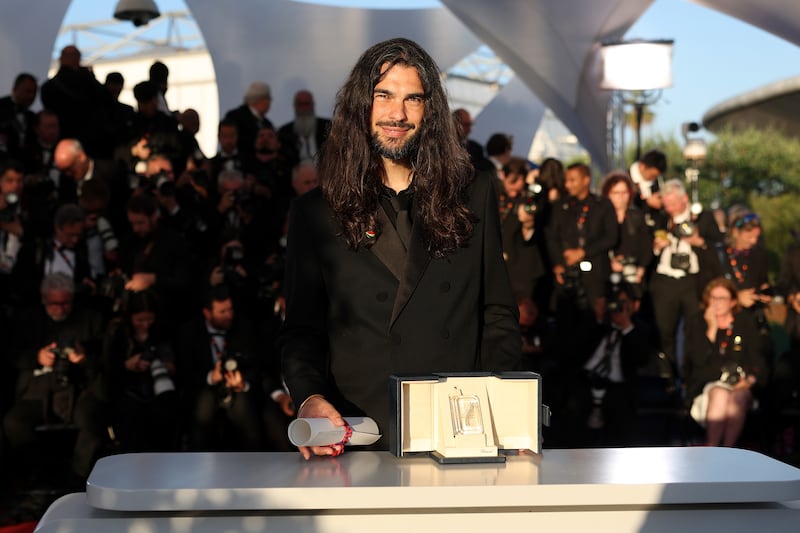
With his fourth feature, the 43-year-old French-born Galician writer/director crafts an unforgettable vision of the end of the world, one that employs professional and non-professional actors—and, as with 2019’s Fire Will Come, roots itself in ideas about nature and destruction—to plumb man’s fraught quest for harmony and togetherness in the face of disorder and death.
Infused with an existential dread that burrows deep beneath the skin, and pivoting on an incident that moviegoers will long remember, Laxe’s latest is the rare film to feel wholly, scarily unique, even as it recalls everything from Mad Max and Dune to The Wages of Fear and 2001: A Space Odyssey.
Sirât is a triumph that elevates Laxe to the forefront of global cinema, its harrowing beauty and bleakness lingering long after its credits have rolled. In advance of its stateside bow, we spoke with the director about traumatizing audiences, rave culture, and what attracts him to the inhospitable desert.

Did you ever imagine, out in the Moroccan desert, that Sirât would embark on this long, celebrated journey to the Oscars?
I have confidence, and I knew that we were doing something serious, and something dangerous. As you know, all my films went to Cannes, so I knew that Cannes was a place to be, and was possible. But I never imagined myself being a contender for an Oscar. I have ego, you know? [laughs]. I’m ambitious. But that was not in my ambitions.
That’s why I’m so grateful for what is happening. The relationship with the U.S. audience has been great, and how industry people are expressing their respect for our work, and the excitement—it’s been amazing.
Sirât is one of the few films to make me literally scream in a movie theater. Was it vital, given the film’s themes, to shock audiences? Were you deliberately seeking that sort of reaction?
To me, that’s related to the way we consider life. Life never calls you to tell you when something will happen. When you’re going to have a test in your life, life never calls you and tells you, be careful.
At the same time, I really think that cinema, and a theater, is a place for catharsis. It’s a place for transformation. That’s why we make films. What you feel, the strong connection that you have in a theater with images and sounds, and how a film can penetrate your body, this is really complex. That’s what we are working on. We were looking for shock therapy.
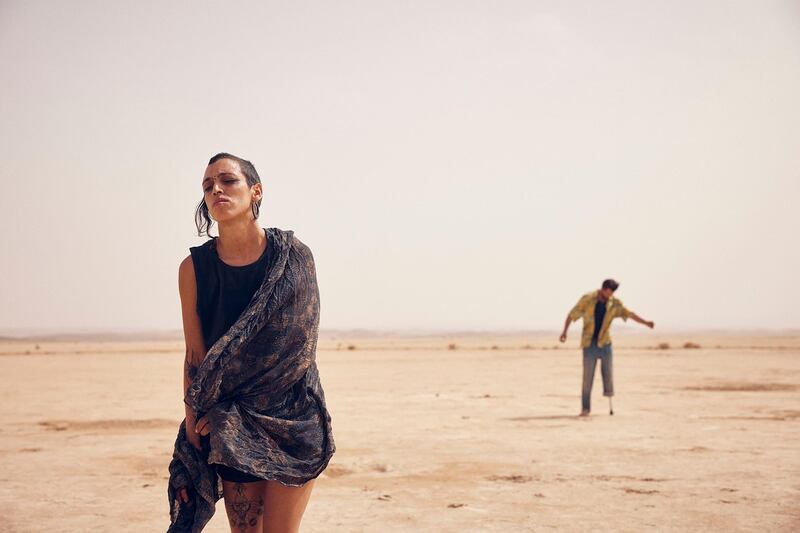
Sirât has been compared to numerous predecessors (including by me). Were you thinking about any prior movies when putting the film together, in terms of narrative, look, or tone?
This film has three layers: the physical, the existential, and the metaphysical. For the physical, we were studying genre films like The Wages of Fear, Mad Max, and Sorcerer. It was important to make a genre film, where the physical narrative is well done.
For the existential dimension, we were really inspired by American cinema from the ’70s. These films where you don’t know what they are talking about, but you feel them. You feel the time, you feel the era, you feel the people, you feel the fears and the dreams of the people from the ’70s. You feel the society. That’s why we make films. We want to connect, and we want to have dialogue with, our time.
For the metaphysical dimension, the master I’m really inspired by is Andrei Tarkovsky. Stalker, Nostalghia—his films were in our mind when we were preparing the film. When it comes to communication, making a film, you look inside, and you dialogue with other filmmakers. But in the end, Sirât is about techno and the Quran.
Are (or were) you a big raver? And what about rave culture—and this nomadic existence—do you find so attractive?
Nadia Acimi, who was the director of casting for the film—she was shortlisted for an Academy Award, although she wasn’t nominated—we were a couple for five years like, 15 years ago. We went to raves a lot, together, and that’s how the film started. We were ravers with our truck, living, going through raves, and from the beginning, I felt that it was a therapy for me—dancing, praying with my body. Dancing is a way to explore something really therapeutical. It really is a ritual. It’s something that we were doing for thousands and thousands of years.
At the same time, I’m studying Gestalt psychotherapy, and it’s really concerned with the body and how the body has memory of your traumas. And then, yes, I like techno [laughs].
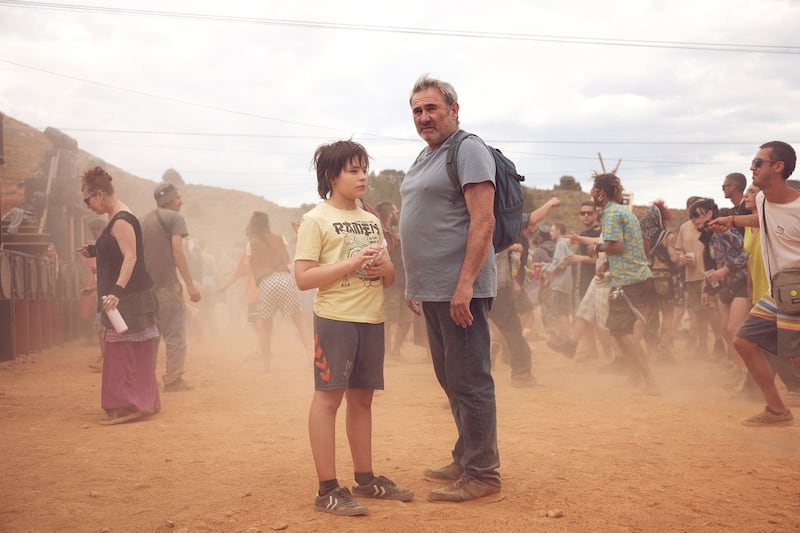
Aside from star Sergi López, your cast is mostly made up of non-professionals. Did you find them at desert raves, and were there challenges to blending the performances of your professionals and amateurs?
We had a calendar, and we were going through raves, and we were visiting communities, and so we did a casting rave. Some of them were our friends, like Bigui (Richard “Bigui” Bellamy). But after, I needed an actor for the main character, for the father. It was a really technical shoot with a lot of visual effects, and I needed someone with experience.
Also, an actor is someone who builds a mask. They are really good at building masks. But the work in this case was to erase the mask, to take off the mask, to be yourself, and to be as fragile as the ravers. For Sergi, the work was to have the same truth as them. The same amount of vulnerability.
Like 2016’s Mimosas, Sirât is set in the inhospitable desert and mountains of Northern Africa. What about that environment speaks to you?
The Moroccan landscape is a wounded landscape. You feel the creation of the planet. You feel you are nothing, you are small, you are a zero. I like this feeling. I like when nature is telling me, stay in your place [laughs]. It’s wounded like us. The mountain is really wounded, and the desert is really abstract. The desert is a perfect place to look inside. You can’t hide yourself in a desert; you are obliged to look inside or to the sky, which is the same thing. So it’s the perfect place for this kind of trip.
At the same time, as a filmmaker, what I really wanted was to evoke that we are living in a magical world. That we are living in a transcendent world. It’s a desert, but it could be another thing. Everybody feels a different thing.
Sirât is, among other things, a spiritual film, in the way it attunes itself to the landscape, the people, and the invisible, elemental forces at play in the world. How much did you think about tapping into that energy during production?
This is the important question, Nick. I think cinema is the perfect art to evoke what is hidden behind the material world. This subtle or spiritual word that is behind, it’s cinema which can evoke it. It’s something that is impossible to represent; if you try to represent it, you won’t get it. It’s almost an accident, you know?
What we did is trust in cinema. We trust in this magical weapon that is images and sounds in a theater. How these sculptures of sounds and images can penetrate and heal you. It is about proportions, and we were working, like, in a ceremony. When you are making a ceremony, you connect with your womb, you connect with your fragility. But at some point, the music gives you light and helps you to cross these shadows.
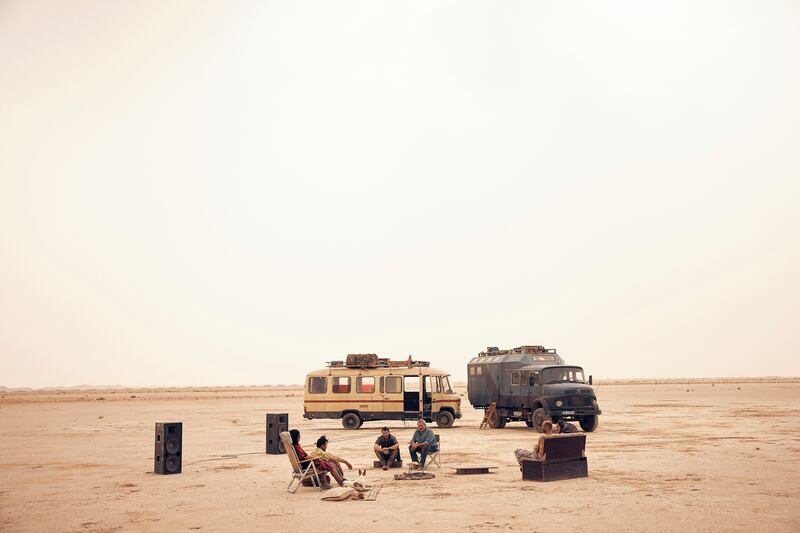
Kangding Ray’s score is central to the film’s power. How early on did you begin collaborating with him? Did you have his music on set?
You have to understand that I danced this script. I’m a filmmaker of images. I have the images, and after, I was on dance floors, and I was really connected with my unconscious. Imagine when you are on a dance floor, how you are free and you are connected with the people that surround you. It’s like I’m in a theater. So I danced these images.
The music is from the beginning in this process. The way I write, it’s really atmospheric, like music. A lot of my scripts are full of links to music. After [I finished writing] I did a casting of musicians, and Kangding was the best. We had one-and-a-half years before the shoot to work on the record. I knew the [narrative] arc, and that I wanted to start with something really physical and cathartic, and slowly go through something more ethereal and transcendent. This is the purpose of poetry—through immanence, arriving at transcendence.
I’ve read that you like to take your time making movies. How difficult—and long—was Sirât’s shoot?
We only had seven weeks, which is nothing for a film like Sirât, with visual effects. I remember Paul Tomas Anderson asked me this, and when I told him it took seven weeks, he was like, you are lying [laughs]. I mean, it’s unbelievable, seven weeks.
We had mechanical issues and problems with the lenses because we had a lot of sandstorms. But I agree with problems. I’m looking for problems. You always have to pay something, and give something back, to life. So it’s okay. I mean, this is my easiest film. The film I did before, Fire Will Come, we had fires, and we had to become firefighters—we even did the test. So Sirât was the easiest.
What is difficult on a film is yourself. To accept the artistic gesture until the end. Sirât was really, really risky. I had fears making it. I was afraid of being misunderstood, because as I said, the film is shock therapy. I was afraid people would think that I’m cruel or sadistic. I’m happy that people arrive in the end to feel light.
Sirât’s title is an Arabic word for “path.” Can you talk about why you felt it was apt for the film?
I can tell you that Sufism [a mystical aspect of Islam] is part of my spiritual practice, and I think this is the key thing about my work. I don’t like to talk much about the title, because it’s too intellectual, but Sirât is a word that is key. There are languages that have divine proportions—Sanskrit, Hebrew, Arabic—and there are words that have energy. I remember when I told my master that the title of the film will be Sirât, he told me, 100% success, don’t worry! [laughs]
It turns out he was right.
If you want to have success, just choose a good title for the film. No matter if the film is s--t—if the title is blessed, it’s OK.