“This new version of the Anthology that’s coming out, I think is great,” Ringo Starr tells the Daily Beast. But he also has a confession: “I haven’t seen Episode 9, so I can’t tell you anything about it. It’s gonna be a surprise to me, too.”
Though it seems unlikely Starr will be breaking out the popcorn and queuing up Disney+ Wednesday night, fans of the band will delight in the 30th anniversary reissue of The Beatles Anthology. But as fantastic as the Anthology series now looks and sounds—with vastly upgraded picture and audio—whether you’re an OG fan or coming fresh to the Beatles’ remarkable story, the real draw will be the newly crafted Episode 9 that even Starr is looking forward to checking out.
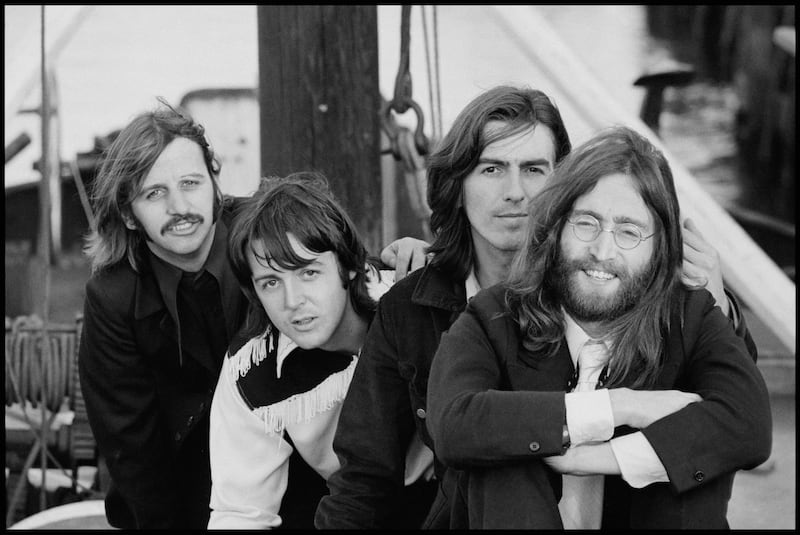
Directed by Oliver Murray, who helmed 2023’s excellent short film chronicling the making of “Now and Then,” the Beatles’ elegiac, swan song single, Episode 9 picks up where the original series, shot between 1991 and 1995, left off. Utilizing largely unseen interviews with Paul McCartney, George Harrison, and Ringo Starr, both individually and together at Abbey Road Studio and at Harrison’s Friar Park home—where the trio also jams on early songs and ’50s chestnuts—it’s a fantastic addition to the Anthology story.
That’s because the interviews for Episode 9 were almost all conducted after the Anthology project was completed and McCartney, Harrison, and Starr had had some time to reflect on what they’d experienced. The result is both reflective and a huge insight into both the interpersonal relationships between the Beatles and what they took away from watching over eight hours of their own story, with all the highs and lows and everything in between.
“What’s it like to be a Beatle?” George Harrison once retorted to an interviewer, “I don’t know, what’s it like not to be a Beatle?”
In Episode 9 Harrison appears to have some sense of what all the joy and madness meant.
“My North Star was making sure I explored how they felt about being Beatles,” director Oliver Murray explains.
Below, Murray—along with McCartney, Starr, and Harrison, quoted from within the new episode—highlights some of the key moments, revelations, and tear-jerkers in store for fans.
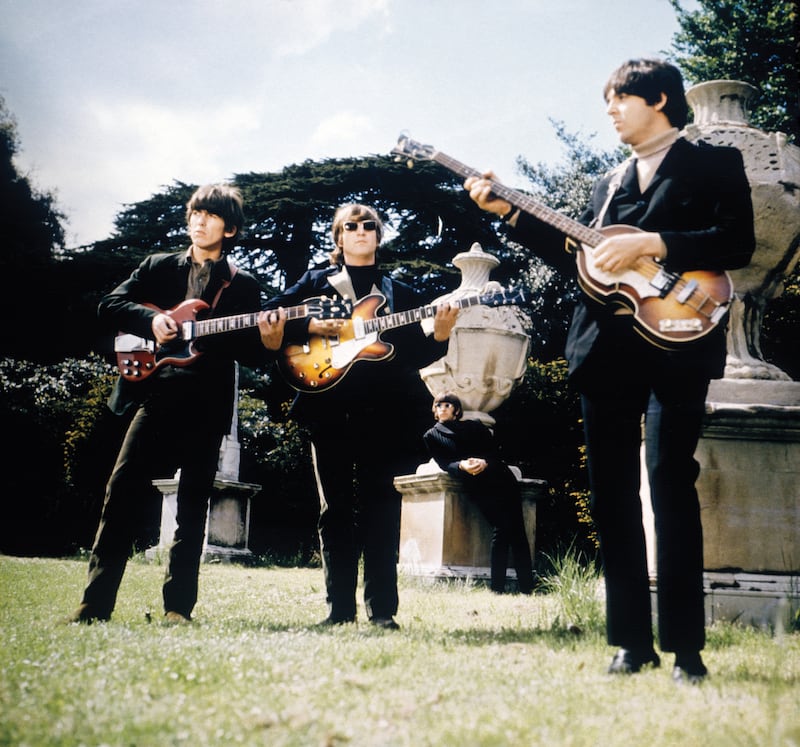
The Anthology project had been in the works for 25 years by the time it premiered in 1995.
“Neil Aspinall (head of the Beatles’ Apple Corps) had strung together, basically, all the footage we’d filmed of ourselves, or we owned ourselves, and whatever footage he could get hold of,” Harrison says in the documentary. “He put it in a chronological order, and that was tentatively titled ‘The Long and Winding Road,’ but that was back in ’71, when we’d had enough of all that.”
“The chronology is so fast-moving,” marvels Murray, who became a fan as a result of the original Anthology broadcasts. “The Beatles story doesn’t lend itself to jumping back and forth, particularly, because it’s like different bands when you do that, the way they evolved. You can’t just say, ‘Let’s go back and reference the Cavern,’ or whatever, because they’re fundamentally different every step of the way.”
“I’m glad it didn’t get made until now,” Harrison adds in the 1995 footage. “I think it’s been nice for us and the public just to forget about the Beatles for a while. Let the dust settle, and now come back to it with a fresh point of view.”
John Lennon is expertly woven into Episodes 1-8, but in Episode 9 his bandmates realize the void is bigger than a matter of including archival interviews.
“I think it’s quite melancholic, especially for someone like George, who had this therapeutic experience in talking about everything,” says Murray. “But he’s thinking about how John never got to do that, and it weighs things down. There’s this cloud over even the good memories. They can go back to that time, but they’re constantly reminded that there’s only three of them. There was a cost to what they experienced.”
“It was interesting to actually get back together,” Harrison reflects. “The Beatles went through a lot of good times, but also went through some turbulent times. And as everybody knows, when we split up, everybody was fed up with each other. But Ringo, Paul, and I, we’ve had the opportunity to have all that go down the river, under the bridge, and to get together again in a new light. I’m sorry that John wasn’t able to do that. I think he would have really enjoyed this opportunity to be with us again. We’d all had enough time to breathe, and I think it’s much easier to look at it now from a distance.”
“I like to say that Episode 9 may conclude the series but it’s not an ending,” adds Murray. “Hopefully, it’s a handover. I had in my mind every day, while we were making it, this strange thing of shutting the door and saying, ‘OK, it’s 1995. I have this amazing collection of material. How do I show what these three amazing people learned in reliving this shared experience?’ So, I resisted temptation to go speak to Paul and Ringo now. It was important to me that there was a discipline around the fact that the Anthology was made in 1995 and it’s kind of an artifact that must remain. And given that George isn’t around anymore to augment any bits and pieces, neither should Paul or Ringo even be asked to do that.”
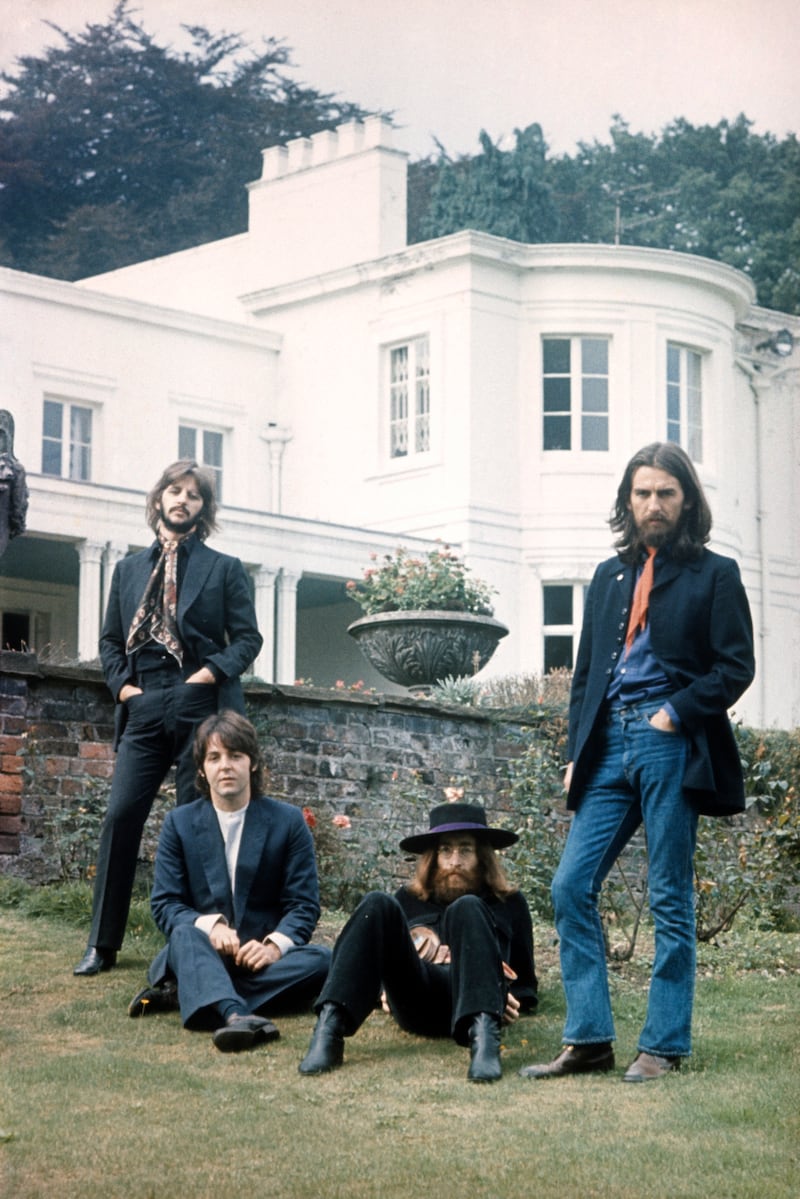
The Beatles themselves realized by 1995 that the definitive story of the band was impossible to capture.
“We started off trying to make the definitive story of the Beatles, and ended up realizing that it’s almost impossible to get the definitive story, because people look at things from different points of view,” McCartney says, adding “Certainly, when you get a situation like the Beatles’ story, everybody has their own idea of what happened. I mean, I found out more than I ever knew about the other guys from the Anthology.”
“If I was doing my Anthology, there would obviously be different things in it,” Starr adds. “You know, I’d have different things in it, George the same, Paul the same, you know?”
“When Ringo says, ‘It’s not my Anthology,’ he’s not stepping away from it, saying it’s rubbish,” explains Murray. “He’s simply saying there’s an otherness to the story of the Beatles.”
But perhaps Harrison sums it up best.
“That’s how it works. Everybody sees life as it’s happening through their own eyes,” he says, adding, “The Beatles Anthology is as much of the history of the Beatles that we can possibly get.”
While Starr and Harrison always had a love/hate relationship with being Beatles, by 1995 they’d made peace with their place in history—but still made a point of teasing McCartney’s seemingly limitless love for the band.
“I like the Beatles. I like to work with the Beatles. I’m not ashamed of that,” McCartney tells them, in a fascinating interview with the three set in Abbey Road Studio. “That’s what I love in life. It’s all about making music.”
“This is decades after the fact, but the dynamics are all still intact,” Murray observes. “Paul is still the work fiend. George is still two feet behind Paul. And Ringo says very little, but when he does, it’s the absolute cherry on the cake that makes it funny or poignant. It’s like it’s drilled into them from their shared experience. So, when they sit down and immediately click back together into their roles, whether it’s in the interviews or musically, when they play together.”
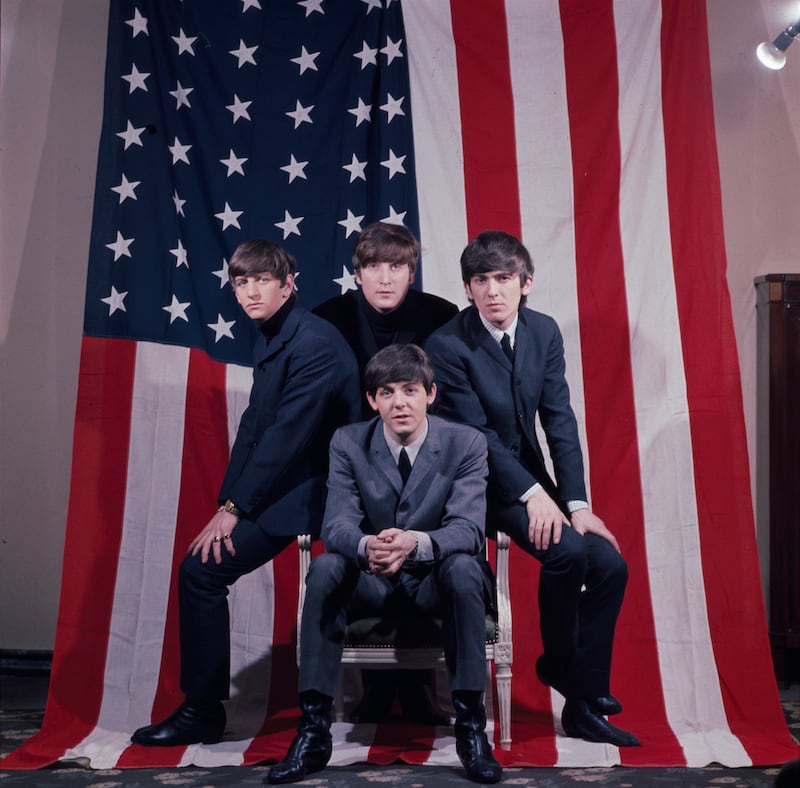
George Harrison, especially, had come to terms with the fact that the Beatles would live on forever.
“We’ll go on and on, on those records and films and videos and books, in people’s memories or minds,” Harrison says. “The Beatles has just become its own thing now. And the Beatles, I think, exist without us… Tomorrow never knows.”
“I think it says a lot about where we are culturally that the Beatles are as big as they are,” Murray adds. “It’s fantastic that the Anthology is a major puzzle piece–maybe the largest puzzle piece–in the matrix of how we can interact with the Beatles’ mythology and legacy. But it could have been overwhelming to try to take this on if I had such reverence for the Anthology that I treated it almost like an artifact. That wasn’t going to enliven it for 2025 and beyond.”
“So, Episode 9 is kind of this mixture of appreciating the legacy and all of those technicians and creatives that came before to film the stuff in the first place,” he continues, “but then to say, ‘Perhaps the ’90s can offer a lot more self-reflection in the way that we’re used to now.’ Because documentary was very journalistic, then and now, it’s incredibly filmic. So, since the Beatles remain present in our cultural imagination, and not just nostalgia, but as something enduring and also evolving, it was important to finish the story on those terms.”
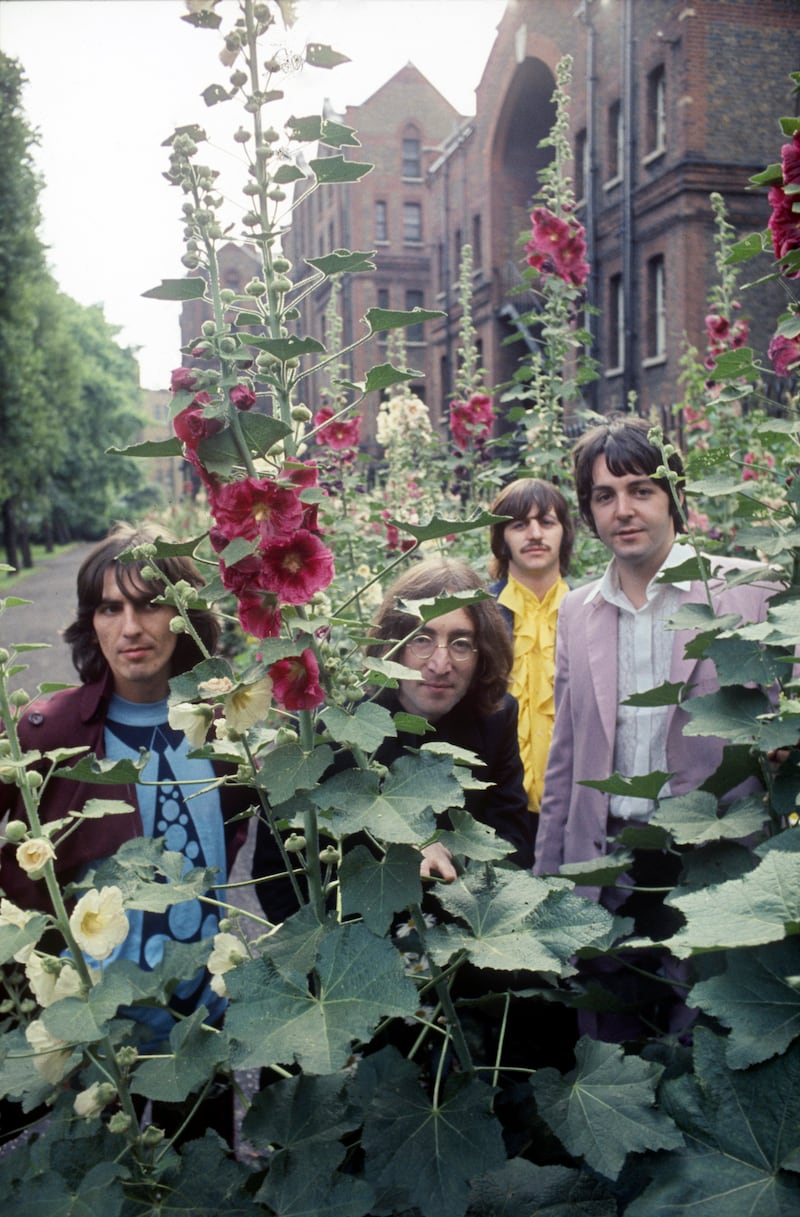
Episode 9 ends on a hilarious note, with McCartney and Harrison teasing plans for the world tour nobody ever asked for, before wrapping up with some typical Beatles banter, and a lovely note from Starr.
“Well, this has really been a really nice day,” Starr says, before being drowned out by McCartney, who says, “It’s been a pleasure for me, too.”
“Well, then I’m not gonna have to see you for the next 40 years,” quips Harrison.
“Before the Anthology, it was kind of weirdly acceptable to not like the Beatles,” Murray explains. “If someone said, ‘I don’t really like the Beatles,’ they weren’t laughed at. The Anthology ushered in an era that reaffirmed them as the preeminent cultural force of the 20th Century. Now that’s a weird thing to say now, ‘Oh, I don’t like the Beatles.’ People say that now to be contrary or for the effect. Anthology changed all of that, because the story and the music they made are so amazing, but also because the love these men had and have for each other shows through at every point.”
As for Ringo Starr?
“It’s been really beautiful and moving. I like hanging out with you two guys,” says Starr, as the credits roll.