Ambition can be a curse as much as a blessing. And it dooms The Bride!, a revisionist take on James Whale’s 1935 Universal horror classic that—with every flamboyant twirl, guttural scream, and punk-rock flourish—aims high and falls short.
Putting a (literally and figuratively) exclamatory feminist spin on its hallowed source material, writer/director Maggie Gyllenhaal’s film features bold performances from Oscar-winner Christian Bale and soon-to-be Oscar-winner Jessie Buckley (Hamnet), along with a couple of bright, shining moments that cut through the dreary dimness.
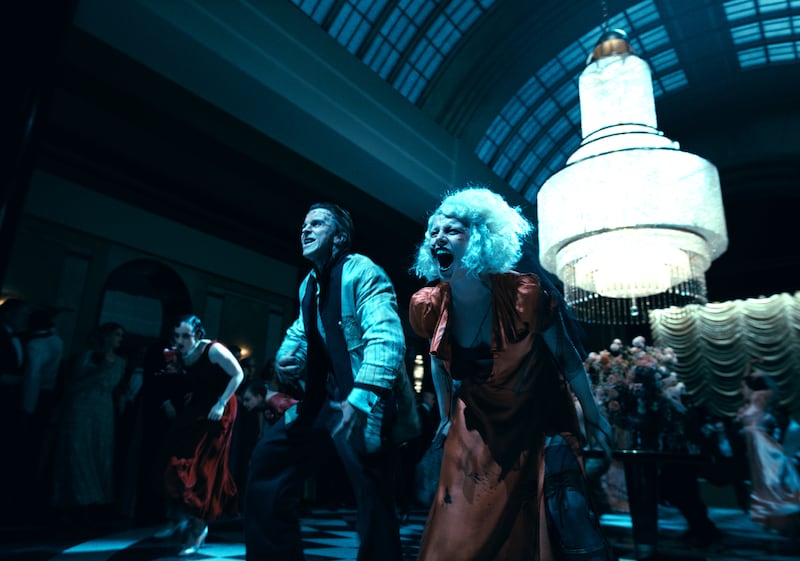
By and large, though, it’s a Frankenstein-ian cine-monster that both reinvents and pays homage with all the clumsiness and unsightliness of its fabled creature.
Like last month’s "Wuthering Heights," The Bride! (March 6, in theaters) is a big artistic swing. Yet whereas Emerald Fennell’s Emily Brontë adaptation had a clear vision (however misguided), Gyllenhaal’s redo is a distinctly disjointed affair.
Caught between cheekily nodding to the past and embracing a surprisingly derivative brand of riot grrrl revolution, it mixes and matches tones, references, styles, and ideas with reckless abandon, hoping that enough zeal and flair will smooth out its scarred edges. Instead, it begets merely a schizophrenic beast—all flailing arms, contorted bodies, and roaring blood-stained mouths—that constantly feels as if it’s coming apart at the seams.
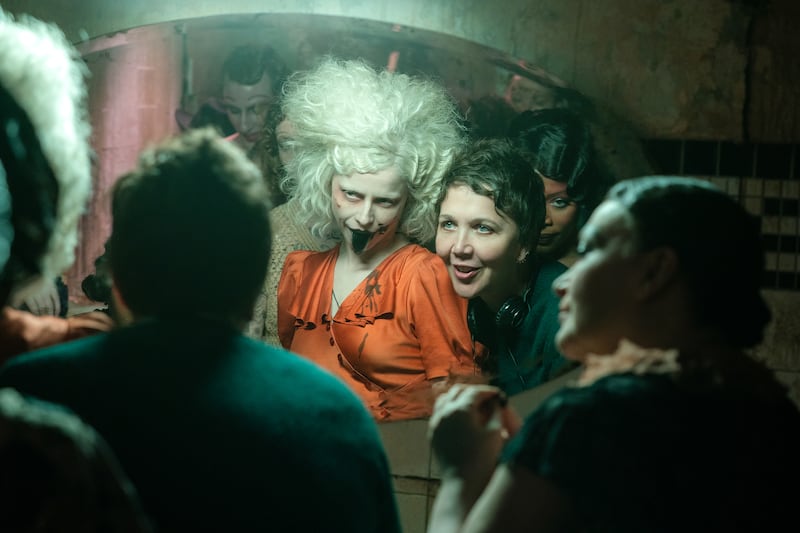
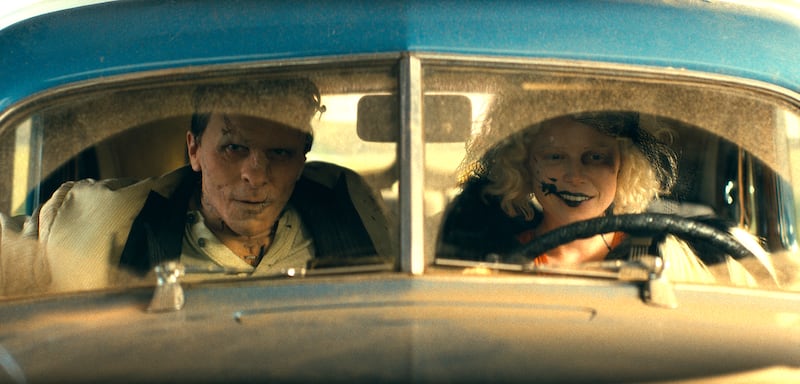
Emblematic of its slapdash construction, The Bride! casts its heroine and her paramour as akin to three different versions of the Clown Prince of Crime, with Buckley’s Bride posited as a pasty-faced radical who inspires the masses to revolt (Joker); a wild anarchist who at one point sticks her head out a moving car window (The Dark Knight); and a tattoo-loving punk who gets Bale’s Frankenstein inked with her name across his chest (Suicide Squad).
In its insolent brashness, Gyllenhaal’s film has more than a bit in common with David Ayer’s 2016 superhero misfire. Even so, the filmmaker doesn’t stop at tipping her cap to DC Comics, finding time to also dully channel Bonnie & Clyde, celebrate Fred Astaire and Ginger Rogers-esque ‘30s cinema, and—in the proceedings’ most mind-boggling misstep—stage a straight-faced rendition of Young Frankenstein’s “Puttin’ on the Ritz” centerpiece.
The Bride! ostensibly intends for that scene to be a tongue-in-cheek tribute to Mel Brooks’ comedy gem, but it’s as flat as every other gesture in this venture, whose tale concerns Ida (Buckley), a 1936 Chicagoan who becomes possessed, out of the blue, by the ghost of Mary Shelley (also Buckley), who from a black hereafter void aims to craft her follow-up to Frankenstein.
This framing device is florid and overcooked, and given that the ensuing action has little interest in investigating storytelling or the lines separating fiction and reality, it comes across as a shallow meta embellishment, all macabre flash and no substance.
Thanks to a Shelley-instigated outburst and the fact that she’s already on the wrong side of an evil gangster (Zlatko Burić), Ida is promptly murdered. Resurrection, however, arrives swiftly courtesy of both Frank, who covets a partner to ease his century-long loneliness, and Dr. Euphronious (Annette Bening), a “mad scientist” who takes up Dr. Frankenstein’s work (complete with grave robbing!) because The Bride! needs someone to help Bale’s flat-top with the, ahem, nuts and bolts of the experiment.
Once reborn as the Bride, Buckley’s protagonist is taken under the wing of Frank, who often imagines himself co-starring in the glamorous movies of his silver screen idol Ronnie Reed (the director’s brother Jake Gyllenhaal)—not least of which because the marquee star overcame a disability—and who has no qualms about cracking the skulls of anyone who dares mistreat his wife-to-be.
The Bride can’t remember her name, and her quest for identity lies at the heart of The Bride!. Still, Gyllenhaal’s script doesn’t coherently thread together its notions of personal self-definition and feminist autonomy and defiance, lurching this way and that as Frank and the Bride get themselves into hot water in Chicago and New York.
On their tail are Detective Jake Wiles (Gyllenhaal’s husband Peter Sarsgaard) and his secretary Myrna Malow (Penélope Cruz), whose dynamic—she’s the brains behind the operation but is marginalized at every turn by sexist men—additionally speaks to the film’s larger gender-inequality concerns. Yet even setting aside the glaring miscasting of Cruz (as a go-getter named Myrna!), these matters are tackled with shocking inelegance, peaking with the Bride repeatedly shrieking, “Me too!”
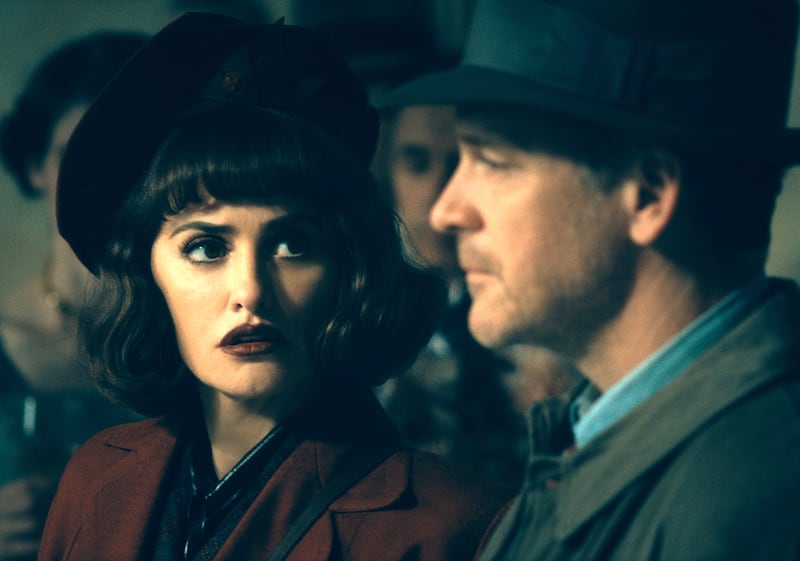
With a boxer’s broken nose and staples circling his scalp, Bale makes Frank a sympathetically forlorn loner. And with her hair a frizzy mess (a fitting shout-out to Elsa Lanchester’s legendary ‘do) and the corner of her mouth splashed with black blood—as is her tongue and a track mark-ish streak on her forearm—Buckley cuts a striking figure as the lost Bride.
Alas, despite strutting, sashaying, and growling with an over-the-top swagger that frequently feels as if it’s about to culminate magnificently, the actress is hamstrung by a script that has her spouting eruptions of rhyming dialogue and oblique from-the-great-beyond gibberish, all of which resonates as the height of trying-too-hard affectation.
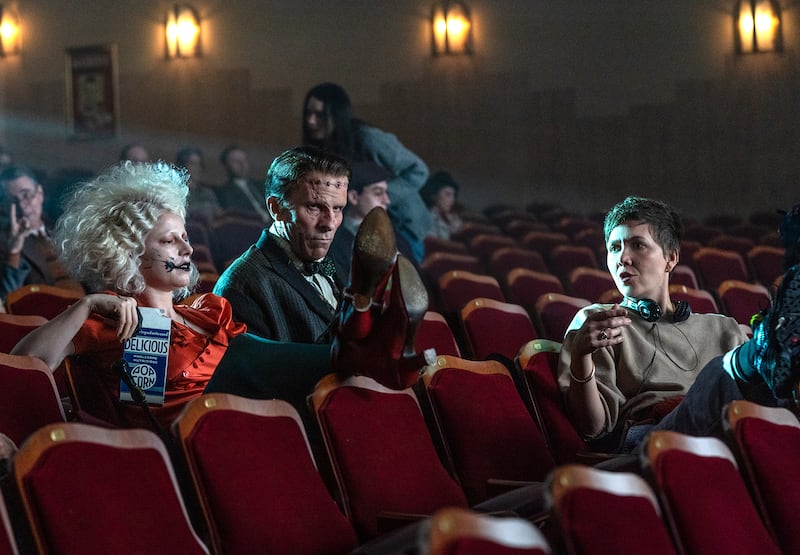
Frank’s decision to lie to the Bride about her origins should, in theory, be a prime component of The Bride!’s censure of misogyny. It’s not, however, as Gyllenhaal gets caught between depicting her heroine as a symbol of unrepentant individuality and developing her and Frank’s bonded-by-misfortune romance.
The two actors snarl and howl ferociously without ever seeming like soul mates. For all their shared rampaging and yo-yoing affections, they’re simply two-dimensional approximations of their hallowed ancestors. Consequently, a late stab at positioning them as a 20th-century Romeo and Juliet proves as unsuccessful as the rest of the film’s gambits.
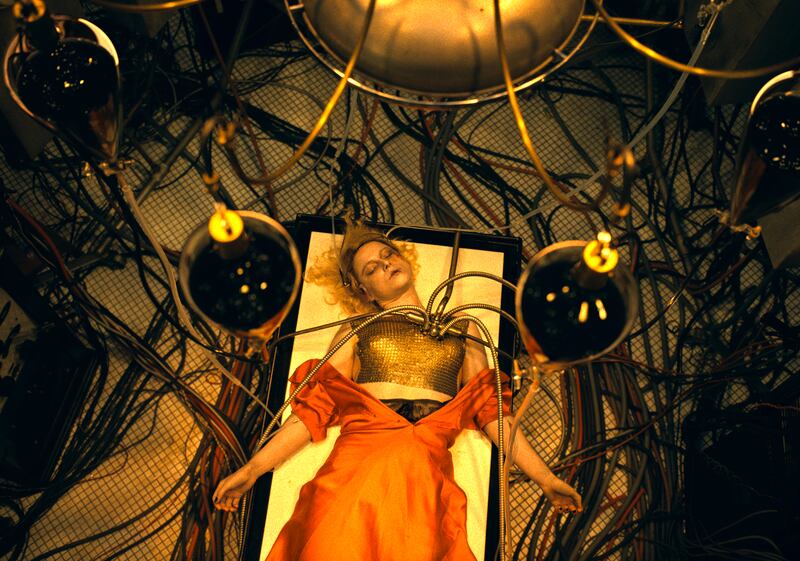
There are instances of genuine beauty in The Bride!, the best of which involves a backlit Frank and the Bride dancing in lockstep in a nightclub spotlight, and Buckley and Bale’s full-throated turns are as big as the madness that surrounds them. Scattered throughout this ungainly affair are flashes of the uniquely spiky monster mash that Gyllenhaal apparently envisioned from the start.
Nonetheless, those glimpses are few and far between, and ultimately, neither her scattershot showmanship nor her headliners’ maximum-voltage electricity can jolt this corpse of a do-over to thrilling life.