
Every superhero gets an origin story, so why not Yeshua the Nazarene, the Lamb of God, also known to many as Jesus H. Christ.
The Carpenter’s Son, now available on digital VOD, is a totally solid idea for a movie. Writer-director Lotfy Nathan’s film attempts to fill in timeline gaps concerning the rebellious rabbi and self-identified Son of Man. What was life like for J.C. after his birth in a Bethlehem manger but before he was baptized, assembled his disciples, and began preaching in Capernaum? Indeed, the opening title card states that the story is derived from the Infancy Gospel of Thomas, one of the so-called “Apocryphal Gospels” that has been dismissed by most Christians as non-canonical works. (A Reddit thread I recently perused referred to them as “early Jesus fan fiction.”)
It’s certainly rich soil, a prequel to The Greatest Story Ever Told, and, in fact, there are whole sequences in Martin Scorsese’s The Last Temptation of Christ that mirror some of what’s seen in The Carpenter’s Son. There is, however, a great difference. Scorsese’s controversial 1988 epic is a masterpiece, while this new picture absolutely sucks.
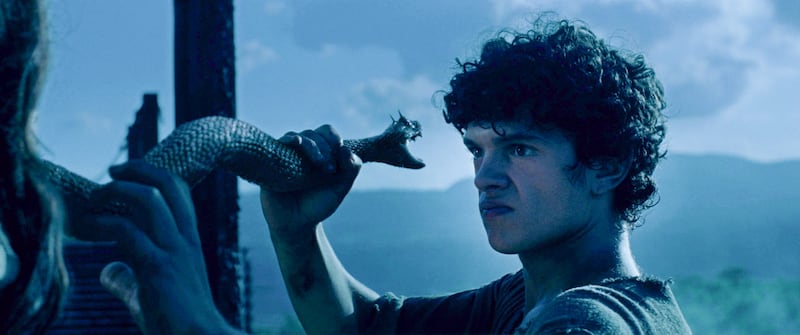
Teenage Jesus is played well enough by Noah Jupe, a handsome kid curious about the world — in fact, some will no doubt find the scene of him lustily spying on his bathing neighbor to be blasphemous. He is also troubled by visions, knowledge he should not have, and a weighty sense of purpose. Moreover, he senses something his parents aren’t telling him. Mom, FKA Twigs, is kind and warm, but his father (the titular carpenter), is cold and demanding. Perhaps you would be, too, if you were cucked by the Almighty.
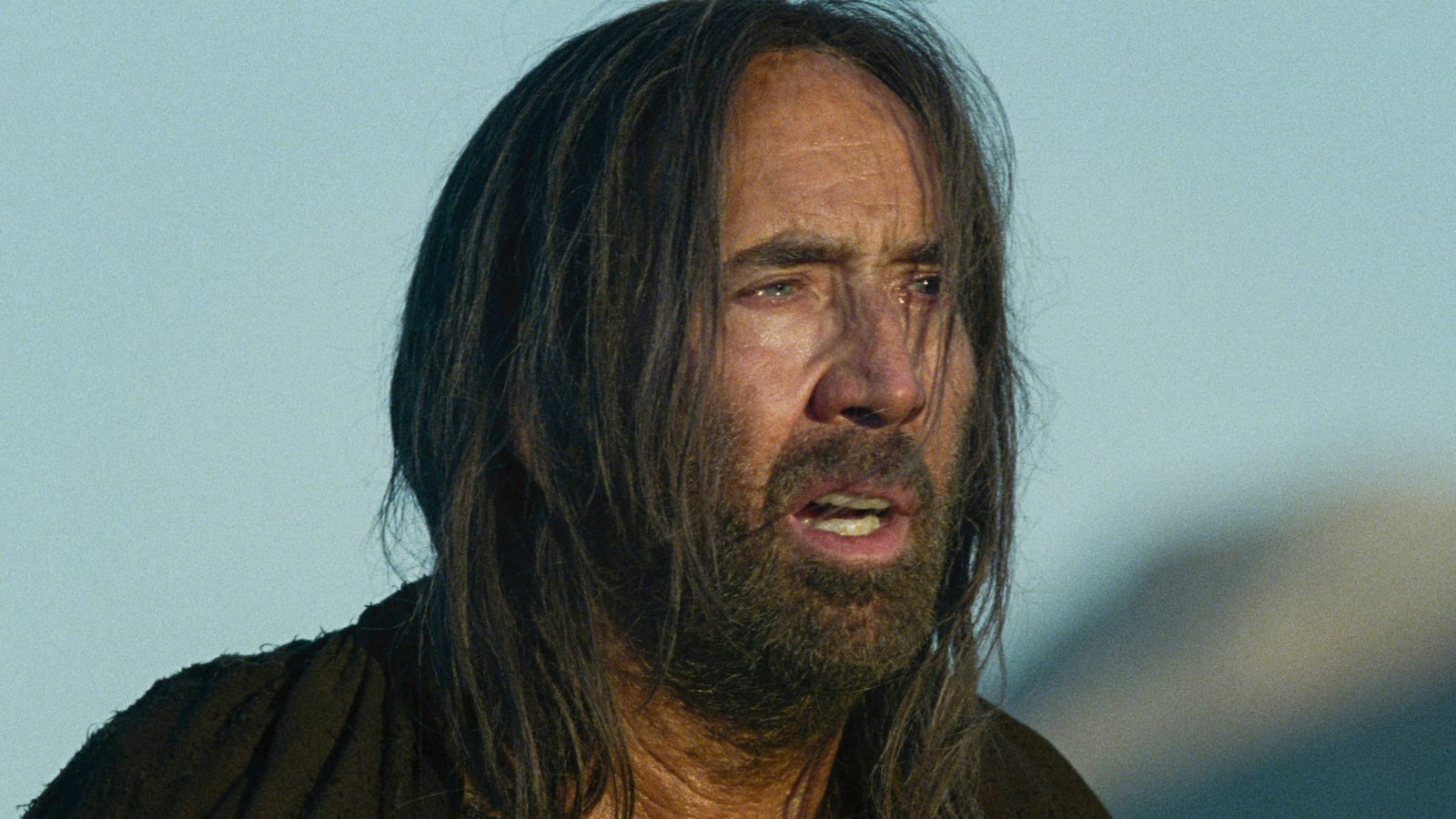
The Carpenter is played by Nicolas Cage, whose shall-we-say specific performance style can be bent by some directors toward noble aims. Recent examples include Pig, Dream Scenario, and Mandy. Many also liked The Unbearable Weight of Massive Talent and Longlegs, both of which I despised, but I kinda dug Renfield, so I guess it evens out. But for every one of these Cage performances that at least merit some discussion, he still regularly pumps out product seen by few like Gunslingers, Sympathy for the Devil, and The Retirement Plan that simply must be money laundering schemes.

I bet Cage entered The Carpenter’s Son thinking it would be one of the good ones. There is a sparseness to it — shot on location in Crete — and an earnestness to the dialogue. Of course, Cage’s braying shatters any taciturn or contemplative qualities the picture might otherwise have.
Teenage Jesus finds himself consorting with Satan (pronounced by Cage as “suh-tahn”), who comes to the boy as a somewhat androgynous, pale girl, reminiscent of Mel Gibson’s The Passion of the Christ. Also in league with that film are the lengthy surveys of human torment. The Carpenter’s community is also host to a kind of crucifixion center, which allows your hero to gaze upon the ghastliness of what he senses will be his future.
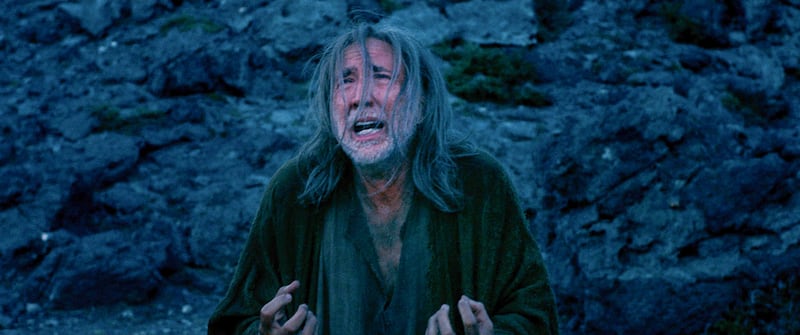
Among those toiling in agony is the neighbor gal Jesus seemed to fancy, so there’s maybe some guilt brewing there, but honestly whatever point Lotfy Nathan is driving toward is lost amid the gross-outs and the relentless tedium. There’s an awful lot of nothing that happens in this film — and it’s dimly lit nothing at that. FKA Twigs gets one active moment early on (a birth scene in which she howls) and the rest of the time she’s just there looking concerned. The drama, such as it is, is supposed to come from Cage’s inner conflict as he wants to protect his son while recognizing he has another destiny. This manifests itself in a lot of shouting (“How will you find drink?!!” he bellows at the boy, planning an excursion) and mugging for the camera in a preposterous wig. It’s funny… for about five minutes.
There have been some online declaring a plan to boycott The Carpenter’s Son on religious grounds. There’s no need to worry about that. You can boycott simply because it’s a terrible bore.