Early in The Moment, film director Johannes (Alexander Skarsgård), who’s been hired to make a movie about Charli XCX’s upcoming tour, tells the artist’s creative director Celeste (Hailey Benton Gates) that concert audiences aren’t interested in just having a “nightclub” experience—they want a story.
Because Charli’s entire persona is built around cigarettes, cocaine, and partying—and because Johannes is an exploitative creep—this opinion is meant to be ridiculous. Yet it’s advice that the film’s actual director, Aidan Zamiri, should have heeded with this pop-icon mockumentary, which may have things to say, but doesn’t have a clue how to say them.
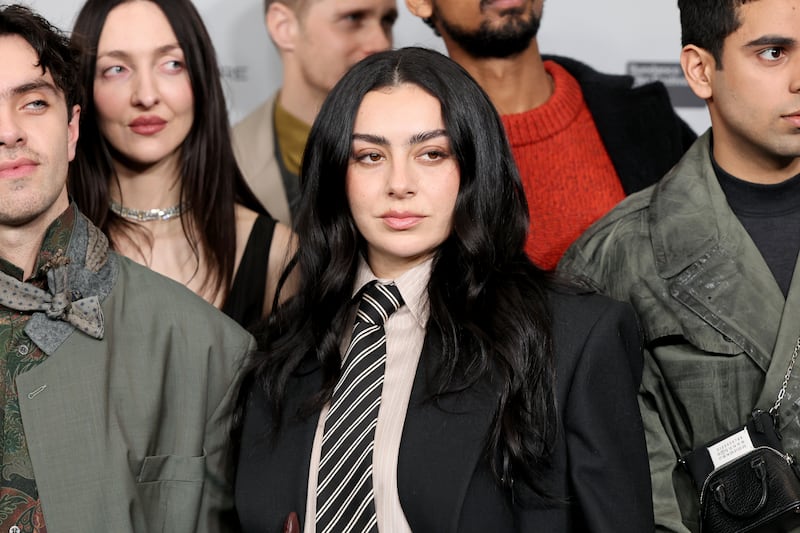
Debuting at the Sundance Film Festival ahead of its January 30 theatrical release, The Moment is a fictionalized account of Charli (playing herself) preparing for her first headlining tour in the wake of her 2024 album Brat becoming an international sensation.
For Charli and the myriad businesspeople in her orbit, this is a pivotal turning point in her career, and that, consequently, kindles anxiety in the singer, who’s torn between wanting to ride her recent waves of success and pivot to a new phase before “brat summer” transitions from an exciting craze to yesterday’s fad.
The Moment casts this crossroads as the end of an era, but it does little to make Brat feel like more than a brief phenom—an impression that partially comes from the fact that Charlie, in September 2024, is contemplating the next chapter only months after the current one began. An introductory montage is so brief that it too underscores the relative brevity of “brat summer.”
Consequently, when Zamiri’s maiden feature opens with strobe-lit images of Charli dancing intensely to frantic club music, the intended effect—look at the exhausting effort required to stay at the top!—doesn’t quite materialize.
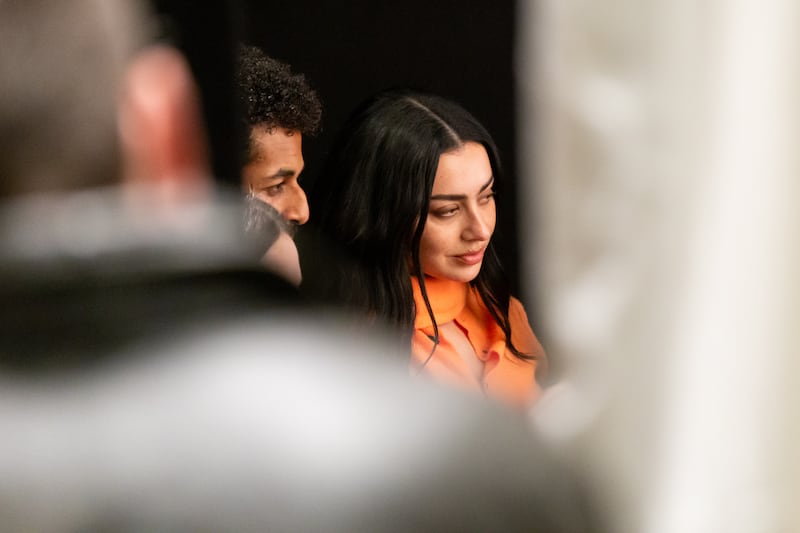
Still, The Moment starts strong, detailing the many forces pushing and pulling on Charli, be it her manager Tim (Jamie Demetriou), whose groveling yes-man instincts prevent him from uttering a single word that might upset his client, or an Atlantic Records UK bigwig (Rosanna Arquette) who’s determined to capitalize on Charli’s skyrocketing popularity by having her enter into a deal with a British bank on a new lime-green Brat credit card whose terms the artist doesn’t, and isn’t all that concerned about, comprehending.
Similarly, at a shoot for Vogue, she practically drowns in a sea of swirling voices (including Kate Berlant’s sycophantic makeup artist) trying to seize her attention and court her approval, all as she’s stitched into a dress while standing up—a telling snapshot of the constraining demands placed upon someone in her position.
Though Charli sells her upcoming tour with enthusiasm on The Late Show with Stephen Colbert, she now believes that “brat summer” is “all cringe,” and a shot of her smoking by herself on a hotel room balcony suggests that she’s less than happy. Her dissatisfaction grows stronger when Arquette’s executive forces Johannes on her.
Charli repeatedly pronounces that she thinks the director’s job is simply to film what she and Celeste have envisioned. Tim’s hemming and hawing during a phone call about this decision, however, indicates that Johannes’ role will be more than merely a passive documentarian.

Once rehearsals begin, tensions mount between Celeste and Johannes, the former a trusted friend of Charli and the latter a sleazeball (he’s dealing with a vague scandal involving another artist) who’s played by Skarsgård as the most annoyingly insincere and conniving individual alive. Prefacing his every calculating, interfering word with friendly and generous remarks, Johannes is a schemer who does his backstabbing with a benevolent smile.
Unfortunately, he’s also one-note, and granted only a single truly amusing sequence in which, with clownish flamboyance, he shows Charli how to perform newly scripted on-stage lines.
With Charli caught in the middle of a Johannes-Celeste tug-of-war that leaves her with minimal control over her concert, The Moment strives to be a tale about the difficulty of being creative (and yourself) in an industry dominated by manipulators, flatterers, deceivers, and abusers. Its drama, alas, swiftly loses its heady thrust, and Zamiri’s flashing, color-changing title cards (set to belligerent electronica) is one of many shrill formal turn-offs.
More problematic is a screenplay (by Zamiri and Bertie Brandes) that offers little more than a narrative skeleton, complete with uniformly superficial characters.

Fed up with the pressure with which she’s saddled—and which she rails about, in overly expository fashion, to Tim—Charli absconds to Ibiza, where she has a miserable spa session with a “holistic facialist” and then runs into Kylie Jenner, whose faux-friendly passive aggressiveness (similar to Rachel Sennott’s earlier cattiness) sends her spiraling.
The Moment can’t make anything substantial out of these incidents, and despite a joke about Celeste’s hyper-antagonistic stage lighting, it gleefully indulges in extreme in-your-face stylization.
It’s not as affected as The Weeknd’s similar vanity project, Hurry Up Tomorrow, but it’s not that far removed from it either, and considering that virtually nothing of real consequence occurs, its brashness wears on the nerves.
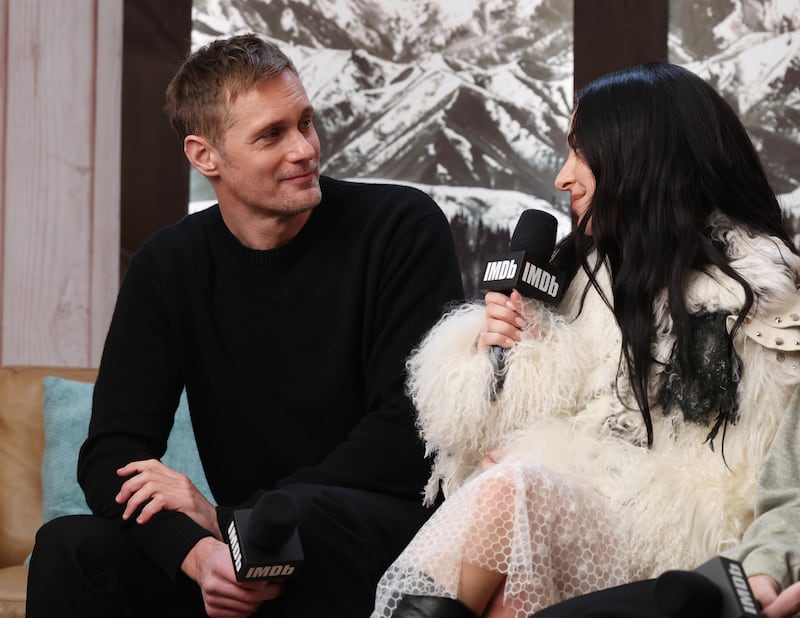
As an actress, Charli is capable of carrying The Moment. Zamiri, however, turns her into such a perpetual moper and malcontent that she makes celebrity look like a drag that isn’t worth the (unseen, at least here) benefits.
The film’s familiarity with the complications and headaches of superstardom is considerable, but its plotting is thin to the point of invisibility, with scene after scene going nowhere while stating its ideas out loud. Moreover, a late crisis is so unclearly defined that it renders the proceedings a series of tossed-off episodes rather than a serious, coherent endeavor.

It’s difficult to imagine these shortcomings mattering to die-hard fans eager to catch a glimpse of Charli’s behind-the-scenes life—even a fake one such as this. Yet Zamiri’s film is too slapdash to get beneath the skin of its hot-commodity subject, and those not already invested in the singer won’t find much to latch onto save for a few intriguing if undeveloped notions about pop-culture power dynamics.
A final tongue-in-cheek note intimates that Charli knows that the only way to fight co-option and maintain autonomy is to spearhead one’s own selling out. By that point, though, the frustratingly slight The Moment has already passed.