

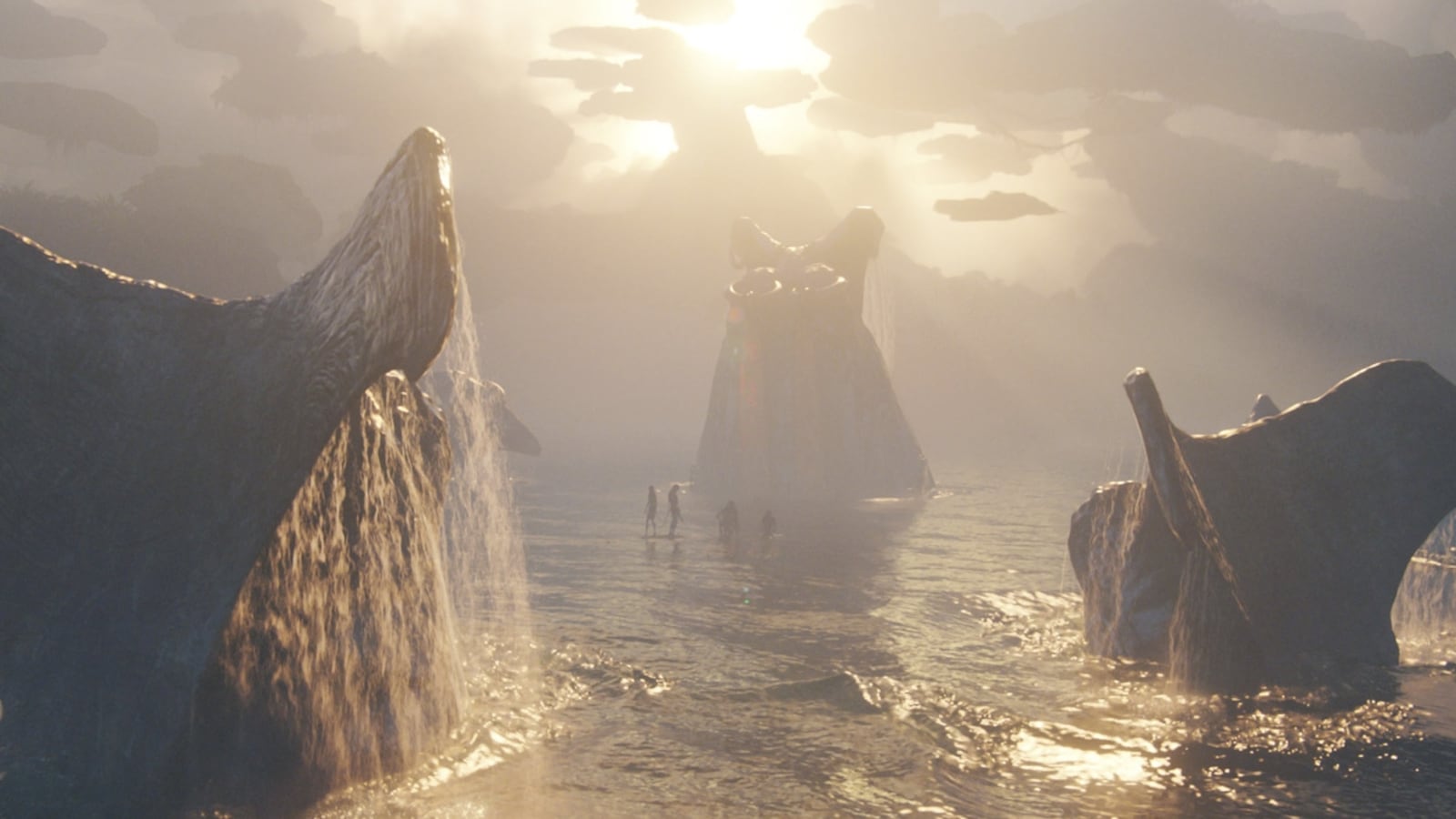
Avatar is back. The monumental gazillion-dollar franchise’s third installment, Avatar: Fire and Ash, is here to snatch the inevitable title of the highest-grossing movie of 2025. Nobody makes an epic quite like James Cameron, and Fire and Ash is the biggest—and longest—Avatar movie yet, clocking in at a whopping 197 minutes. Thankfully, it’s also a joyous spectacle, and it’s got one of the wildest, yet unexpectedly wholesome moments in the entire franchise.
A lot of conversation about Avatar is that despite these movies making over $2 billion apiece worldwide, they’re not part of the broader cultural conversation. It’s an intriguing argument—even though they’re some of the highest-grossing movies ever (currently number 1 and number 3 ever, not adjusting for inflation), when have you last heard somebody talk about these movies? Sometimes, there’s so much complaining about Avatar that people lose sight of the fact that these movies are really freaking fun.
What is also often overlooked about Avatar is that these movies are exceptionally weird.
(Warning: Spoilers ahead.)
Everything about Avatar is bigger and bolder than what you’ve seen before, and that’s not just about wilder action sequences or crazy new villains (which Fire and Ash delivers admirably). It also means the films get even weirder. After all, this is the franchise where the Na’vi, Avatar’s primary species, have sex by intertwining their neural queues, which are like a long braid. And the sequel, Avatar: The Way of Water, introduces the Tulkun. They’re gigantic whales that can talk to the Na’vi—and they’re the real reason Avatar is so darn fun.
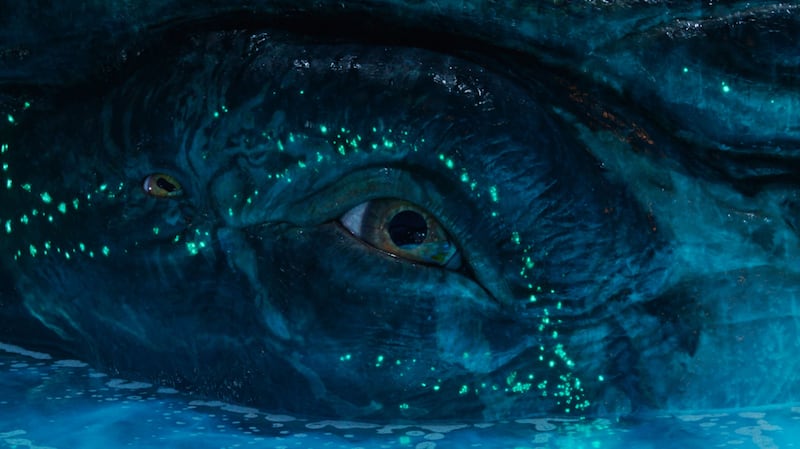
The Way of Water was secretly just a movie about a boy and his best friend whale named Payakan. And Payakan is the cutest gigantic whale monster you’ll ever see. His eyes are a window into his tortured soul, and seeing Payakan fight to defend the Na’vi—while also exacting a long-awaited personal vendetta—was nothing short of perfection. In Fire and Ash, Payakan goes on trial.
Yes, you heard me right. Fire and Ash puts a whale (or a tulkun, to be specific) on trial. And no, I don’t mean that some Na’vi argue with a whale. I mean that there’s a proper trial, with a tulkun judge, a tulkun jury, and a whole crowd of Na’vi waiting to hear Payakan’s fate. And it’s one of the best movie moments of 2025. Yes, really!
Here’s what you need to know about the Tulkun: pacifism is their be-all and end-all, which they call the “Tulkun way.” They’d rather be torn to shreds before inflicting violence on any living thing. Payakan was already an outcast for leading an attack on humans (to avenge his mother), which led to other Tulkun dying. The tribe has never forgiven Payakan for this. But after The Way of Water, he’s on even thinner ice—or rather no ice at all, as he’s been outlawed by the Tulkun.
But Payakan cannot stay away from the Na’vi, specifically Lo’ak, his best friend. And Lo’ak wants nothing more than for Payakan to no longer be an outcast. The trial is set up exactly (or perhaps nothing) like you’d expect, with a group of staggeringly big Tulkun half-emerged from the water, surrounding Payakan, countless Na’vi looking on. When the Tulkun come together to sentence Payakn, Lo’ak hopes to convince them to change their minds about his bestie.
Sadly, Lo’ak’s pleas fall on deaf ears. Lo’ak tries to get the hundreds of Na’vi watching the trial on Payakan’s side, reminding them that without Payakan’s efforts, they would all be dead. But the Na’vi refuse to intervene. The grand Tulkun, who is somehow even bigger than Payakan, casts their official judgement: Payakan is officially outcast. For good.
In any other movie, this would feel ridiculous. Downright stupid, even. It’s the kind of moment where you’d expect various thinkpieces to talk about how a whale trial is exactly why a movie is awful. But the whale trial in Fire and Ash is shockingly emotional. It’s the magic of James Cameron on full display, an artist who so deeply believes in his work that he can convince you that a literal whale on trial is one of the most riveting, heartfelt moments in cinema.
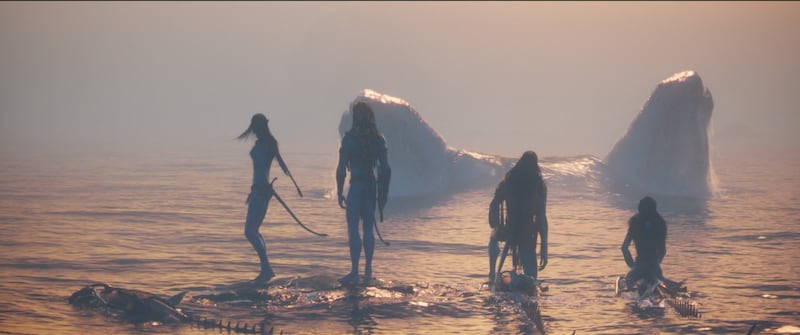
When Payakan receives his verdict, he does not fight it. Somberly, he promises, “You will never hear my song again.” (This moment is subtitled, as is all Tulkun dialogue, because they don’t speak English, but the Na’vi can understand them, and therefore so can we). Reader, I can’t lie to you: a tear fell from my eye in this moment. It’s impossible not to feel the immense sense of loss that both Payakan and Lo’ak are feeling in this moment—they understand one another like nobody else, yet they’re being forced to separate.
Of course, Lo’ak doesn’t take this lying down. He’s furious, defying Tulkun tradition and going against the wishes of the Na’vi village by pleading for Payakan—but it doesn’t work, and the Tulkun stick with their verdict of banishing Payakan for life.
Underneath all the spectacle (and there is So. Much. Spectacle.) is a remarkably vibrant heart. Avatar isn’t popular because of the action—it’s beloved because it can convince you that something as goofy as a whale on trial is a moment of extraordinary emotion.