The Sundance Film Festival can be counted on for small-scale, low-key dramas set in rural enclaves full of barren woods, open fields, train crossings, messy working-class dwellings, and men and women coping with everyday hardships. Union County fits that template to a tee, blending fiction and non-fiction to tell the story of a young man striving to get a grip on his addiction—and life—in the heartland of America’s opioid epidemic.
In myriad ways, Adam Meeks’ directorial debut is cut from a familiar cloth, right down to its mournful score and bittersweet atmosphere. Yet it also follows festival tradition by featuring a stellar breakthrough performance from a well-known actor—in this case, Will Poulter’s sterling turn as a junkie caught in a prison of his own making.
Union County (premiering at Sundance on January 25) features Ohio’s Adult Recovery Court, which assists addicts through a combination of drug tests, journal entries, and appearances before a judge to whom they report on their day-to-day progress (or lack thereof).
Meeks’ cast is populated with many real-life participants in this program, and their frank testimonials—both in court and at the Addicts Anonymous meetings they attend—contribute to the film’s realism. Be it a man talking about finding strength from dedicating himself to his kids, or a woman confessing that she previously used narcotics to quell the troublesome emotions she couldn’t manage, these survivors lend the material an authenticity that helps offset its more clichéd construction.
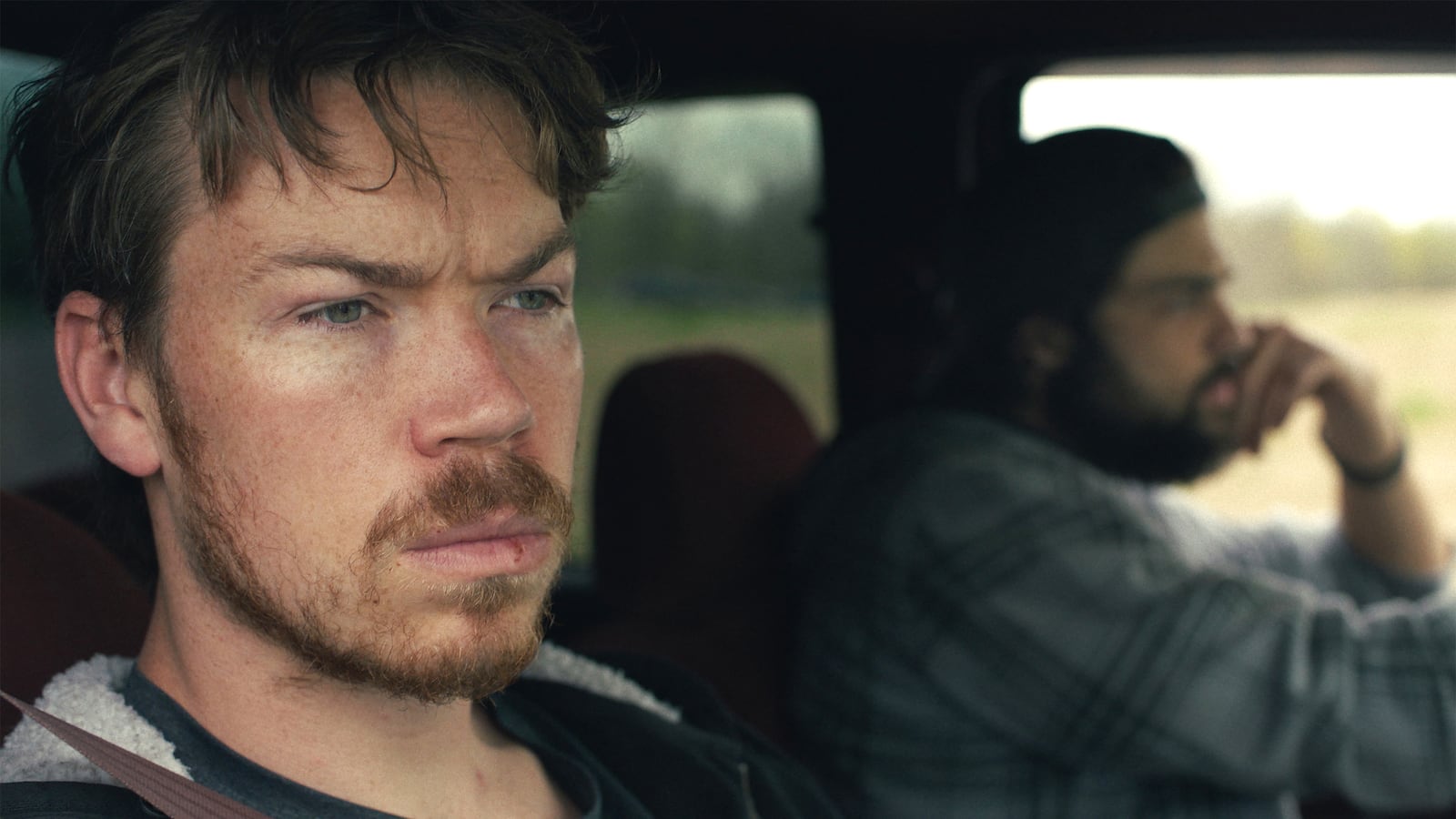
Tasked with blending in alongside these non-professionals is Poulter as Cody, who arrives at Adult Recovery Court after a stint in prison. The rules for staying in the program are simple, but the dull, hard look in Cody’s eyes indicates that he’s hardly someone who’s comfortable sticking to the straight and narrow.
In a striped button-down and jeans, his bangs covering his forehead and his shoulders slumped so heavily that it’s easy to visualize the invisible monkey on his back, Cody is a quiet and reticent newbie. Still, he perks up at the sight of Jack (To All the Boys I’ve Loved Before’s Noah Centineo), whose curly hair, bushy beard, camouflage baseball hat, and hurried body language immediately mark him as a source of potential trouble.
As it turns out, Jack is Cody’s foster brother and happy to see him after a lengthy time apart, and Centineo plays him as the type of lovably energetic kid whose vibrancy, sadly, is intimately related to his lack of inhibition. Jack has been in the program for months but is struggling to stay clean, and he gets Cody a job at a factory cutting wood planks. He also helps him reintegrate into their hometown, namely by taking him to a bonfire get-together in the middle of the forest. It’s there that Cody meets Anna (Elise Kibler), a friendly local whose kindness is epitomized by her generously lighting a cigarette before giving it to him.
When Jack fails an alcohol test and is booted from his recovery house residence, Cody—who’s been sleeping in his car, complete with hanging his washed clothes on outdoor clotheslines and brushing his teeth with a jug of water—takes his room and discovers that Anna, fortuitously, works across the street at the women’s shelter.

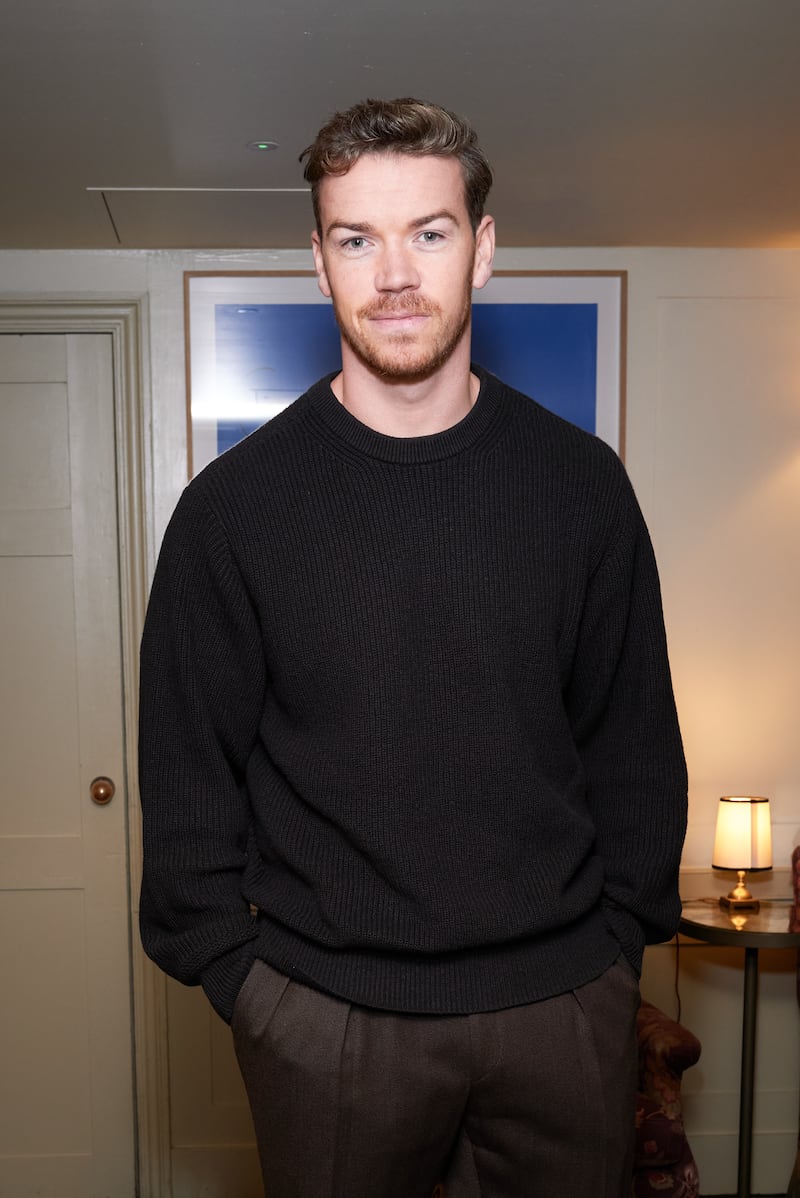
Since his big-screen debut 19 years ago in Son of Rambow, Poulter, 32, has exhibited considerable range in a diverse array of projects that include Meet the Millers, Midsommar, Guardians of the Galaxy Vol. 3, The Bear (which earned him an Emmy nomination), and last year’s Death of a Unicorn, which he hilariously stole out from under Paul Rudd and Jenna Ortega.
Whereas he went over-the-top in that supernatural comedy, he tamps down any hint of charisma in Union County, embodying Cody as someone whose years-long battle with substance abuse has transformed him into a shell of himself. There’s no showiness to the English actor’s work here, just a marrow-deep woundedness that’s colored with brief, piercing flashes of the healthier soul buried beneath an avalanche of need, regret, fury, self-loathing, and despair.
Poulter is working in well-worn territory in Union County, but his refusal to court manipulative waterworks is admirable. As Cody grapples with a catastrophic relapse and its fallout, the headliner’s evocation of his protagonist’s misery feels realistically muted, just as the plot’s crises and recoveries resonate as genuine precisely because they’re posited as regular potholes along this bumpy road.
To wit: When Cody’s sister Katrina (Emily Meade) and her young daughter awaken to find him sleeping on their couch, his face badly bruised and his body battered, her silently furious reaction—and the unpleasant incident that follows—is staged with a flatness that speaks to its routineness in a family contending with crippling addiction.
Poulter is so good in Union County that he props up what amounts to a modest slice-of-life feature about the all-too-common opioid nightmares faced by millions of Americans and their families, friends, and loved ones. A shot of a bird flying out a broken window, or a car driving down an empty pastoral road, would be at home in any number of Sundance dramas from the past three decades, including last year’s Omaha, with which Meeks’ film shares both a formal reserve and a story rooted in reality.
Like that festival standout, it also features a quietly affecting lead performance that deepens and becomes more empathetic as the character’s circumstances grow more dire. In this instance, Cody ultimately must confront tragedy head-on and, with it, his willingness to keep battling his demons, and Poulter’s understated tack goes a long way toward selling the action’s concluding moments.
There are no grand gestures, bold confrontations, or uplifting platitudes in Union County. Rather, Meeks’ film ends by recognizing that persevering through tough times is made easier with the help of others; that healing is a never-ending process; and that optimism is a commodity worth holding onto, no matter how difficult doing so may be.
It’s a portrait of tentative hope that sneaks up on you, and serves as confirmation that Poulter, regardless of his already impressive résumé, is an artist destined for even bigger and brighter things.