
Of all the descriptors applied to James Cameron’s epic sci-fi Avatar franchise over the years—“wonderous,” “immersive,” “technologically boundary-pushing”—who could’ve foreseen “strangely…erotic?” being added to the list?
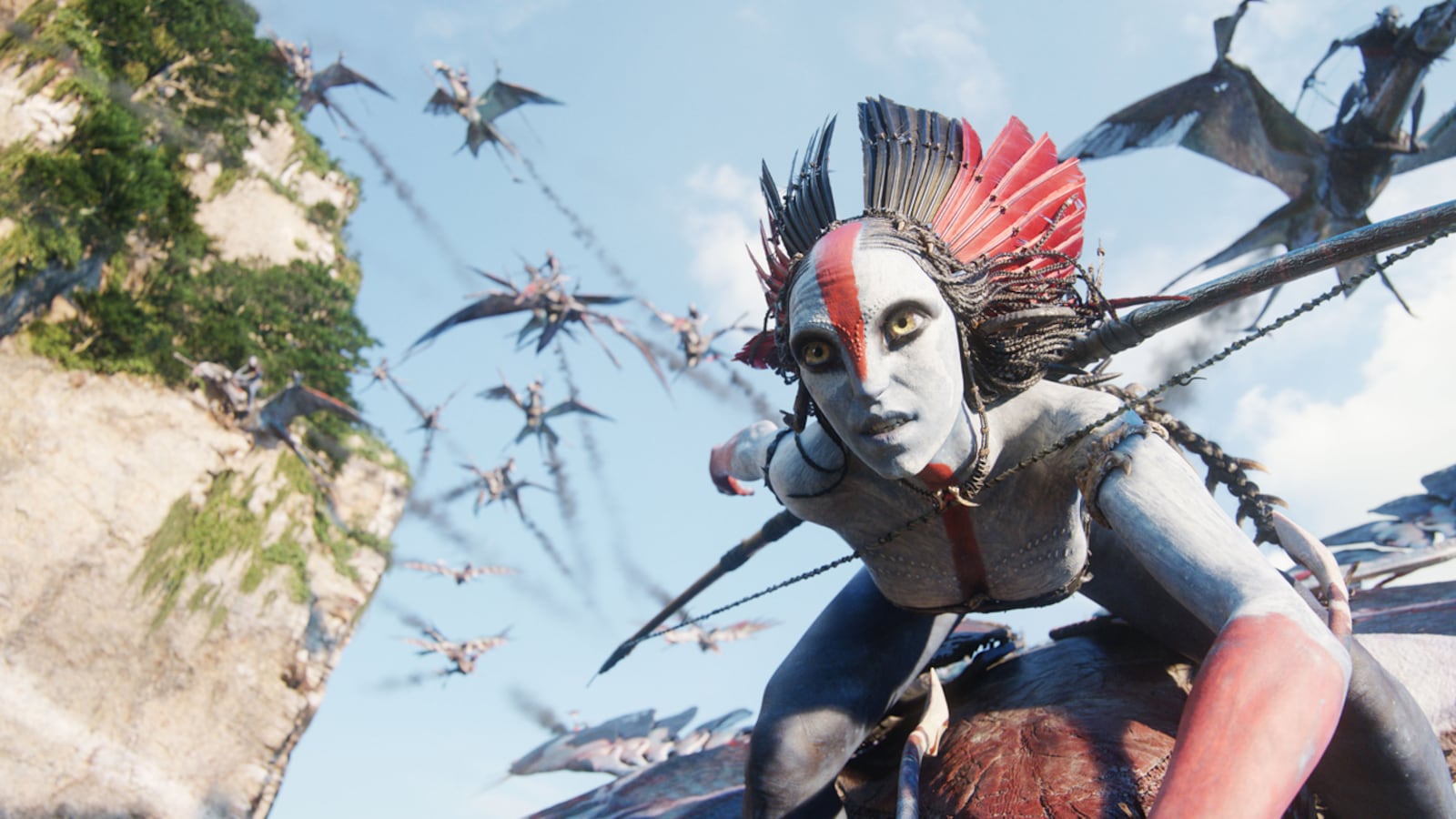
And yet, from the moment she descends over the horizon, leading her Na’vi tribe of fearsome Ash People in a brutal attack on merchant ships, Avatar: Fire and Ash antagonist Varang (Oona Chaplin) becomes the film’s most alluring character.
“I am the fire,” she screams, commanding her troops into kamikaze attacks, then grinning as they plummet from the sky ablaze. This is Varang’s idea of a good time. She just as often bares her teeth in a snarl.
Varang speaks slowly and deliberately to ensure her threats land, defiantly imbuing even the mention of Pandora’s deity Eywa with venomous disgust. But though she projects a deadly menace—a toughness forged from bitter childhood circumstances, she later reveals—she also retains a sense of childlike curiosity.
When she comes across a gun—a weapon the Ash People have encountered for the first time—she touches it gingerly, demanding that the teenage Lo’ak (Britain Dalton) show her how to “make thunder” with her new toy, then watching with wide-eyed wonder as Colonel Miles Quaritch (Stephen Lang) teaches her exactly that.
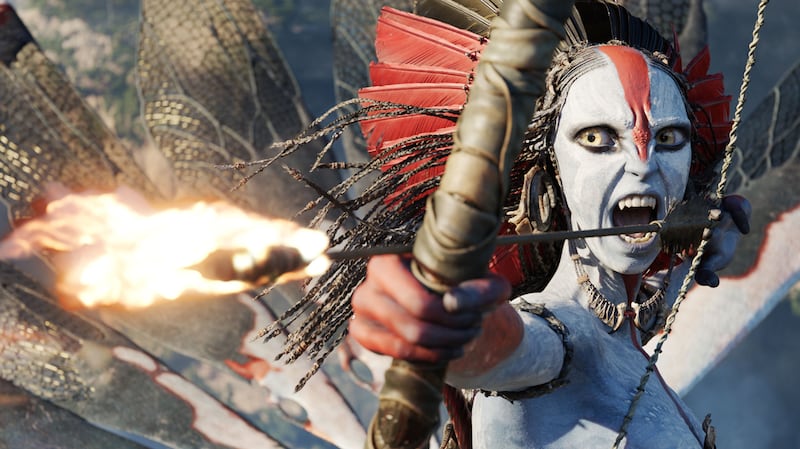
The scene not only calls to mind Cameron’s Aliens (1986), in which a weapon fosters intimacy between the two people who bond over how to use it, but also mirrors the first Avatar (2009) installment, in which Neytiri (Zoe Saldaña) teaches Jake Sully (Sam Worthington) how to use a bow and arrow.
In this case, it feels perfectly in character for Varang to have tortured this knowledge of weaponry out of Quaritch. The rare sounds of distress we hear from her are when he’s holding her captive initially—they’re fake, aimed at getting him to let his guard down so she can swiftly overpower him.
Varang turns the tables on Quaritch yet again when he later meets with her tribe on their turf in the hopes of negotiating an alliance. The colonel initially has the upper hand thanks to a well-placed sniper, but still winds up drugged out of his mind, alone with Varang in her tent.
Her slinky walk and feline body language convey a sharp, feral awareness of her sensuality, a weapon that’s just as strategically deployed as the film’s vast arsenal of machine guns and arrows.
As Quaritch stares up at her in dumbstruck admiration, she uses sorcery to get him to admit he’s not really there for her help, but for her.
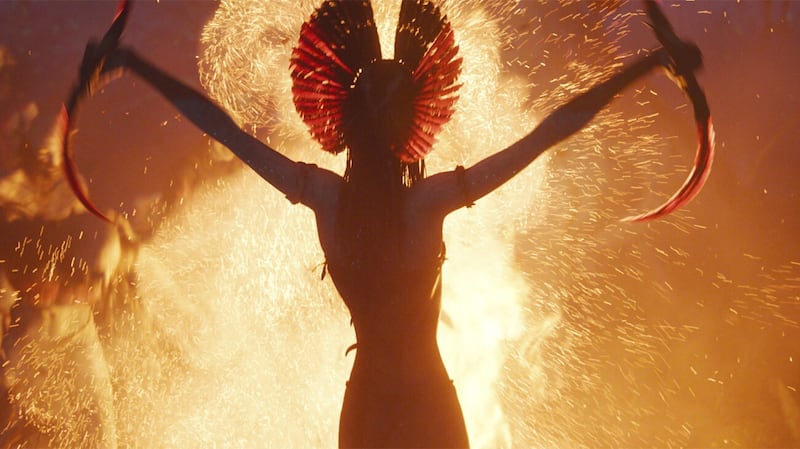
“I might keep you…as my slave…to pleasure me,” she says, drawing out each part of her threat. Or is it a promise? “That sounds like a fun weekend,” he shoots back.
Their loaded back-and-forth charges the atmosphere with sexual tension. They both have something the other needs —Quaritch’s weapons, Varang’s sorcery—but they’re also someone the other wants. By the end, she’s staring back at him with the same hungry expression.
Against the marital friction of Jake and Neytiri and the sweet teenage romances blossoming between Kiri (Sigourney Weaver) and Spider (Jack Champion), and Lo’ak and Tsireya (Bailey Bass), theirs is a—pardon the pun—burning passion, the film’s hottest relationship.
In interviews, Cameron described their tent scene as the film’s best one, adding that he pushed back against his editing team’s efforts to shorten it.
“I said: ‘Guys, you’re about to become unemployed—put it back, every line,’” he said. He clearly made the right choice.
Crucial to Varang’s appeal is the relish with which she approaches each opportunity; she makes villainy look fun, adding an essential bit of levity to a film that otherwise prioritizes sincerity. Take the demonstration of a flamethrower’s prowess, which sends her into a fit of giggles.
Fire and Ash’s magnetic MVP exits the film in its last act. Still, with her return so anticipated in the series’ next installment, she’s well on her way to securing a spot in Cameron’s pantheon of memorable, iconic villains.