Shocking Twist in $500M DHS Prison Splurge Exposed
Astonishing new claims raise questions about the shuttered jail’s initial asking price and whether its conditions are fit for human habitation.

Photo Illustration by Victoria Sunday/The Daily Beast/Getty Images/MPR
Get The Swamp newsletter delivered straight to your inbox
By clicking “SIGN UP” you agree to our Terms of Use and Privacy Policy.
The Trump administration paid half a billion dollars to use a mothballed jail as its new ICE detention center just 18 months after its owner allegedly discussed a $3 million sale, PunchUp has been told.
The 1,600-bed Prairie Correctional Facility in western Minnesota reopened this month for the first time in 16 years after Markwayne Mullin’s Department of Homeland Security acquired it to “carry out the American people’s mandate for mass deportations.”

The center has come under a hail of criticism for human rights reasons, with activists fearing that people are being kept in inhumane conditions, and for its controversial $496 million sale price—despite its owner CoreCivic separately offering it for $75 million the year before.

The Trump administration has spent $496 million on a mothballed jail to serve as a new ICE detention facility.
Tim Evans/REUTERS
But the state’s corrections commissioner, Paul Schnell, told the Daily Beast’s investigations unit, PunchUp, that he personally attended talks with the private prison provider in Spring 2025, where the idea of a $3 million sale was floated.
“These were informal discussions, but it was in the low $3 million-ish range that they were talking about at that stage of the game,” Schnell alleged. He said that the prison had been “an albatross for CoreCivic” until “the push on ICE enforcement stuff” in Trump’s second term.

The previous owner allegedly discussed letting the facility go for just $3 million only last year.
Tim Evans/REUTERS
He added that CoreCivic itself approached Gov. Tim Walz’s officials about selling the facility in rural Appleton, arguing the empty, 448,000-square-foot jail could be remodeled into a European-style prison. However, the talks never produced a formal offer. The governor’s office has been approached for comment.
The firm returned in May 2025 after another inquiry from legislators, this time offering the jail for $75 million and throwing in the necessary upgrades for a reopening. The governor’s office declined, leading CoreCivic to sell to DHS for nearly $496 million in August this year.

Minnesota has proven a repeat flashpoint for Trump's immigration purge after two U.S. citizens were killed by federal agents during violent raids in Minneapolis.
Evelyn Hockstein/REUTERS
Schnell was scathing about the extraordinary sum DHS paid. “Nothing can explain $400 million more,” he said. “Nothing.”
He added: “The question is, what is the value of that property as it sits? And it was not $495 million. It just wasn’t.”

A CoreCivic spokesperson denied ever offering to sell the jail for $3 million, labeling it as “false” and an “outlandish suggestion.” “There was no offer by CoreCivic to sell the Prairie Correctional Facility for $3 million, or anything remotely approaching that amount,” they said.
They added: “It is simply not credible that CoreCivic would have offered to sell a 1600-bed turnkey, purpose-built secure correctional facility of this size for approximately $3 million.
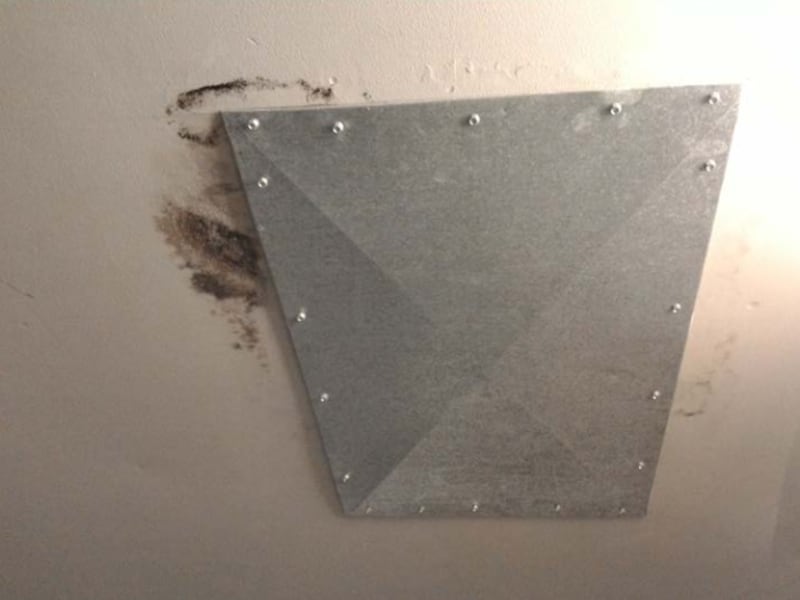
A 2018 assessment for the Minnesota Department of Corrections found numerous problems with the building.
Minnesota Department of Corrections
“To portray an alleged informal discussion as evidence that the facility was once available for a fraction of its value is inaccurate and misleading. If anything, this claim further illustrates the lack of seriousness with which Minnesota approached the prospect of acquiring the Prairie Correctional Facility.”
The firm also defended the sale price.
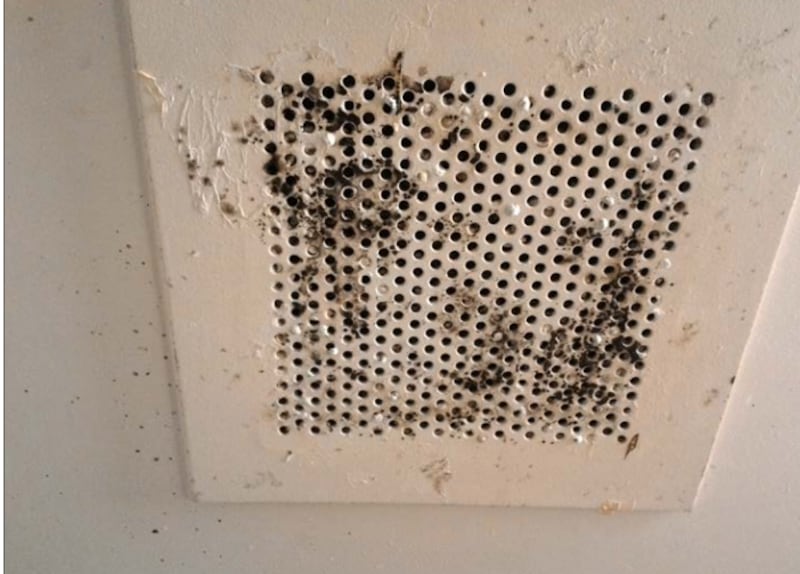
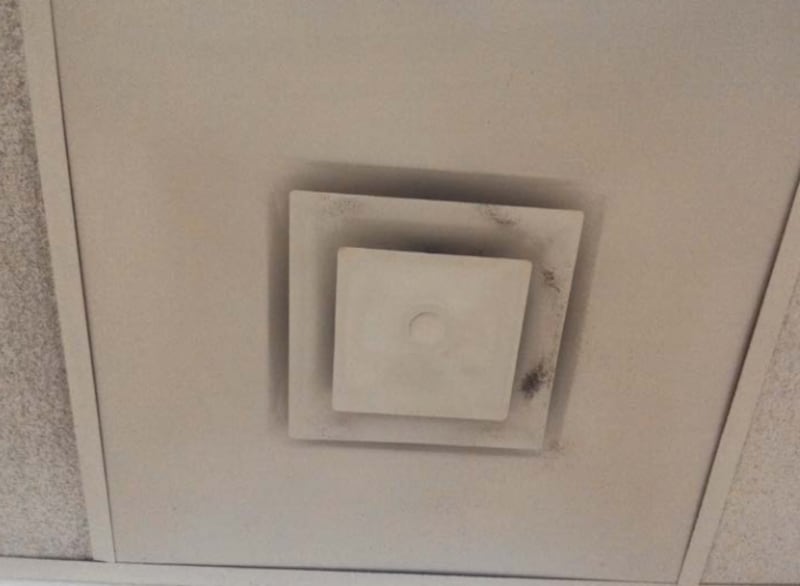
It is not clear at this stage whether all of the existing issues, such as mold, have been fixed.
Minnesota Department of Corrections
The spokesperson said: “It is also important not to conflate entirely different figures and circumstances surrounding the property. As we have stated previously, the reported $75 million figure and the federal purchase price measure two different things at vastly different points in a valuation process. The earlier figure was never an appraisal or a replacement cost and was never intended to be.”
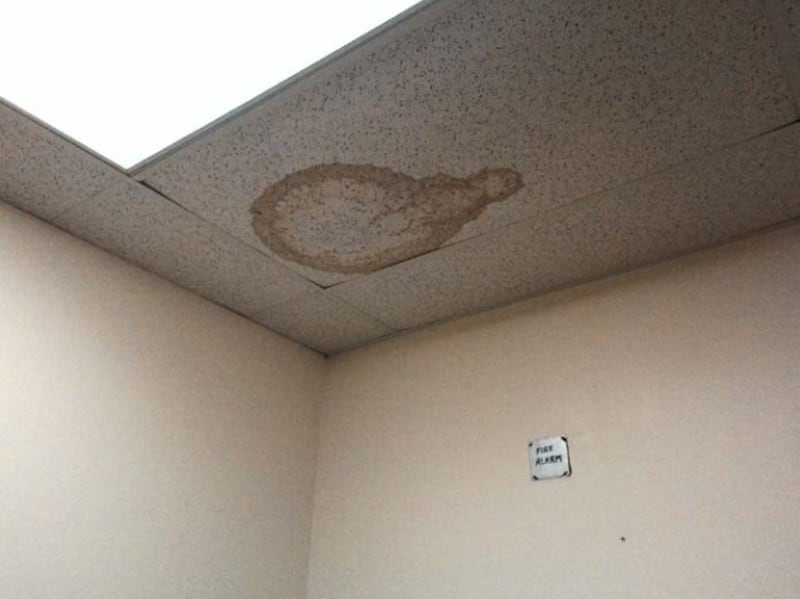
Meanwhile, an independent assessment prepared for the Minnesota Department of Corrections in 2018 lays bare a cavalcade of severe maintenance and security issues.
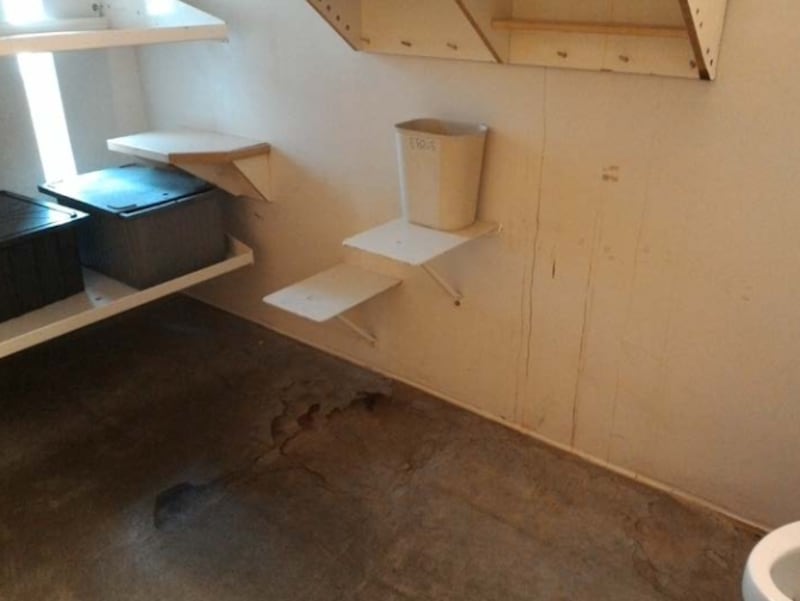
Assessors discovered leakages in several places across the building.
Minnesota Department of Corrections
Surveyors found mold in housing units, water damage, CCTV blind spots, and inadequate facilities for monitoring inmates at risk of suicide, valuing the purchase and necessary upgrades at $139 million.
The facility even lacked basic equipment to keep the place under control, they found. Officers stationed in housing blocks would have had no access to prisoner-management computers or live surveillance feeds, while the central control room could not monitor every unit.
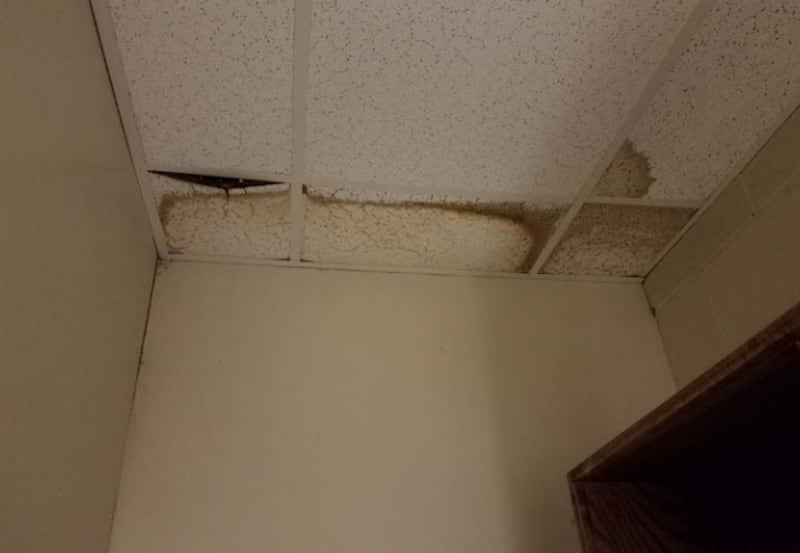
The leakages had caused damage in a number of places.
Minnesota Department of Corrections
The medical unit was found to lack panic buttons for staff dealing with violent inmates, and the pharmacy did not even have electronic security controls on its doors, and sick inmates had access to a nurse-call system that did not send an actual alert to the nurses’ station.
They said showers risked scalding inmates, and that sections of the prison’s water pipes had rusted or rotted, while backup generators could not power the entire complex during an emergency.
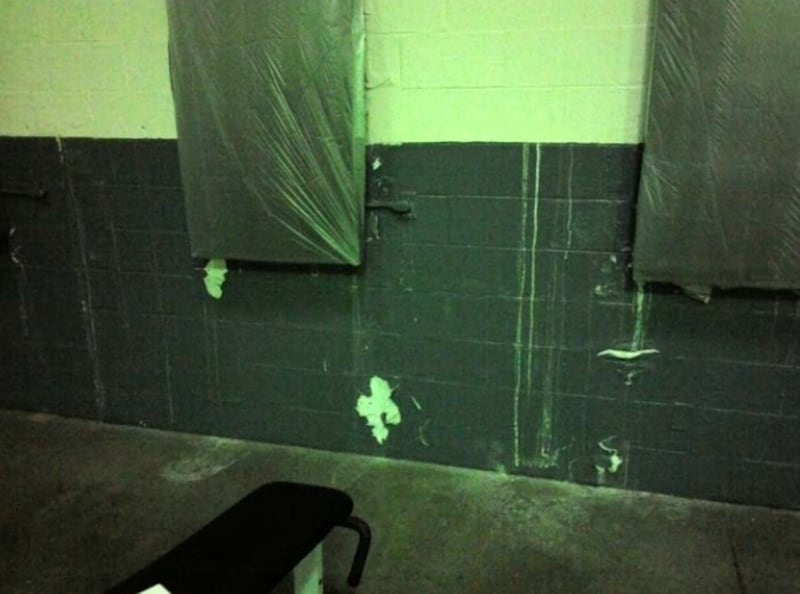
Assessors also warned that the showers could risk scalding inmates.
Minnesota Department of Corrections
CoreCivic filed for a renovation permit worth around $1 million in 2025, according to the Sahan Journal. It remains unclear whether all of the issues were fixed. It told us it “maintained the property during its period of inactivity and completed significant work associated with its activation,” such as “ICE-specific renovations and new security and fire systems” and “plumbing, flooring and electrical work.”
Controversy has swirled around the jail after it finally reopened on Nov. 9, after being shut down in 2010 due to a lack of inmates. Protesters descended on the rural town over the weekend demanding answers about the first group of people now being detained inside.
Minnesota passed on the initial offer partly because the facility's remote location would make staffing and operating it difficult.
Minnesota Department of Corrections
Yolanda Cisneros, a member of rights group Unidos MN who helped lead Saturday’s protest, told PunchUp that the enormous price increase is “extremely difficult to understand” and warned of the prison’s chilling effect among local migrants.
“These are our neighbors, our coworkers, our classmates, and the families who make up our communities,” she said.
John Boehler, an ACLU lawyer, slammed the purchase as a “handoff of half a billion dollars to a friendly industry,” questioning why the government needed to buy the prison at all.
It is unclear why DHS does not appear to have shared the same qualms as Minnesota about the facility.
Minnesota Department of Corrections
He added that attorneys have had difficulty arranging confidential conversations with detainees at the facility, with some allegedly directed to telephone lines used for calls to friends and family—which Boehler said are recorded.
CoreCivic told PunchUp detainees were entitled to confidential legal calls, correspondence, and private meetings with attorneys. The company added that it would investigate any claims that a lawyer had been directed to speak with their client on a recorded phone line.

Mullin's department purchased the facility as part of a detention expansion to accommodate Trump's immigration crackdown.
Evan Vucci/REUTERS
Minnesota has already witnessed some of the bloodiest episodes of Trump’s immigration crackdown after federal agents shot and killed two American citizens, Renee Good and Alex Pretti, during a spate of violent raids in Minneapolis in January.
The state’s existing ICE processing facility has also faced horrifying allegations of abuse, with human rights watchdogs finding that detainees at the Bishop Henry Whipple Federal Building had been shackled for prolonged periods and crammed into filthy cells, as well as being forced to sleep on cold concrete floors.

CoreCivic has a five-year agreement with DHS to operate the facility, which it expects to generate about $75 million annually once the prison is fully operational.
Democratic Sen. Maggie Hassan, who’s preparing to chair the Senate Homeland Security and Governmental Affairs Committee and has already announced an investigation into the sale, told PunchUp “the deal appears to be an enormous waste of taxpayer dollars” amid “serious concerns about pay-to-play schemes and corruption at DHS.”

A DHS spokesperson defended the Appleton purchase, saying the prison gave ICE immediate detention capacity while avoiding years of construction work. It said independent appraisers established the price using standard procedures and that the earlier $75 million figure did not reflect the full construction costs of the center or those of operating it to federal standards.
Tom Latchem exposes the secrets, scandals, and stories that powerful people and institutions want to keep under wraps. Follow all of his reporting at PunchUp on Substack.
See more of our coverage in your search results.


Got a tip? Send it to The Daily Beast here.
Unlock a year of full access to The Daily Beast for $35.
Monthly
$1
First month then $5.99/month
Annual
$35
First year then $59.99/year
Premium
$79
First year then $119.99/year
*Substack access provided by the next business day, using your subscription email. Choosing the Premium plan constitutes your permission to share your subscription email with Substack and your agreement to Substack’s Privacy Policy.
Looks like you already have a subscription!
- Account (completed)
- Payment (completed)
- Confirmation (completed)
You're all set!
Thanks for subscribing.
- 1Account
- 2Payment
- 3Confirmation
Sign in or create an account
Register below to read this article for free or subscribe
to unlock unlimited access to The Daily Beast.
Monthly
$1
First month then $5.99/month
Annual
$35
First year then $59.99/year
Premium
$79
First year then $119.99/year
*Substack access provided by the next business day, using your subscription email. Choosing the Premium plan constitutes your permission to share your subscription email with Substack and your agreement to Substack’s Privacy Policy.
Already have an account? Sign In
Looks like you already have a subscription!
- Account (completed)
- Payment (completed)
- Confirmation (completed)
You're all set!
Thanks for subscribing.
- 1Account
- 2Payment
- 3Confirmation
Sign in or create an account
Login dialog
Loading comments…