Blogs and Stories

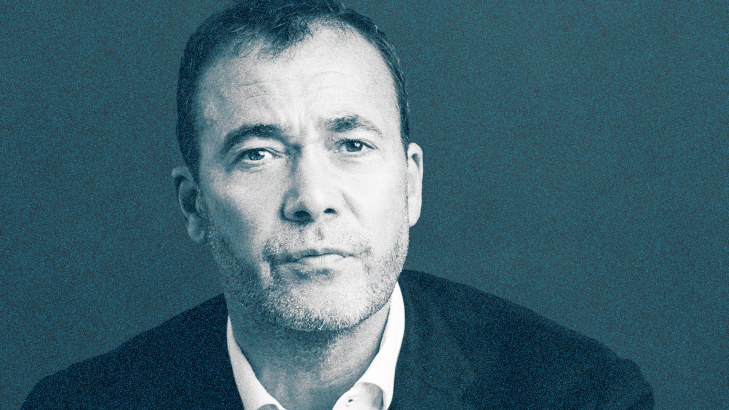
Christopher  Buckley

My Visit To Hell

Article - Buckley My Visit To Hell Mandel Ngan, AFP / Getty Images In the wake of President Obama’s visit to the Buchenwald concentration camp today, The Daily Beast’s Christopher Buckley recalls his own horrific trip to Auschwitz with his father 10 years ago and his walk along the Wall of Death.

I went to Auschwitz, about ten years ago, with my late father. There is something about seeing Konzentrationlager Auschwitz that makes you want to give witness. I wrote a long description of the visit, which I’ve never published until now.

Note that the following contains disturbing descriptions.

February 19, 2001

You go through the visitors center and there it is. You’ve seen it in photographs a hundred times, the famous gate: “Arbeit Macht Frei.” Work will set you free. The idea was to be reassuring, unlike the slogan Dante hung over the entrance to his hell, “Abandon hope all ye who enter here.” Put in an honest day and everything will be all right. Counterproductive to panic the arrivals. Here, and up the road, in Birkenau, they thought through all the details, down to the numbered hooks in the dressing rooms outside the gas chambers. The SS jollied you along. Remember which hook you hang your clothes on so you’ll be able to get find them after the shower. And don’t forget to put your shoes underneath so you’ll be able to get them, too. You’re a shoemaker? Great, we need shoemakers. At Auschwitz, they even had a prisoner orchestra playing inside the gate. It helped keep order. Good for morale, too. How bad could it be, if they greeted you with music?

It’s February and gray. The poplar trees that line the avenues between the cellblocks are bare. The swimming pool—See? We even have a swimming pool!—that was to impress the Red Cross is covered with dirty ice. Crows, gallows. It’s hands-in-the-pockets cold, but would you want to see this in springtime, with blossoms and sweet earth smells?

Our guide is Jarek. Mid-forties, fluent English, dark mustache, knit cap. He grew up in Oswiecim. He speaks precisely, in a low, clear voice without emotion for nearly six hours, except for twice, once outside Block 10 and inside Block 11. We pass under Arbeit Macht Frei. He indicates a grassy strip. “Here is where they gave the welcome speech. They said, ‘You dirty Poles, this isn’t a sanitorium. There’s only one way out—through the chimney of crematorium. Jews, you have three weeks. Priests, one month. Three months for the rest of you.”

Sixty thousand, out of about 1.5 million, survived Auschwitz. If you made it through the first weeks, you stood a chance of making it. Some managed to survive five years, from 1940 to 1945. By contrast, out of 600,000 at Belzec, three people survived.

It feels colder inside the cell blocks, where the exhibits are. There is a blown-up photograph of Himmler viewing Auschwitz’s first inmates, Soviet POWs. Polish political prisoners, the intelligentsia, priests followed. Two years later, with the construction of the much larger Birkenau three kilometers away, the camp became ground zero for the “Final Solution to the Jewish Question.”

Between October 1941 and March 1942, some 10,000 Soviet prisoners died here. Jarek as well as the exhibits use the word “murder” instead of die, or kill, or exterminate. It takes some time before the ear gets used to it, modern speech being less direct.

“The method for murdering the Soviets was in many cases simple,” Jarek says. “Put them in a field, surround them with barbed wire and leave them.” Some became so resigned from hunger that they would climb themselves onto the wagons of corpses. There was cannibalism. In Thadeusz Borowski’s short story, “The Supper,” a group of Russians who have tried to escape are lined up, arms tied behind them with barbed wire, and shot point-blank through the back of the head in front of a crowd of starving prisoners. The prisoners clamor and rush forward and must be dispersed with clubs. “The following day … a Jew from Estonia who was helping me haul steel bars tried to convince me all day that human brains are, in fact, so tender you can eat them raw.” Borowski was at Auschwitz. He survived and later put his head in a gas stove at the age of 29.

Back to Top
January 30, 2009 | 6:39am
Facebook
|
Twitter
|
Digg
|
|
Emails
|
print
Comments ()

jonathanpeterson

clinical, brutal and moving.

There is a man in Italy who could afford to read this.

thank you for writing it.

|
|
Reply
|
7:45 am, Jan 30, 2009

This comment has been removed by The Daily Beast's editors.

|
|
Reply
|
2:46 pm, Jun 6, 2009

Dreamer4Ever

What the hell is wrong with you?

|
7:43 pm, Jun 6, 2009

dailyplanet

You are a very sick, demented individual.

|
12:23 am, Jun 8, 2009

AtomicOvermind

Thank you, Mr. Buckley.

|
|
Reply
10:10 am, Jan 30, 2009

clave54

Thank you for this article!
I have read a lot about the Holocaust, but it always seems to furiously strike me again and leave me speechless.
I therefore understand the silence between your father and you.
What could you possible say?
I am an ardent world religions student and it is the Muslim's explanation of evil that always comes back to my mind. "Evil is that were God doesn't exist at all". I am certain that God didn't exist in Auschwitz.

|
|
Reply
|
10:41 am, Jan 30, 2009

scough

God! Those Muslims are crappy spellers.

|
|
Reply
|
2:47 pm, Jun 6, 2009

Dreamer4Ever

GOD! Those scoughs are assholes.

|
7:44 pm, Jun 6, 2009

Dynisty

Thank you for your work. I have read and watched a lot of programs regarding the Holocaust and come to the conclusion I would not have survived. I just can't get a handle on this kind of inhumanity and sometimes don't want to be part of the humane race.
It seems you have access and the ability to answer a question that has come to me over and over as I read and watch these kinds of articles. During the years before and after WWII, (say 1934 - 1949) What were the Jewish people in the United States doing to prevent these activities? Do you have any websites you could direct me to? I am 60 and love to watch TCM. I often wonder as I am watching films made between these years...These movie makers were mostly Jewish....Why weren't there more movies made about the outrageous behavior of the German government? I have seen 'The Little Dictator' by Charlie Chaplin, and surprisingly enough, there were several movies or shorts by the Three Stooges (the first 1940 just before The Little Dictator, 'You Nazi Spy') so clearly there were messages getting out of Germany that were indicating things to come. However, most of the movies were all about 'entertaing' the masses into oblivion to make a profit. Was any of this money used to get the Jewish relatives in Germany out of that mess? I just wonder as I watch these old movies...Why weren't there more movies made to stop this? Or at least educate the population of the world what was really happening. There must have been letters from the Jewish people in Germany going out to the rest of the world. It just purplexes me.
Thanks for listening...and thanks again for your work.

|
|
Reply
|
11:44 am, Jan 30, 2009

scough

Please see MGM's "Broadway Buchenwald Big Broadcast of 1939". It stars Bob Hope, Dorothy Lamour and Eva Braun. There are a lot of coded references to what was going on in Europe. The allusions to the Nazis went over the heads of most American moviegoers of that era.

|
|
Reply
2:52 pm, Jun 6, 2009

finderj

Every time I think I have read the hardest thing about the Holocaust, I read another story like yours and once again, I am left wounded. There are individuals out there who have done even worse things to peoploe. These individuals are profoundly mentally ill, regardless of their IQ, and are, in my opinion, not truly human, only wearing a human guise. When located and convicted, these people should be executed immediately. We have no other way of helping them or truly protecting ourselves from them.
But how does one protect oneself and one's family, one's community, from an entire nation gone mad? From an entire nation touched in varying degrees by total evil?
I do not know what caused the evil that entered Germany in the 1930's. I do not understand how an entire nation could be so infected with this evil that it made an industry out of killing millions of people. What I do know is that as the survivors leave us, it is the memories they leave behind, and the bones of the camps still standing that continually bear necessary witness to this horror. "Never again" is the only human response to such tragedy.

|
|
Reply
12:07 pm, Jan 30, 2009

Bulldoglover100

Thank you.
I pray that the destiny in the aferlife, for a certain man in Italy who claims to be of the cloth, is to be decided by a million & half angels.

|
|
Reply
|
12:20 pm, Jan 30, 2009

scough

You ate how much?

|
|
Reply
2:53 pm, Jun 6, 2009

KathFitz

How could an entire nation could be so infected with this evil that it made an industry out of killing millions of people? I would guess there are many answers, and none complete. But the idea, spread, taught, and reinforced over years and generations, that people of certain different religions or races were so culturally different, strange, and unknowable that society could not "afford" to give them the same rights as other citizens and remain safe was required to make it possible. Those "others" were labeled as inherintly inferior or evil, and so needed seperate laws and different treatment. In the time of Guantanamo Bay and the war on terror, perhaps it is good for some of us to see a stark reminder of the path that thinking sets you at the beginning of, and whose footsteps precede you.

|
|
Reply
|
3:47 pm, Jan 31, 2009

BasPos

Sadly, too many of Sarah Palin's campaign rallies offered proof.

|
|
Reply
3:20 pm, Jun 7, 2009

a2burns

chris, thank you !!!!!!!!!!!! i do not want to get anymore emotional than i feel now so my comment is short !!!!!!!! i lived in prague for 4 years and could never bring myself to visit any camps !!!!!!!!!!! you are brave to do it !!!!!!!!!! i have a photographic memory so when i have seen the atrocities the images do not leave my mind ever !!!!!!!!!!!!! you are a great writer so i hope the revisionists read your account !!!!!!!!!

|
|
Reply
5:53 pm, Jan 31, 2009

a2burns

Dynisty, the jews were up on capital hill everyday and FDR would not do anything that is where american jews were !!!!!!!!!!!!!!! anti semitism will never end !!!!!!!!!!!

|
|
Reply
|
5:58 pm, Jan 31, 2009

scough

No they weren't. Even the New York "Times" admitted this in a long, and long overdue, mea culpa several years ago.

|
|
Reply
2:54 pm, Jun 6, 2009

badtux

FDR was indeed most emphatic that the U.S. would *not* help the Jews of Europe. He was concerned that making the war into a "war to help the Jews" would cause a collapse in American support for the war.

Anti-semitism was as big an influence in American society in the 1930's and 1940's as it was in German society. As late as the 1960's, there was a three-tier society in the United States. White men were addressed by their last name, as "Mr. Sheffield" for example. Jewish men were addressed by their first name, as a child in the segregated South I was directed to address the Jewish drug store owner in the same building as my father's shop as "Simon", not by his last name. And of course, black men were simply addressed as "boy", they weren't allotted a name by American society at that time.

So it's easy, today, to fault FDR for his decision. But given how racist and anti-semitic American society was at the time, he may have had no choice...

|
|
Reply
8:18 pm, Jan 31, 2009

Jolly-Dolly

Dear Mr. Buckley,

To change a mind, you must first change a heart. I fear that those who deny such evils have been done have no heart for those who are Other, or Enemy, or Useless.

"In my Father's house, there are many mansions."

This 'man of god' takes the name of God, his position as a figure of authority and uses it for a worldly purpose - among the gravest sins that any can make. Not only does he break the commandment, but he leads others to do so.

|
|
Reply
9:04 pm, Jan 31, 2009

roseth

The more I read about the Nazis and the Holocaust, the harder it becomes to imagine the unbelievable evil perpetrated. There is no limit to the depravity of humans, given the "right" circumstances : collective, group control; fanatic nationalism and basic tribal instincts. It tells us how little our nature has evolved since we left the cave. Emotions can still be manipulated to override our intellect and sensibilities. Germany was the larges and best organized ethnic cleansing operation ever, but it is still happening on a smaller scale. It surely is a misnomer to call this "animal" behaviour -- animals don't kill for the fun of it, or engage in torture and ethnic cleansing..

|
|
Reply
10:03 pm, Jan 31, 2009

This comment has been removed by The Daily Beast's editors.

|
|
Reply
|
11:44 pm, Jan 31, 2009

BasPos

I always felt the story of Pilate washing his hands was a sop to the Roman empire. The gospels were as much about politics as religion.

|
|
Reply
3:22 pm, Jun 7, 2009

EmilyAP

Thank you, Mr. Buckley, for your grave and moving account of you and your father's visit.
This is hard to say, but I think the most dangerous thing we do when looking back is not speaking or even keeping silent, but allowing ourselves the comfort of believing that these people, the Nazis who did this, were not human. It was and is horrific, inhumane, and unfathomable, but they were just as human as we are. That's really the worst part- it was not only people like us who died there, it was people like us who killed and gassed and followed orders- and pulled the trigger. It was our fellow human beings who decided to do nothing because that's exactly what would most profit them.
We say "Never again", and we hope and we pray, but after Bosnia, Iraq, Darfur, I really don't know.

|
|
Reply
1:42 am, Feb 1, 2009

Denjudge

I have travelled Europe a number of times and in fact lived in The Hague for 4 years. I have been to Dachau a few times as a day trip from Munich. The first 2 or 3 times I went to Munich, I wanted to go to Dachau, but I just couldn't force myself to go. I eventually did make it to Dachau, and it was a very sobering experience. That's when I first saw in person "Arbeit Macht Frei" on the top of an entrance gate.
However, nothing could prepare me, not even Dachau, for what I saw at Auschwitz. In the early 1990s, I went to visit my sister, who was studying in Germany. I met her in Berlin, and we took the night train to Crakow. Somewhere around 03:30 or 04:00 in the morning, we both woke up and realized we had been robbed, just outside of Katowice. My sister had some books and money taken; my camera bag, eye glasses, and passport were taken. Fortunately, my sister thought to look in a trash can on the train, where we found my passport.
We arrived in Crakow early in the morning, where we met a taxi cab driver who spoke little English. We told him our story, and then he decided to help us out. He got us set up in a hotel; he helped us get some money (the hotel wouldn't give us any initially); he brought us to his home to meet his daughter who spoke English well; then they took us to the police station to file a police report; and then they took us to lunch out in the countryside.
After lunch, the taxi driver asked if we wanted to go to Auschwitz. We said that we did want to go.
We took the tour, and it was very much as Chris has described it....extremely moving, extremely sobering, extremely sad. There were even feelings of great anger and bewilderment that the Holocaust happened....how can human beings do this to other human beings?
Some of the things I remember most vividly and which caused me to shiver were the large rooms behind glass, rooms which separately housed clothes, human hair, and eye glasses. On that night train from Berlin, my own glasses had been stolen. I was upset that my glasses had been taken, but after seeing all of those eye glasses from people who were murdered, my feelings about my own glasses disappeared.
It is very difficult to explain what and how I felt taking the tour of Auschwitz. I always take many photographs of places that I visit, but in this case, my camera had been stolen; if I still had my camera, however, I would not have been able to take pictures. It was just too moving.
Thank you, Chris, for the article; I highly encourage anyone who has a chance to visit Auschwitz, or any other camp, to do so.

|
|
Reply
2:20 am, Feb 1, 2009
Leave a comment

Thank you.
As a first time user, your comment has been submitted for review. It can take anywhere from a few hours to a day or two for your comment to be reviewed, depending on the time of week and the volume of comments we receive.

View Comments

My Visit To Hell

by Christopher Buckley

Info
RSS
Christopher  Buckley
Emails
|
print
Single Page
|
text
-
+
Facebook
 | 
Twitter
 | 
Digg
 |