Blogs and Stories

Stryker McGuire

Murdoch's Secret Plan to Charge for Content

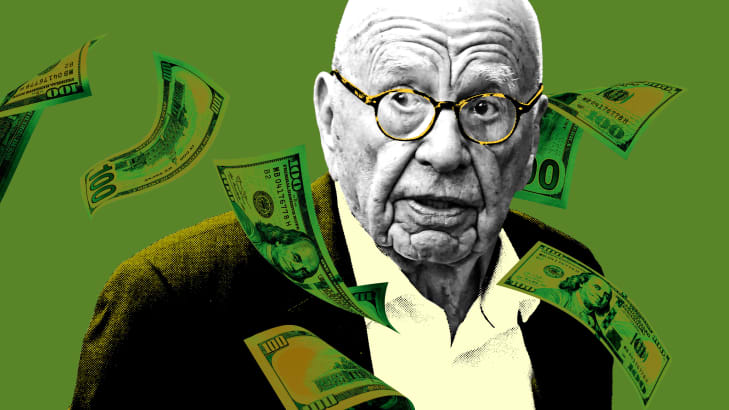
Rupert Murdoch Tom Stoddart / Getty Images The Daily Beast's Stryker McGuire has learned that News Corp. has tasked a global team—reporting directly to the 78-year-old media mogul—with creating a model to charge for online content.

Only a few years ago, Rupert Murdoch described himself as a “digital immigrant” and the Internet as “an emerging medium that is not my native language.” Since then, he has gobbled up social-networking sites like MySpace and digital-content delivery systems like Factiva.

Now, The Daily Beast has learned, Murdoch’s News Corp. has set up a global team, based in New York, London, and Sydney, to create a system for charging for online content in an environment where consumers have come to expect to get it for free. According to a knowledgeable source, the team is said to be “looking at hardware” to deliver the content in a “user-friendly way”—a prospect that will surely catch the attention of the developers of Amazon’s Kindle and the Sony Reader.

The project, still under wraps, will draw on the conglomerate’s wide array of assets, from The Wall Street Journal to The Times, Sunday Times, and the Sun in London.

The source tells me that this team is “personally run and overseen” by Murdoch, 78. Murdoch has enlisted the aid of a longtime trusted lieutenant, Les Hinton, now CEO of Dow Jones, which News Corp. took over in 2007, and Murdoch’s youngest son and heir-apparent, James, 36, the London-based CEO of News Corp.’s Asian and European operations since late 2007.

News Corp. declined to comment on these developments, but my source tells me that the project, still under wraps, will draw on the conglomerate’s wide array of assets, from The Wall Street Journal to The Times, Sunday Times, and the Sun in London. Murdoch’s team is also in discussion with publishers and “other content providers” outside of News Corp., according to the source. The executive handling these talks is Jonathan Miller, the former AOL head who, a few weeks ago, was appointed chairman and CEO of News Corp.’s Digital Media Group and chief digital officer of News Corp. Miller reports directly to Murdoch.

These are significant developments, coming as they do from the company that runs the world’s largest English-language journalism business. News Corp.’s iconic newspaper and TV properties span the globe, from The Wall Street Journal—one of the few newspapers that successfully charges for content—to The Australian to The Times of London to Sky News. News Corp. is also a major provider of sports programming and content.

Murdoch has been criticized for overspending when he paid more than $5 billion for Dow Jones, but Dow Jones businesses—including Factiva and the Mosaic content-management and billing system—have a number of existing, direct relationships with publishers that could prove useful in a content-charging world. Originally, Murdoch talked about making the Journal’s Web site free and advertiser-supported, but he later decided charging was a valuable revenue source.

Murdoch is by no means alone is this very new game. In fact, he’s coming under increasing pressure to get his new plans out into the open as potential competitors roll out theirs. One new player is Journalism Online, which was launched in April by the media entrepreneur Steven Brill (Court TV, American Lawyer); L. Gordon Crovitz, a former publisher of The Wall Street Journal, and Leo Hindery Jr. of InterMedia Partners, a private-equity firm.

As anybody who used to read a newspaper that no longer exists knows, the race by Murdoch, Brill, and others to “save journalism” has taken on an added urgency in recent months. The latest case, but certainly not the last, is the venerable, New York Times-owned Boston Globe, which has been threatened with closure unless it can work out a deal with a union representing more than 600 Globe employees.

The extent of News Corp.’s plans is a well-kept secret, but their existence does not come as a complete surprise. Murdoch vaguely alluded to them last month at an industry show. His favorite in-house editor, Robert Thompson, formerly editor of The Times of London and now managing editor of The Wall Street Journal, has been scathing in his attacks on Internet companies like Google as “parasites or tech tapeworms in the intestines of the Internet.” As he told an interviewer in April, “There is a collective consciousness among content creators that they are bearing the costs and that others are reaping some of the revenue. Inevitably that profound contradiction will be a catalyst for action, and the moment is nigh.”

Stryker McGuire is an American journalist working in London. McGuire is a contributing editor at Newsweek magazine, where he was a correspondent, bureau chief and editor for 30 years; the founding editor of International Quarterly , and an associate at Lombard Street Research, an economics consultancy in the City of London.


Back to Top
May 5, 2009 | 5:02pm
Comments ()
Banjo1

It's about time. But don't get any ideas, Tina.

|
|
Reply
8:37 am, May 6, 2009
johncabell

How does this advance the story Murdoch himself broke a month ago, when he said News Corp was investing in such a device?
http://mediamemo.allthingsd.com/20090402/live-from-the-cable-show-ruper t-murdoch-and-jeff-bewkes/

|
|
Reply
9:31 am, May 6, 2009
KemCho

Tina
Beast is free that's why I read it. If you charge money, bye.

|
|
Reply
10:53 am, May 6, 2009

This user is no longer registered.

|
|
Reply
11:05 am, May 6, 2009
photoshock

The idea of charging for content that has previously been free has been proven to be a model that is disastrous to those companies that do the charging.
The NYT previously was $40.00 per month online and now is free because nobody but the highest paid and least likely to use their service could and did.
This charging for content will be a boon to independent media sources and alternative media sources throughout the world.
Especially in third world countries where the median income is hardly enough to support the internet, this will the worst thing to happen since the advent of charging higher prices for faster internet. Rupert Murdoch thinks too highly of himself and his product and will surely fail at this endeavour.

|
|
Reply
|
11:15 am, May 6, 2009
penscott

That is not accurate. The NY Times tried charging ONLY for access to a set of its columnists, some of whom, like Rich and Herbert, you'd have to pay me to
read. 99% of the contents were free. The Times could very likely charge a
modest annual fee and make money. Despite the tendentious news coverage and ludicrously politically correct editorials, there is still a fair amount of useful
material in the Times.

|
|
Reply
3:49 pm, May 7, 2009
joymars

I love this picture of Murdoch. At first sight it looks like he's chest-high in a mud puddle.

|
|
Reply
11:29 am, May 6, 2009
nokware

I might have paid for an online subscription years ago, when WSJ stuck to its core competency of strong business news and reporting. I could actually leverage and use what I new.

Now that it comes closer and closer to reporting the same news the other major papers do, it has lost some of its differentiation, and hence makes it harder to consider it as worth paying an online subscription for.

|
|
Reply
11:31 am, May 6, 2009
bbucol

Of course Rupert's idea won't work- but he's just stubborn enough to try every possible alternative until it becomes clear that the old operating model for newspapers really is dead, and maybe in the meantime he will save everyone else a lot of trouble as he eliminates one false path after another figuring out the inevitable: Times have changed.

Rupert and other publishers need to use their combined and derivative circulations far more wisely- and to do that may take another, different generation of people who love to do this sort of thing, instead of using old news vehicles to fill corporate coffers.

In the meantime, if a newspaper bites the dust because it can't support bloated corporate fat, so be it. Something else will certainly spring up in its place.

|
|
Reply
2:18 pm, May 6, 2009
tom7343

Read a book about Rupert, again another "Outfoxed" then, "The New York Post"
Watched him on "Charlie Rose"
History of Rupert is his love for news papers as a business. Each accusation is a product of Rupert"s vision for a profitable business. He has chosen to create "Tabloids" from every purchase. As often, Good trusted Journalist leave. Feel that if the Wall Street Journal had not been sold we would have had a much better understanding of the financial crisis before it became too late.
Chalie Rose interview: Rupert claimed no interfering with editorial. Carl Rove is on the Editorial Board or a contributor. So much for quality.

|
|
Reply
11:57 pm, May 6, 2009
Kestrel10

Here's the thing. Newspapers are slowly dying. Instead of trying to stem the tide, perhaps media companies should preemptively kill off ALL their print editions. That's right, kill them. The print editions eat up tons of cash. This may seem counter intuitive (and it may be a little crazy), but if the print editions are gone advertisers will migrate to the online editions.

If you have a product or service, you still have to advertise it somewhere and online newspapers will be a solid option. The problem media companies are having is that advertising cannot support BOTH print and online editions. Print editions are currently eating up advertising revenue that would naturally migrate online. Online editions are having to compete with their print editions for advertising revenue.

Additionally, if the print edition of the Wall Street Journal was dead, then Rupert's readers would be forced to get the news from either a pay website or a Kindle like device. The total number of subscribers will decline, but my guess is that media companies will be able to make more off each subscribers.

It's going to happen anyway. Maybe Rupert, the NY Times, and everyone else should just get it over with.

|
|
Reply
12:28 am, May 7, 2009
barney

When the printing press was invented, word of mouth went to print. Removable type made it cheap and news papers got larger.
This median is long dead, the electronic cost of the internet is minor. The news is already free, we just want a few more details. I am 58 years old and read all on the net. He is chasing the read a book people who will soon be in the minority. I would not want to try to listen to the "town crier" for my news.

If he wanted to make some real money he would show us the "truth" and how I can use that to make/save mine. I would pay for that.

News papers are the "buggy whip" of the last depression. He will live to see his "empire" fall. Just think of all the trees we will save and how that will help gobal warming.

|
|
Reply
1:37 am, May 7, 2009
Banjo1

"Something else will certainly spring up in its place."

Sure of that?

|
|
Reply
10:53 am, May 7, 2009
deparnage

What makes everyone think they are entitled to free content from everyone?

In a free market, some people will provide content for low or no cost...and it will be often (not always) of less quality. For those who want more or better quality, why do people care if someone wants to provide a content service for a fee?

Photoshock had it right in that previous charge-for-content models (such as NYT) didn't work because everyone else was free. But if Rupert can get enough of his own and other media outlets on board, may it's possible that it could work...but they need to be creative. Micropayments, bundling, free for print subscribers - there's probably lots of ideas floating around.

There's lots of people who would be happy with any type of news for free and that will always be available...I gotta believe there's enough people who will slowly adopt to a new world of paying for content, just as 6-7 years ago no one paid for digital downloads of music...

Thoughts?


|
|
Reply
11:35 am, May 7, 2009
scuba96

Why pay for material that is not the old fashion who, what, when, why and where? Anything else is somebodies opinion.

On a side note I bet some airlines would like to start charging you just to visit their websites since they charge for everything now.

|
|
Reply
3:00 pm, May 7, 2009
penscott

I cheerfully pay for the WSJ online. The amount, $125 a year, is reasonable, the articles well written and at times brilliant, the opinion pages a great antidote to political correctness, to uncritical Obama worship, and other violations of common sense.
And they always keep one raging Liberal on the opinion pages, just for fun.

|
|
Reply
3:53 pm, May 7, 2009
BillyCaxton

Memo to Rupe, you'll be hard pressed to get the general public to pay for your gutteresque journalism. So, go ahead and charge, the 180 degree shuffle will be performed within the year. Listen to the younger generation, they've been brought up to expect free content. Personally I use the BBC which will always be free due to their license fee model. Yes, yes I know they could make it free to people within the UK only but there are ways around that, proxy servers etc. So, digger, drop that greed inspired notion and look to another model to generate some ROI. Oh, and employ some scribes that write well executed and unbiased yarns. Perhaps then you'll get the respect you crave. Cheers Billy.

|
|
Reply
6:28 pm, May 8, 2009
Leave a Comment
Leave a comment

Thank you.
As a first time user, your comment has been submitted for review. It can take anywhere from a few hours to a day or two for your comment to be reviewed, depending on the time of week and the volume of comments we receive.

View Comments
Leave a comment

Please log in to leave comments.

Murdoch's Secret Plan to Charge for Content

by Stryker McGuire

Info
RSS
Stryker McGuire
Emails
|
print
text
-
+
Facebook
 | 
Twitter
 | 
Digg
 |