Anwar al-Awlaki Killing Shines Light on Obama’s Anti-Terror Doctrine
The killing of Awlaki is the latest prize of Obama’s strategy of a smaller, quieter war on terror.
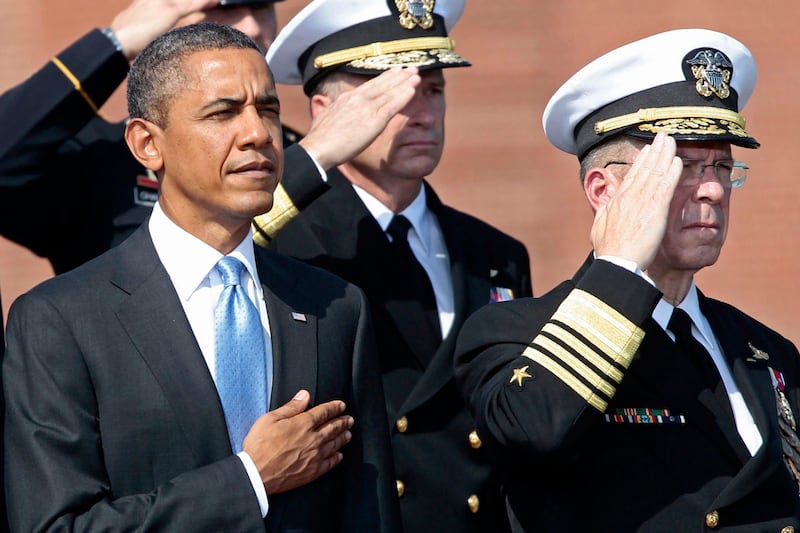
Pablo Martinez Monsivais / AP Photo
Get the Beast Digest newsletter delivered straight to your inbox
By clicking “SIGN UP” you agree to our Terms of Use and Privacy Policy.
President Obama has put an indelible stamp on the war on terror in the last six months, scaling back the big wars his predecessor launched in Iraq and Afghanistan while widening a covert campaign in many countries that is waged with precision air strikes and operatives that leave a much smaller military footprint.
The tactics Obama has embraced and deployed were developed in the final years of George W. Bush’s presidency but have been refined and expanded with success under this administration with strong backing from the likes of CIA Director David Petraeus and Defense Secretary Leon Panetta.
And while the drones are the most outward signs of the covert campaigns that rage from the Horn of Africa to Pakistan, it is the nearly invisible troops on the ground—both U.S and allied special forces—who are gathering the intelligence, making eyes-on confirmation, and directing the strikes with remarkable precision.
The killing of Anwar al-Awlaki, a U.S.-born cleric cut down in Yemen, where he was a major figure in al Qaeda in the Arabian Peninsula, was a pinnacle achievement of a strategy that also helped assassinate Osama bin Laden in Pakistan; killed Ilyas Kashmiri, the commander behind the 2008 Mumbai attacks; and captured Yunis al-Mauritani, a top operations chief in Pakistan.
“Make no mistake, this is further proof al Qaeda and its affiliates will find no safe haven in Yemen or anywhere around the world,” the president said Friday when Awlaki was killed.
Instead of big wars, Obama is more interested in quiet, smaller wars. The new model for this approach is the U.S. campaign in Yemen that took shape in early 2009 and was sealed in the fall of that year, when Yemen’s President Ali Abdullah Saleh agreed to give the U.S. unfettered access to Yemen’s territory for counterterrorism operations.
The new campaign was an unprecedented melding of efforts by U.S. conventional forces, special operations forces, and the CIA, all controlled from a single Joint Operations Center. Contingents of “white” special forces, those at Fort Bragg in North Carolina and the Rangers in Fort Benning, Georgia, have been training Yemen’s own special forces.
Teams of “black” special operations forces—Delta, SEAL Team Six—are operating in tandem with those Yemeni forces. JSOC, the Joint Special Operations Command, which runs these black forces, gives directions on where to patrol, where to search, and whom to look for, while providing targets for the Predator and other drones the CIA has been flying.
Meanwhile, a U.S. mini-carrier patrols off the Yemen coast, with strike aircraft on call to provide rapid response against targets identified by the Yemeni or U.S. special forces.
There is a split inside the administration over the current strength of al Qaeda and its affiliates. Panetta and John Brennan, the top counterterrorism adviser at the White House, have said publicly that al Qaeda is on its last legs. Others in the administration, such as Petraeus and Mike Vickers, the undersecretary of defense for intelligence, have taken a more cautious view. Vickers told Congress last month that it would be 18 to 24 months before al Qaeda’s core leadership would begin to fragment and implode.
But there is consensus on the importance of these secret smaller wars. Even as the United States begins to draw down from Iraq, the Obama administration is trying to negotiate an agreement to store the drones from Iraq in neighboring Turkey.
The Obama doctrine is a shift from the Bush administration’s focus during its second term on building institutions and civil society necessary for preventing al Qaeda from reestablishing a safe haven in Iraq.
The special forces today, according to Mary Habeck, an al Qaeda specialist for the Bush National Security Council, are returning to their traditional role in counterterrorism.
“It helps to prevent attacks on the homeland and that is important,” she said. “What it does not do is provide a viable strategy for destroying the organization and building societies that will be resilient against the return of al Qaeda.”
See more of our coverage in your search results.


Got a tip? Send it to The Daily Beast here.
Unlock a year of full access to The Daily Beast for $35.
Monthly
$1
First month then $5.99/month
Annual
$35
First year then $59.99/year
Premium
$79
First year then $119.99/year
*Substack access provided by the next business day, using your subscription email. Choosing the Premium plan constitutes your permission to share your subscription email with Substack and your agreement to Substack’s Privacy Policy.
Looks like you already have a subscription!
- Account (completed)
- Payment (completed)
- Confirmation (completed)
You're all set!
Thanks for subscribing.
- 1Account
- 2Payment
- 3Confirmation
Sign in or create an account
Register below to read this article for free or subscribe
to unlock unlimited access to The Daily Beast.
Monthly
$1
First month then $5.99/month
Annual
$35
First year then $59.99/year
Premium
$79
First year then $119.99/year
*Substack access provided by the next business day, using your subscription email. Choosing the Premium plan constitutes your permission to share your subscription email with Substack and your agreement to Substack’s Privacy Policy.
Already have an account? Sign In
Looks like you already have a subscription!
- Account (completed)
- Payment (completed)
- Confirmation (completed)
You're all set!
Thanks for subscribing.
- 1Account
- 2Payment
- 3Confirmation