Egyptian President Mohamed Morsi’s Biggest Challenge? The Economy, Stupid
Egypt’s sputtering economy and high unemployment pose serious challenges—and are the same issues that led to the revolution against Mubarak in the first place. Mike Giglio reports.
Khaled Desouki/AFP/Getty,KHALED DESOUKI
As Egypt lurches from one crisis to the next, it’s the country’s battered economy, analysts say, that may be President Mohamed Morsi’s greatest challenge yet.
The 2011 revolution that toppled Morsi’s predecessor, former dictator Hosni Mubarak, was inspired by—in addition to police abuse and suffocating repression—the dire financial straits most Egyptians faced. Alongside Tahrir Square’s famous anti-Mubarak chants, protesters also rallied around a more basic slogan, in which the first demand went to the needs of the dinner table: “Bread, Freedom, and Social Justice.”
Under Morsi, however, who became Egypt’s first democratically elected president in June, the economy is now faring even worse. And with Morsi’s government reluctant to tackle serious reform, and the country’s politics gridlocked, analysts say, it only looks likely to keep fading. “Things are going steadily worse in the economy, and the politics is becoming more polarized,” says Mohsin Khan, a senior fellow at the Atlantic Council and former director of the International Monetary Fund’s Middle East and Central Asia department. “I really don’t see a way out in the near future.”
The economic malaise is once again helping to bring protesters to the streets, calling for Morsi’s overthrow—as they once did Mubarak’s. At the ongoing demonstrations, alongside grievances over Morsi’s politics, young Egyptians regularly complain that they just can’t find work. “People don’t feel that the economic policy of Morsi is different from the economic policy of Mubarak,” says Hassan Aly, a professor at Ohio State University who specializes in Middle Eastern economies. “Nothing has changed. It’s even getting worse.”
Mubarak led Egypt for 30 years, and during his tenure, the Arab world’s most powerful and populous country saw its resources squandered regularly on mismanagement and corruption. But Mubarak’s final decade brought steady economic growth as the regime pursued liberalizing reforms. The problem for most Egyptians was what economists called “growth without development.” While a small segment of the population grew wealthier—mainly regime loyalists—almost everyone else continued to struggle, with millions forced to get by on less than $2 a day.
Sign Up for Our Beast Digest Newsletter
By clicking “SUBSCRIBE” you agree to our Terms of Use and Privacy Policy.
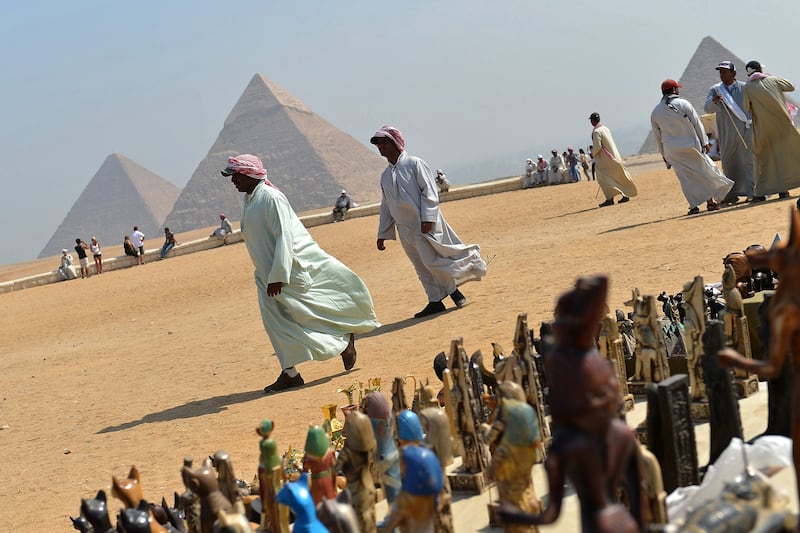
Now, economists say, Egypt’s growth has slowed to a crawl. The economy is expected to expand slightly this year, but far less than it should, meaning that unemployment will continue to rise. The unrest that has defined Egypt since the revolution, meanwhile, has seen capital flee the country while political instability keeps investors at bay. Foreign reserves have dwindled, and the Egyptian pound has dipped. The constant chaos has also drained Egypt’s tourism industry, leaving the economy with two main lifelines: aid from allies and remittances from Egyptians working abroad.
Rachel Ziemba, the director of emerging markets at Roubini Global Economics, notes that the seeds for Egypt’s economic troubles were planted by Mubarak. In addition to saddling the country with corruption and unemployment, Mubarak’s government borrowed heavily to finance stimulus packages during the worldwide economic downturn, leaving Morsi to pick up the tab. “You had that whole period where people weren’t sharing the wealth. And then you had the global financial crisis, [with] the government draining its resources trying to keep the show on the road,” she says. “Morsi and his government didn’t really have a very strong hand to play.”
But Morsi “came to power with a lot of global willingness to help and invest,” Ziemba adds, only to let the opportunity go to waste as it fought bitterly with political opponents and failed to produce a serious economic game plan—“kicking the can down the road,” as Ziemba puts it. “Many of the economic triggers for the revolution are not only still present, but the economic conditions are arguably even worse,” she says.
Morsi’s government, says Khan, the former IMF official, “has done nothing on the economic indicators. But more importantly, it has done really nothing on some of the economic reasons for the uprising: rising inequality, rising unemployment, badly skewed wealth distribution. None of those things have been addressed.”
Already beset by crisis and eroding political support, the new government has seemed unwilling to push the potentially unpopular measures that analysts say are needed to repair the economy, such as increasing sales tax and cutting back on subsidies. “[Morsi] has made the political calculation that it’s just too costly,” Khan says.
Egypt’s political stalemate, Khan adds, has intensified the problems, with many observers blaming it for the delay of a critical IMF loan. (Egypt’s point man in the tumultuous negotiations resigned this week.) “Everyone is looking to the IMF to help out,” Khan says. “But the IMF’s position is [that they] want broad political consensus and broad political support for any program. There’s no way they’re going to get it.”
Aly, of Ohio State, criticizes Morsi for installing an inexperienced economic team that seemed to “give priority to the people you trust over the people who have experience.” But while Egypt’s economic woes have caused some analysts to warn of another upheaval—the term “revolution of the hungry” has gained currency lately—there are signs that Morsi will be able to muddle through, in the near-term at least, possibly buying time until parliamentary elections can help to stabilize the country politically.
Egypt has a bumper crop of wheat, Aly notes, which should keep down food costs. And Morsi’s greatest economic success has come in keeping the aid money flowing from wealthy allies who are likely wary of the fallout should Egypt slide into chaos. Qatar has made headlines with increasing billions in support, while countries such as Turkey and Libya are also helping to keep Egypt afloat. “Regional powers are not going to just let go,” Aly says. “They have this concern that Egypt is too big to fail. They cannot have a ‘failing state’ with Egypt’s size and influence on their doorsteps.”
See more of our coverage in your search results.

Got a tip? Send it to The Daily Beast here.
Register below to read this article for free or subscribe
to unlock unlimited access to The Daily Beast.
Monthly
$1
First month then $5.99/month
Annual
$35
First year then $59.99/year
Premium
$79
First year then $119.99/year
*Substack access provided by the next business day, using your subscription email. Choosing the Premium plan constitutes your permission to share your subscription email with Substack and your agreement to Substack’s Privacy Policy.
Already have an account? Sign In
Looks like you already have a subscription!
- Account (completed)
- Payment (completed)
- Confirmation (completed)
You're all set!
Thanks for subscribing.
- 1Account
- 2Payment
- 3Confirmation