Hamas Seems Ready for Fatah Unity Deal, Says Palestinian Rep Nabil Shaath
With Hamas’s Syrian patrons weaker, the group may be softening its hard line and open to a Fatah deal. By Ei Lake.

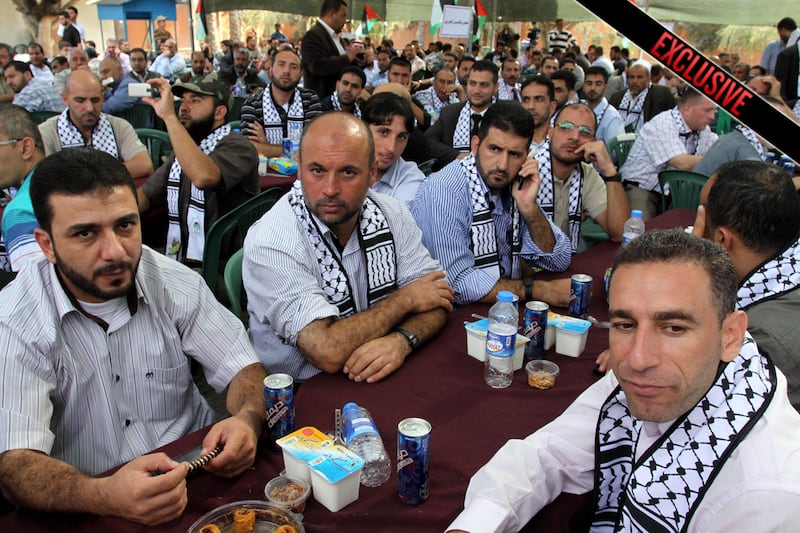
Mohammed Asad, APA / Landov
Get the Beast Digest newsletter delivered straight to your inbox
By clicking “SIGN UP” you agree to our Terms of Use and Privacy Policy.
Top Palestinian negotiator Nabil Shaath, a key member of the Fatah Party started by Yasser Arafat, says his rivals inside Hamas appear to be moderating their positions and could be moving toward a deal for a unified government.
Shaath told The Daily Beast that the weakening of Syria’s government—long a source of support for Hamas—in the face of civil unrest has changed the dynamic for Palestinians still trying to create a unified government that could negotiate with Israel with one voice.
“I see that the Hamas leadership, particularly after the erosion of their base in Damascus, is becoming more interested in unity with Fatah than before,” Shaath said in an interview this week.
His optimism comes despite speculation by some that the Palestinian Authority has been weakened by Israel’s decision to release more than 1,000 prisoners to Hamas in exchange for soldier Gilad Shalit.
Fatah is the secular Palestinian liberation movement started by the late Arafat in 1964. Fatah at first committed to armed struggle, but in 1993 made a strategic decision to start negotiations with Israel. Fatah and the Palestinian Liberation Organization negotiated on and off with Israel between 1991 and 2010.
During that period, Hamas distinguished itself as the party against the peace process and to this day its charter calls for the elimination of Israel. Negotiations conducted earlier this year between Hamas leaders and President Abbas to form a unity government broke down.
Shaath said Khaled Meshaal, the leader of Hamas’s military wing headquartered in Damascus, was turning into the group’s biggest reformer. “He is now the dove in Hamas,” Shaath said. “He is the one that publicly said if (Abbas) thinks he still needs a year or two in negotiations he should go forward for it. He is the one that declared our objective is only a Palestinian state on West Bank and Gaza and not the totality of historic Palestine. He is the one that is pushing now for unity talks with President Abbas.”
Meshaal and Israeli Prime Minister Benjamin Netanyahu have their own history. In 1997 Netanyahu, in his first term as prime minister, ordered the Mossad to poison the Hamas operative in Amman. It was one of the Mossad’s most embarrassing blunders, as the two Israeli officers were caught after placing a nerve agent in Meshaal’s left ear.
The Israelis had to provide the antidote after King Hussein demanded they save Meshaal’s life. Shaath also has a history with Hamas. At a conference Wednesday commemorating the Madrid peace conferences, Shaath explained that Hamas burned his family home in Gaza in 2007, when Hamas bested what was left of militias loyal to Fatah.
In 2006, Hamas won a plurality of seats in legislative elections, but Fatah never turned over control of the vaunted security ministries to its rivals. After Hamas won power in Gaza, the group released secret files from the security ministry aimed at humiliating Fatah and the Palestinian Authority that claimed Fatah spied for the CIA in other Arab states.
When asked why Meshaal was changing his tune, Shaath said, “My feeling, and I don’t want to really preempt his possibly seeing the changes need to be done, I mean people change. But also the erosion of the Damascus base has been a factor.”
Rob Danin, a former senior U.S. diplomat who specialized in the Arab-Israeli conflict, said he, too, has seen a shift in some of the rhetoric from Meshaal, but he doesn’t think it amounts to a strategic shift for the group still designated in America and Europe as a foreign terrorist organization.
“I suspect this is tactical,” Danin said. “I think it’s way overstated to call him a dove. But in relative terms, it seems the uprisings in Syria have compelled Hamas to adopt a more pragmatic approach.”
One factor at the heart of the new drama over Hamas and Fatah is the prisoner exchange for Gilad Shalit. Shalit, an Israel Defense Forces soldier who was abducted in 2007 while guarding the Israeli side of the border with Gaza, was traded last month for 1,027 Palestinian prisoners, most of whom Israeli courts convicted of planning or supporting terrorist incidents.
The deal was publicly praised by both Hamas leaders and Abbas when the first group of 477 prisoners was returned to Gaza, but some key Hamas leaders were not included. The deal also required Hamas to agree to the deportation of at least 40 prisoners, a key red line the group in the past has been unwilling to sanction.
“However flexible Hamas was to make this deal, this did not entail them to alter any of their core positions or in any way to alter their ideology,” said Danin, who is now a scholar at the Council on Foreign Relations.
The prisoners released include Yehia Sanwar, one of the founders of the elite Hamas Izzedin al-Qassam brigades; Walid Anajas, a planner of a suicide bomb attack on the Moment café in Jersualem that killed 12 people, and Abdul al-Aziz Salaha, whose bloody hands after strangling an Israeli soldier provided one of the iconic images of the second intifadah. Their release prompted significant celebration, including from Abbas.
When asked about the official celebrations on the return of the prisoners, Shaath said, “All the prisoners in Israeli jails to us are political prisoners. When two people fight each other, you don’t take Israeli soldiers to jail because they killed Palestinians. Israeli soldiers have been sent by the Israeli government to Gaza and have killed 1,500 Palestinians and injured some 5,000. Do you consider them criminals and put them in jail?”
He added, “The release of prisoners is something that everybody rejoices without looking specifically at these charges that have been made.”
Israel’s ambassador to Washington, Michael Oren, took issue with Shaath’s rationale for the celebrations.
“I’m disturbed that Mr. Shaath is incapable of distinguishing between a soldier with a strict moral code to defend his country from attack and a terrorist who blows up a restaurant or a bus filled with innocent civilians. What message is Mr. Shaath sending to Palestinian youth?” Oren asked. “Our message is clear: while our enemies revere death, Israel cherishes life.”
See more of our coverage in your search results.

Got a tip? Send it to The Daily Beast here.
Unlock a year of full access to The Daily Beast for $35.
Monthly
$1
First month then $5.99/month
Annual
$35
First year then $59.99/year
Premium
$79
First year then $119.99/year
*Substack access provided by the next business day, using your subscription email. Choosing the Premium plan constitutes your permission to share your subscription email with Substack and your agreement to Substack’s Privacy Policy.
Looks like you already have a subscription!
- Account (completed)
- Payment (completed)
- Confirmation (completed)
You're all set!
Thanks for subscribing.
- 1Account
- 2Payment
- 3Confirmation
Sign in or create an account
Register below to read this article for free or subscribe
to unlock unlimited access to The Daily Beast.
Monthly
$1
First month then $5.99/month
Annual
$35
First year then $59.99/year
Premium
$79
First year then $119.99/year
*Substack access provided by the next business day, using your subscription email. Choosing the Premium plan constitutes your permission to share your subscription email with Substack and your agreement to Substack’s Privacy Policy.
Already have an account? Sign In
Looks like you already have a subscription!
- Account (completed)
- Payment (completed)
- Confirmation (completed)
You're all set!
Thanks for subscribing.
- 1Account
- 2Payment
- 3Confirmation