There’s more beef in Season 2 of Beef, but to a greater extent than in its acclaimed initial season, it’s a weak catalyst for a story fixated on the sticky intersection of ambition, selfishness, love, contentment, and capitalism.
For his follow-up to his Emmy-winning 2023 Netflix hit, creator/writer/director Lee Sung Jin refuses to merely duplicate what worked the first time around, instead charting the battle between two couples mired in a web of greed, anger, disappointment, and deception.
Buoyed by compelling lead turns from Oscar Isaac, Carey Mulligan, Cailee Spaeny, and Charles Melton, and yet undone by shenanigans that impart less than they aspire to, it’s a comic crime saga that demonstrates the difficulty of catching lightning in a bottle twice.

Monte Vista Point is a ritzy country club overseen by general manager Josh (Isaac), whose cheery professionalism has made him a favorite with wealthy members such as Troy (William Fichtner) and Ava (Mikaela Hoover). He’s less beloved by his wife, Lindsay (Mulligan), an interior designer who, at home following a club event, lashes out at her husband, sparking a knock-down, drag-out argument that threatens to get downright physical.
More troubling than their marital strife, however, is the fact that it’s caught on camera by Ashley (Spaeny) and Austin (Melton), both of whom work at the club and spy this fight while returning Josh’s wallet.
This creates a most uncomfortable situation for Josh and Lindsay, since the video would undoubtedly ruin Josh’s chances of keeping his job under the new owner Chairwoman Park (Oscar-winner Youn Yuh-jung), a South Korean billionaire who’s threatening to make major changes to the business and already hates Lindsay’s plans for redecorating the establishment.

When Austin approaches Lindsay the following day about the incident, she contends that it’s natural for couples to fight—a new idea to Austin, a sensitive, happy-go-lucky part-time trainer who dotes on Ashley. Things prove bumpier between Josh and Ashley, and their hostile encounter is followed by her discovery that she has an ovarian cyst that endangers her health and ability to have a baby.
What’s a young couple with no prospects or health insurance to do? For Ashley and Austin, the answer is blackmail. They justify this with talk about “late-stage capitalism” (“disparity is systemic”), which Lee casts as insincere and empty, not least of which because, given that Ashley has no high school diploma and Austin is a talentless football has-been now trying to earn a living with online exercise tutorials, they’re obviously responsible for their lousy lot in life.
Nonetheless, in their quest to get ahead by leveraging dirt on their superiors, Beef establishes its recurring idea: namely, that in modern society, all relationships are predicated on money, and those who succeed are the ones capable of wielding their advantages to come out on top—financially.
This is a fine enough hook for Beef’s second go-round, but as with the tete-a-tete that drives its action, the show’s portrait of these couples’ ensuing tensions—and of 21st-century life as dominated by cutthroat business concerns—is a milder sort of beef.
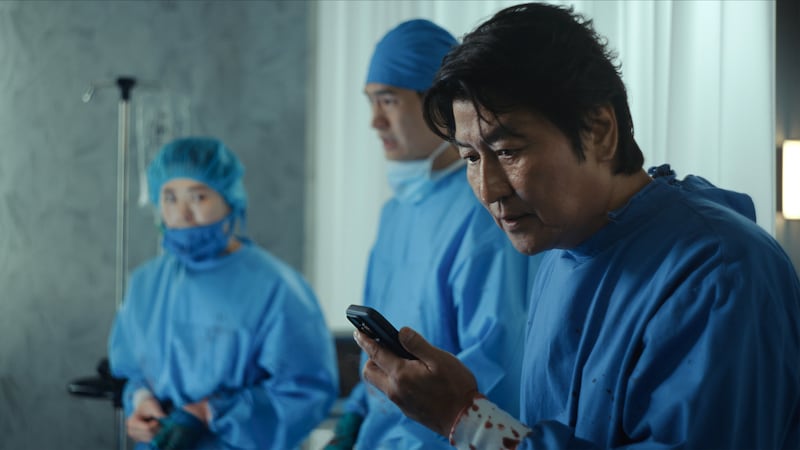
In return for not going to the cops with their video, Ashley demands, and receives, a cushy office job at the club. While giving in displeases Josh, he views Ashley as just one of his many headaches, considering that he’s been embezzling funds from the club to prop up his and Lindsay’s lifestyle and stuck-in-neutral plans to open a bed-and-breakfast. Unbeknownst to him, that ruse is in jeopardy because Park is using the club to funnel bribes to South Korean officials in order to cover up her cosmetic surgeon husband, Dr. Kim’s (Parasite’s Song Kang-ho). accidental killing of a patient.
Everywhere you turn in Beef, someone is exploiting their position and knowledge to gain a monetary upper hand, including club tennis pro Woosh (BM), who preys on his female clients’ vanity (on behalf of Park) to sell them cosmetic treatment packages with Dr. Kim. Lee ties his characters up in fiscal knots and then pulls even tighter on the strings until they begin to snap. Before long, vengeful plots are hatched, violence runs rampant, and unlikely alliances are formed due to a combination of need, sorrow, fury, and avarice.

Whereas its maiden season’s descent into guns-a-blazing genre insanity stretched its conceit to the breaking point, Beef maintains a relatively firm grasp on reality for most of its eight episodes, even as its protagonists become embroiled in what amounts to corporate espionage.
Additional complicating factors are omnipresent, be it Austin’s budding feelings for Park’s assistant Eunice (Seoyeon Jang), Ashley’s desire for a family and suspicion about her partner’s loyalty, Josh’s friendship with Troy (which veers between seeming genuine and of a client-employee variety), and Lindsay’s infatuation with her dachshund Burberry and temptation to rekindle an affair with an ex.
Beef is never dull, but it’s not nearly as deep as it intends to be, and its saving grace is that its stars carve their characters in such precise contours that it’s easy to get caught up in their messy escapades. Lies are the currency used by Lee’s players to pay their way through the world. And Isaac, Mulligan, Spaeny, and Melton evoke how deceptions of both a big and small nature aid their cause and, at the same time, immerse them deeper in a calamity of their own making.
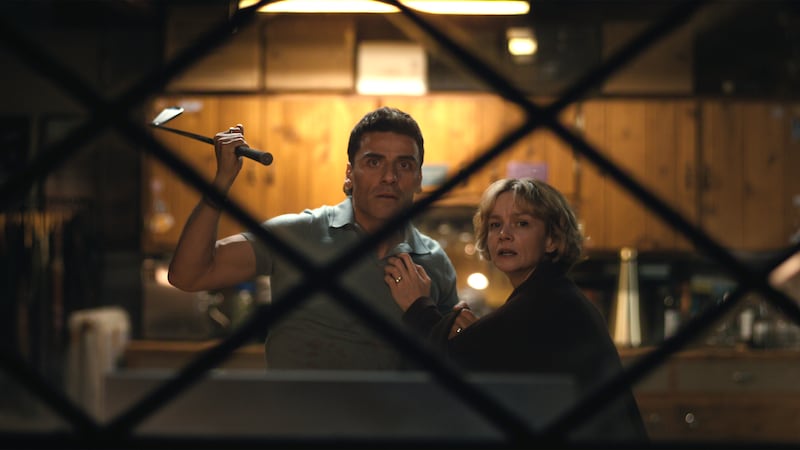
Their performances are rich even when the material is thin, and that’s especially true in the show’s closing installments, during which perilous situations and a bit of aesthetic razzle-dazzle (highlighted by a skirmish inside a medical facility) help distract attention away from the ho-humness of the narrative’s resolution.
Whether money and ambition beget happiness is the question at the core of Beef’s sophomore run, and Lee tackles it with enthusiasm if minimal profound insight, resulting in a story that’s engaging on a moment-to-moment basis but leaves little meaningful impact.
A-listers notwithstanding, it’s a surprisingly slight return engagement, and suggests that, should the series continue onward, it’d be wise to plumb personal and social ills by again tapping into the everyday rage and frustrations—and the minor conflicts that escalate into major crises—that were the lifeblood of its breakout debut.