Upon being released from prison, Max Cady (Javier Bardem) describes his behind-bars ordeal as “death by a thousand cuts.” That’s also a good summation of Cape Fear, a 10-episode Apple TV adaptation of John D. MacDonald’s 1957 novel The Executioners that unnecessarily and exasperatingly expands, remixes, and overcomplicates its source material.
Taking its cues less from J. Lee Thompson’s 1962 film version of this story (with Robert Mitchum and Gregory Peck) than from Martin Scorsese’s 1991 remake (with Robert De Niro and Nick Nolte), it’s an A-list series that, in terms of originality, vitality, and rationality, proves an F-grade affair.
Developed by Nick Antosca and executive-produced by Scorsese and Steven Spielberg, Cape Fear (June 5) assumes its predecessors’ basic return-of-the-repressed form, telling the tale of Anna (Amy Adams) and Tom Bowden (Patrick Wilson), married lawyers who were responsible—in a fashion that Apple has deemed a spoiler—for convicting Max.
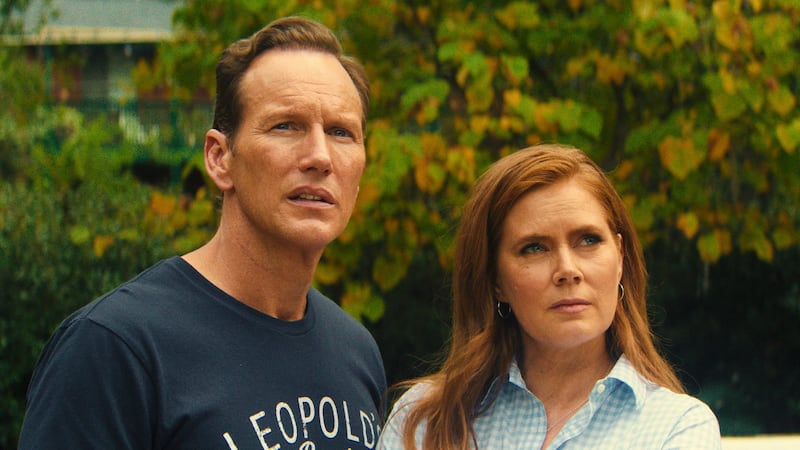
Now living in Savannah with their teenage kids Natalie (Lily Collias) and Zack (Joe Anders), Anna and Tom are the picture of perfection. Their seemingly idyllic life, however, is turned upside-down when Max, who was serving a life sentence for a heinous crime, walks free thanks to another of the basic plot points the streamer has forbidden critics from mentioning.
Max’s emergence is of grave concern to Anna and Tom, and from the outset of Cape Fear, it’s clear they’re not just worried about him because he’s a killer. The secrets they harbor hover over this thriller, even as the story lays out the cracks in their facades, such as Zack’s creepy psychological issues that can be traced back to a nasty school incident for which he was responsible.
On top of that, Anna, on the orders of her boss Noa (CCH Pounder), is endeavoring to get another inmate off death row, as she now works for an Innocence Project-style organization dedicated to righting criminal justice system wrongs—an ironic vocation given that Max, despite his claims to the contrary, obviously blames her (and Tom) for unjustly putting him away.
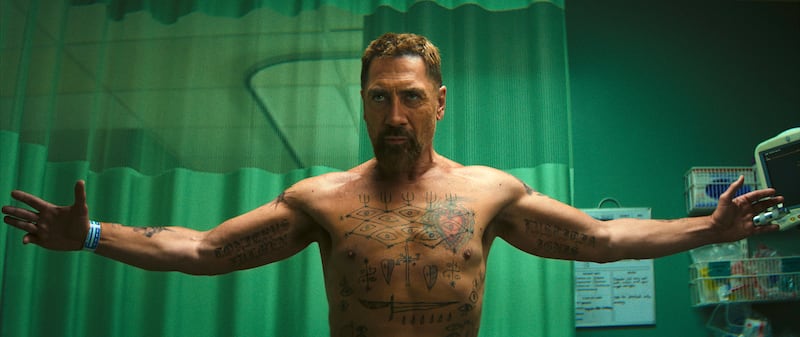
This set-up is a slightly altered riff on the previous Cape Fear films, and Antosca’s series mimics those precursors in numerous additional ways, be it utilizing Bernard Herrmann’s legendary theme music, replicating Scorsese’s negative imagery, or covering Max in De Niro-esque tattoos (including on his knuckles, an echo of original star Mitchum in The Night of the Hunter).
Before long, Max integrates himself into the couple’s life. Yet he does so in a manner that strains credulity, beginning by offering his services to Anna’s firm and Noa gleefully accepting his help, regardless of the fact that Anna failed to get him off and now looks like a complete failure, if not someone who actively conspired to screw him over.
Adams and Wilson are well-matched as a pair of well-to-do attorneys who believe, foolishly, that their wealth and standing will keep their skeletons locked away in the closet, and their performances are appropriately harried and—courtesy of the Savannah heat—sweaty. Cape Fear’s outlandish plot machinations, unfortunately, undercut their turns, with the series saddling Anna and Tom with a litany of dilemmas that are made perilous by their (historic and current) stupid behavior.
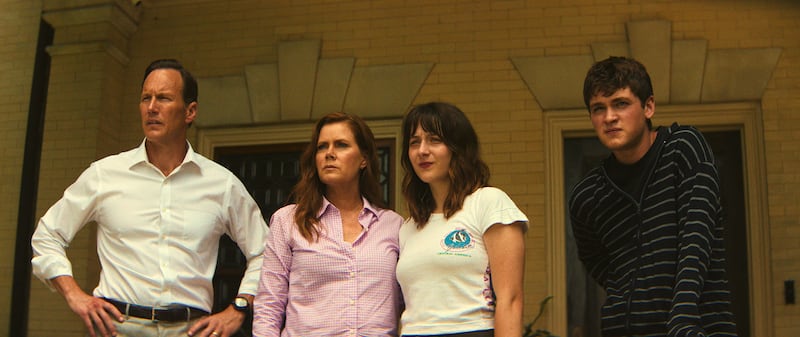
There’s no doubt that Max is the one behind their mounting misfortune, but the show only works because its protagonists repeatedly engage in inane and/or self-sabotaging conduct. That goes triple for Zack and Natalie, who wind up pawns in Max’s game due to their own preposterous foolishness.
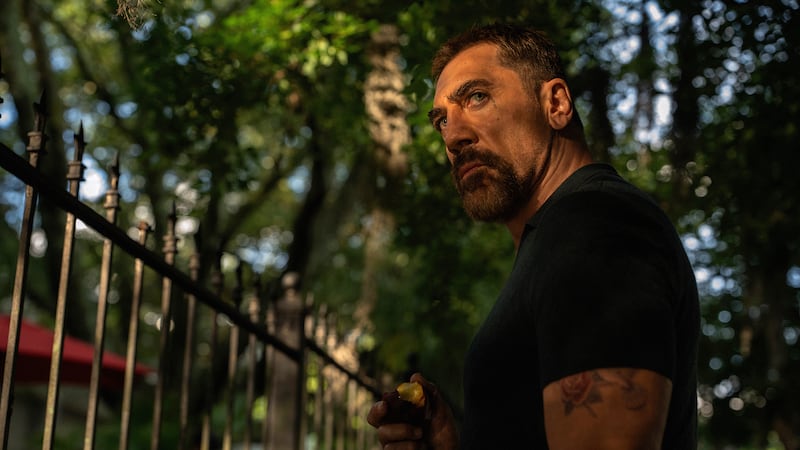
Cape Fear’s topsy-turvy and serpentine direction (full of canted angles and recurring eye motifs) strains to channel Scorsese’s stewardship, and the sense that this is all a facsimile of more concise, suspenseful, and coherent ancestors is epitomized by Bardem’s wan take on Max.
The Oscar winner’s smirking, taunting, devious expressions certainly make him a villain with a punchable face, but he’s a pedestrian madman, too composed to be terrifyingly unhinged and too wacko to be this good at fooling the public into thinking he’s an upstanding Wrong Man. Worse, as befitting a show chockablock with gratuitous subplots, he’s given (like Anna and Tom) familial and psychological hang-ups that make him less scary than ridiculous.
There are so many goofy threads laced through Cape Fear—including one involving quasi-voodoo Orisha rituals—that it takes a constant suspension of disbelief to make it to the end of each episode. For the most part, Adams and Wilson rise above it, but by its midway point, the series’ drama peddles nonsense—such as the idea that Max is playing eight-dimensional chess—that doesn’t jibe with reality and renders everyone something close to a dolt.
The entire point of this saga is, of course, that Anna and Tom have gotten themselves into this mess and are now the prey of an evil tormentor, yet the frequency of their imprudent decisions is enough to drain them of any sympathy.
This isn’t to say that Cape Fear is entirely without merit. There are occasional sequences that thrum with paranoia and horror. Those moments, however, are drowned out by absurd twists, corny cameos, and excessive convolutions that have been introduced not as natural outgrowths of this tale—and its thematic interests in fathers and daughters, honor and unfairness—but as ways to stretch it to nearly ten hours.
For all of Max’s nefariousness, the show is far less unsettling than Thompson and Scorsese’s takes, avoiding their hothouse mania and pedophilic menace for a more palatable (if over-the-top gruesome) type of malevolence.
While critics were only provided with eight of Cape Fear’s 10 installments, it’s apparent that its conclusion will take place in and around a houseboat on North Carolina’s Cape Fear River, thereby underscoring that, for all its additions, it’s just a busier rendition of its forerunners.
Considering that those superior editions are readily available (including on Apple TV), it’s difficult to imagine why anyone would bother with this 10-hour do-over. No matter its illustrious headliners, impressive production design, and overarching sheen of prestige, it’s just a superfluous retread that underscores the difference between cinematic artistry and small-screen cosplay.